The emergency room is often the first place people turn when symptoms like burning during urination, pelvic discomfort, genital discharge, or unexplained pain appear.
But does an ER blood test show STDs? The short answer is no. Standard ER blood work doesn’t include STD screening, and most emergency departments don’t perform comprehensive STD testing at all. ERs focus on immediate, life-threatening conditions.
Here’s what emergency rooms actually do regarding sexual health concerns.
Does an ER Blood Test Show STDs?
No. Standard ER blood work does not include STD testing, and most freestanding emergency departments don’t perform STD panels, even when specifically requested. They can treat acute complications from STDs but refer patients to appropriate clinics for actual testing and diagnosis.
What standard ER blood tests actually check:
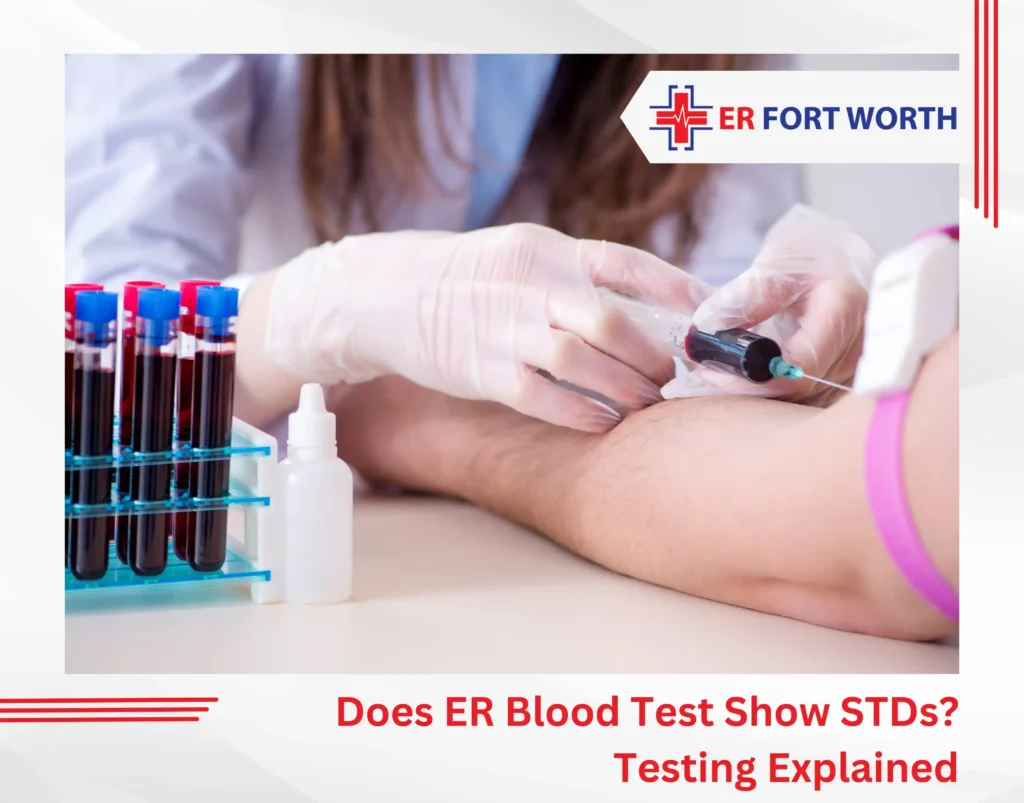
When you visit an emergency room, doctors order blood tests evaluating immediate health threats:
- CBC (Complete Blood Count): Checks for infection, anemia, blood disorders
- Metabolic Panel: Evaluates kidney function, electrolytes, blood sugar
- Liver Enzymes: Assesses liver function, especially with abdominal pain
- Inflammatory Markers: Detects acute infection or inflammation
These tests show how your body is responding to illness, but they do not detect STDs.
What ERs Actually Do for Sexual Health Concerns
Emergency rooms treat complications from STDs:
- Treat acute symptoms (pain, fever, infection)
- Stabilize the patient
- Refer to appropriate clinic for STD testing if needed
- Discharge with clear follow-up instructions
Common Types of STD Tests
Different sexually transmitted infections require different types of tests. Doctors choose the testing method based on your symptoms.
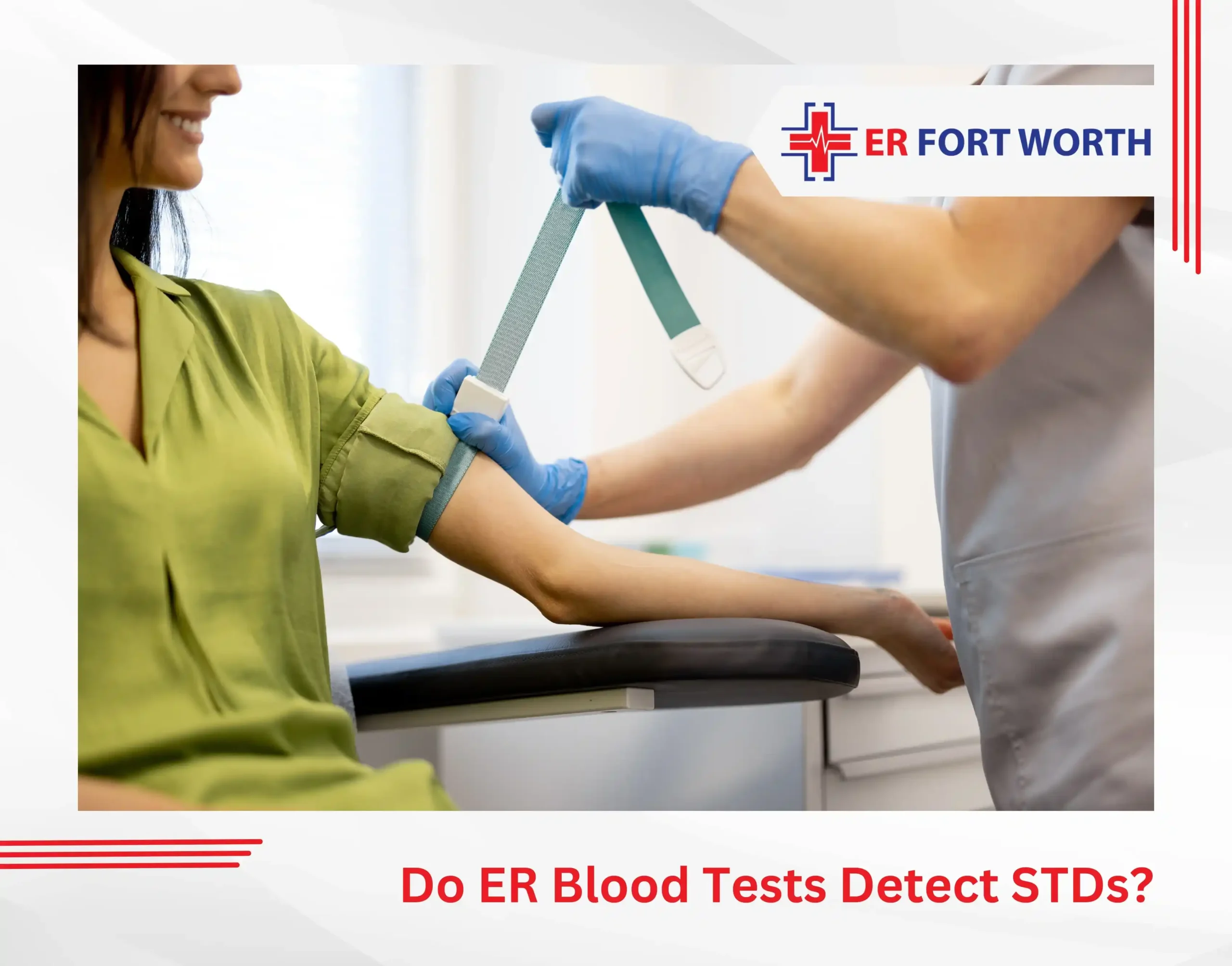
1. Blood Tests
Blood tests detect STDs that affect the bloodstream.
Used for detecting:
- HIV – early antigen/antibody detection
- Syphilis – RPR, VDRL, and confirmatory testing
- Hepatitis B & C – antibody and antigen screening
Blood tests are typically ordered when symptoms affect the whole body, such as fever, rash, or swollen lymph nodes.
2. Urine Tests
Urine testing is simple and commonly used.
Used for detecting:
- Chlamydia
- Gonorrhea
Urine tests are often ordered when symptoms include burning urination, discharge, lower abdominal pain, or testicular pain.
3. Swab or Culture Tests
Swabs provide the highest accuracy, especially for localized infections.
Swabs may be taken from:
- Vagina or cervix
- Urethra
- Throat
- Rectum
- Genital sores or ulcers
Swabs are used when visual symptoms (like sores, redness, swelling, or lesions) are present.
Getting Proper STD Testing After Your ER Visit
If you visited the ER for symptoms possibly related to STDs, comprehensive testing at an appropriate facility is essential, even if you received treatment.
Presumptive treatment isn’t a diagnosis. Emergency antibiotics may have covered bacterial STDs like gonorrhea or chlamydia, but you don’t know for certain what you had or if you have other infections.
People with one STD often have others, so testing only for the infection that ER doctors suspect leaves other infections undetected and transmissible. Some STD strains resist standard antibiotics, meaning testing confirms whether treatment worked.
Where to Get Comprehensive Testing
- Local health department STD clinics
- Planned Parenthood
- Primary care physicians
- Specialized sexual health clinics
Get tested, even if symptoms improve with antibiotics. Retest at two weeks if initial tests occurred during the “window period” when infections may not yet be detectable.