Measles is a highly contagious viral infection that can spread rapidly, especially during outbreaks. Recognizing measles symptoms early is critical to preventing complications and protecting others.
It often begins with flu-like symptoms but can quickly progress into a serious illness with a high fever and a widespread rash. In some cases, measles can lead to life-threatening complications that require emergency care.
This guide explains what measles looks like, how symptoms progress, and when to go to the emergency room.
What Is Measles?
Measles (also known as rubeola) is caused by a virus that infects the respiratory system and spreads throughout the body. It is transmitted through airborne droplets released when an infected person coughs, sneezes, or even talks.
What makes measles particularly dangerous is its extreme contagiousness, the virus can remain active in the air or on surfaces for up to two hours, making transmission very easy in shared environments.
Once inside the body, the virus multiplies in the throat and lungs before spreading through the bloodstream, affecting multiple organ systems.
How Measles Spreads
Understanding how measles spreads is key to preventing infection and controlling outbreaks.
Measles spreads through:
- Airborne droplets (coughing, sneezing, breathing).
- Direct contact with infected secretions.
- Contact with contaminated surfaces, followed by touching the face.
A person is contagious before he or she ever feels sick, usually from four days prior to the appearance of a rash to four days after.
Incubation Period: Silent but Infectious
After exposure, measles has a 7 to 14 day incubation period during which:
- The virus is reproducing inside the body.
- No visible symptoms are present.
- The person might still become contagious at the end of this phase.
People still spread the virus unknowingly even in the absence of symptoms. This silent phase makes measles highly contagious before symptoms are recognized.
The Most Common Symptoms of Measles
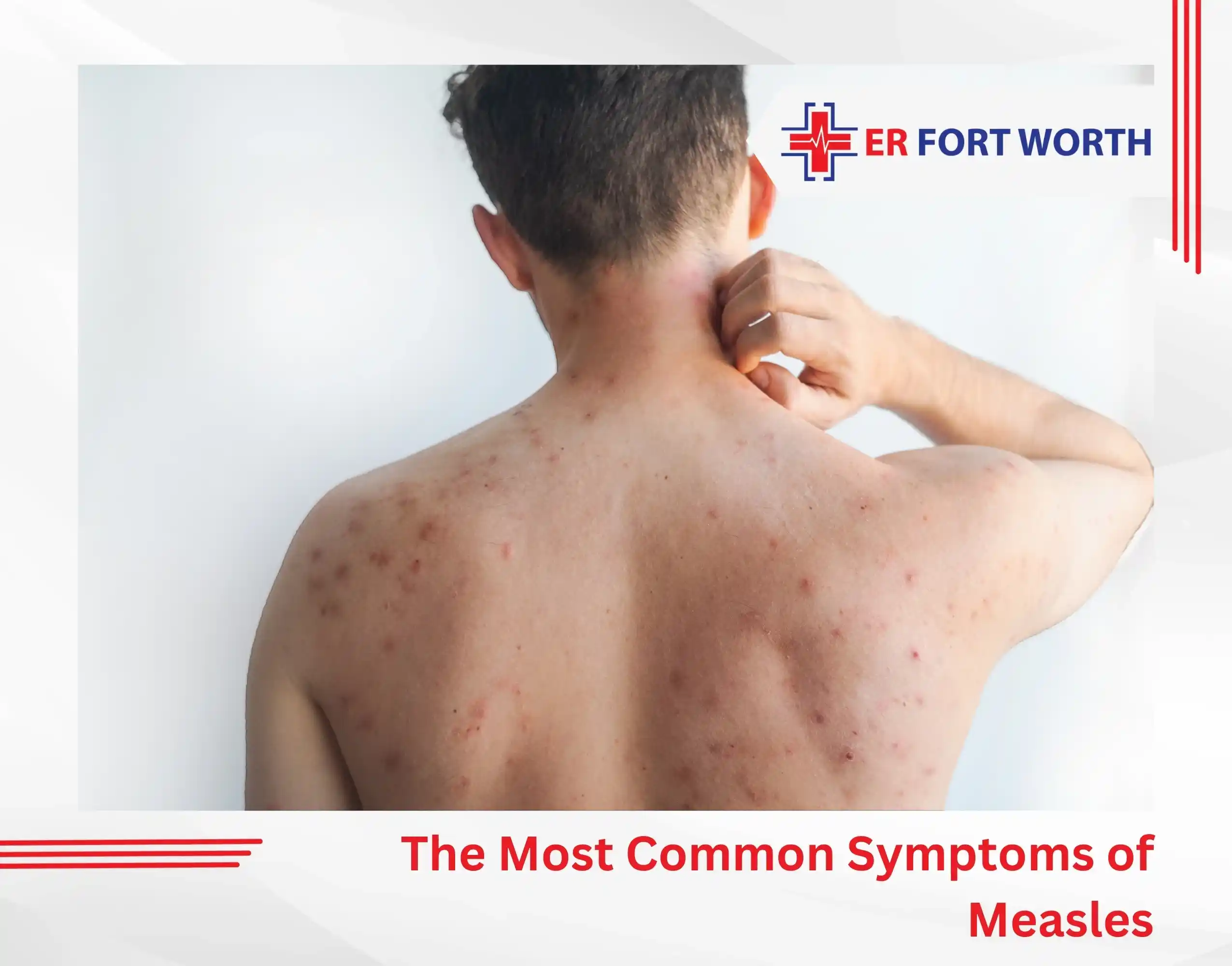
Measles symptoms develop in stages, starting with early warning signs before progressing to the classic rash. Here are early and other measles symptoms you should be aware of:
Early Symptoms of Measles (Prodromal Phase)
The early telltale symptoms look like a bad cold or flu, making initial diagnosis challenging.
Key Early Symptoms:
- High fever (often exceeding 104°F / 40°C).
- Dry, persistent cough.
- Runny nose (coryza).
- Red, watery eyes (conjunctivitis).
- Sensitivity to light (photophobia).
Why These Symptoms Matter
These early measles symptoms indicate that the virus is actively affecting the respiratory system and immune response. The high fever reflects the body’s attempt to fight infection, while coughing and sneezing increase the risk of spreading the virus to others.
This stage is when measles is most contagious, even before the rash appears.
Koplik Spots: A Rare Early Warning Sign
Koplik spots are one of the most distinctive early signs of measles.
What They Look Like:
- Tiny white or bluish-white spots.
- Surrounded by a red base.
- Found on the inner cheeks.
When They Appear:
- Usually 2–3 days after the onset of early symptoms.
- Often before the skin rash.
Why They’re Important:
Koplik spots are thought to be a hallmark sign of measles and aid health care providers in differentiating it from other viral illnesses.
The Measles Rash: How It Appears
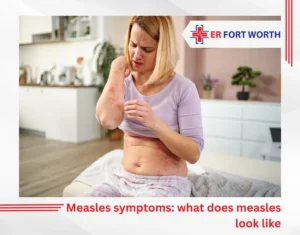
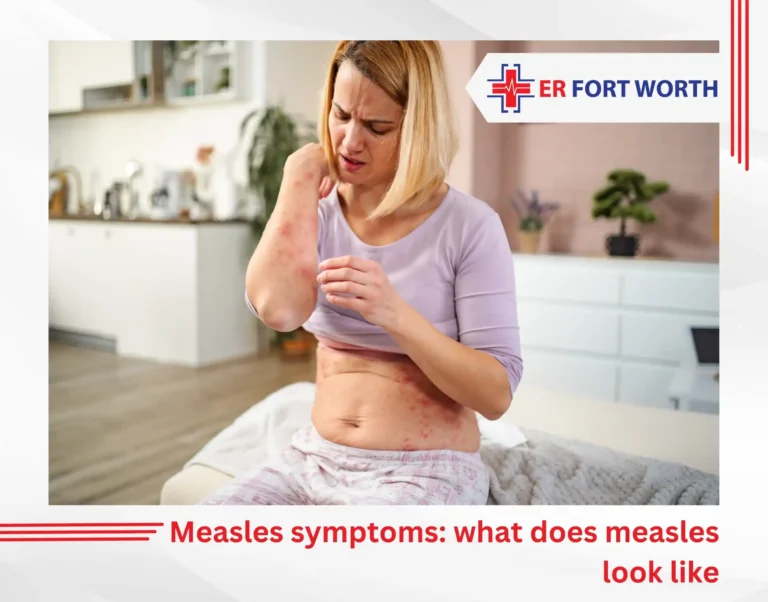
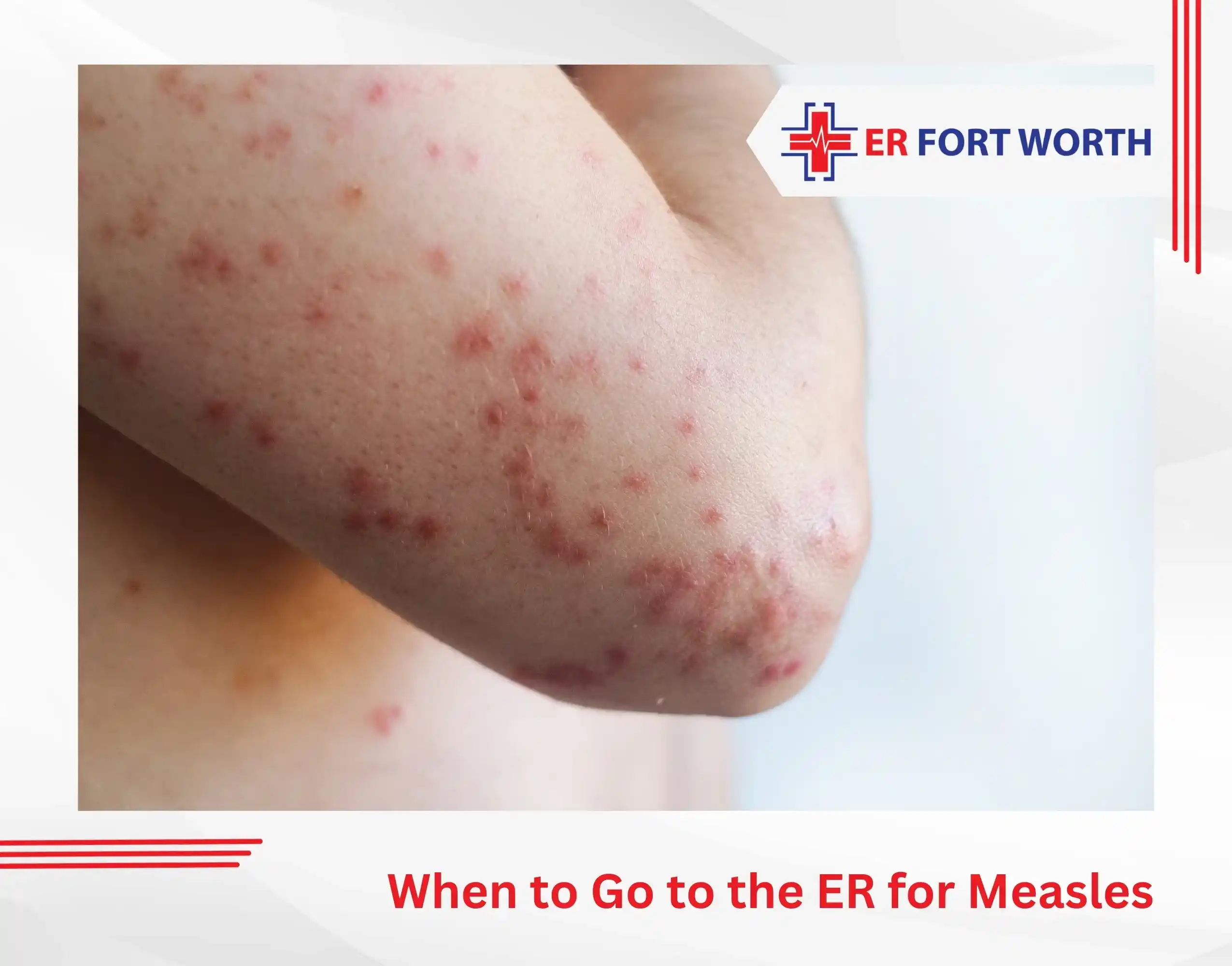
The measles rash is the most recognizable symptom and is often what people search for when asking, “what does measles look like?
How the Rash Develops:
- Begins on the face.
- Around the hairline.
- Behind the ears.
- Spreads downward.
Neck → chest → arms → torso → legs
Appearance
- Red, flat spots.
- Small raised bumps.
- May merge into larger patches.
Full Timeline of Measles Symptoms
Knowing the timeline of measles symptoms can help identify the stage of infection and when symptoms may worsen.
Here’s the common timeline that helps identify the stage of illness:
Days 0–14: Incubation
- No symptoms.
- Virus is multiplying.
Days 1–4: Early Symptoms
Fever, cough, runny nose, red eyes.
Days 2–3:
Koplik spots appear inside mouth
Days 3–7: Rash Phase
- Rash spreads from face downward.
- Fever peaks.
- Symptoms worsen.
Recovery Phase:
- Rash fades.
- Fever decreases.
- Cough may linger.
Additional Measles Symptoms
Beyond the hallmark signs, measles can also cause shortness of breath and:
- Severe fatigue.
- Loss of appetite.
- Sore throat.
- Body aches.
- Weakness.
- Swollen lymph nodes.
These symptoms reflect the body’s systemic response to infection.
What Does Measles Look Like in Children vs Adults
While measles symptoms are similar across age groups, severity can vary:
In Children:
- Higher risk of rash and ear infections.
- Irritability and reduced appetite.
In Adults:
- More severe fever and fatigue.
- Higher risk of complications such as pneumonia.
Serious Complications of Measles
Measles is not just a rash, it can lead to serious and sometimes fatal complications, especially in vulnerable individuals.
Common Complications:
- Pneumonia
The most common cause of measles-related death.
Causes breathing difficulty and lung inflammation.
- Encephalitis (Brain Swelling)
Can lead to seizures, brain damage, or death.
Occurs in about 1 in 1,000 cases.
- Severe Dehydration
Caused by fever, poor intake, and illness.
- Ear Infections
May lead to hearing loss.
- Blindness (Rare)
Due to vitamin A deficiency and infection.
When to Go to the ER for Measles
While mild cases can be managed at home, certain symptoms require immediate emergency care.
Seek Emergency Care If You Notice:
- Difficulty breathing or shortness of breath.
- Chest pain or persistent coughing.
- Seizures or convulsions.
- Confusion or extreme drowsiness.
- High fever (above 104°F / 40°C) that does not improve.
- Severe dehydration (dry mouth, dizziness, low urine output).
These symptoms may indicate life-threatening complications such as pneumonia or encephalitis.
Who Is at Higher Risk?
Certain groups are more likely to experience severe measles:
- Children under 5.
- Adults over 20.
- Pregnant women.
- People with weakened immune systems.
- Unvaccinated individuals.
Measles Treatment: What to Expect
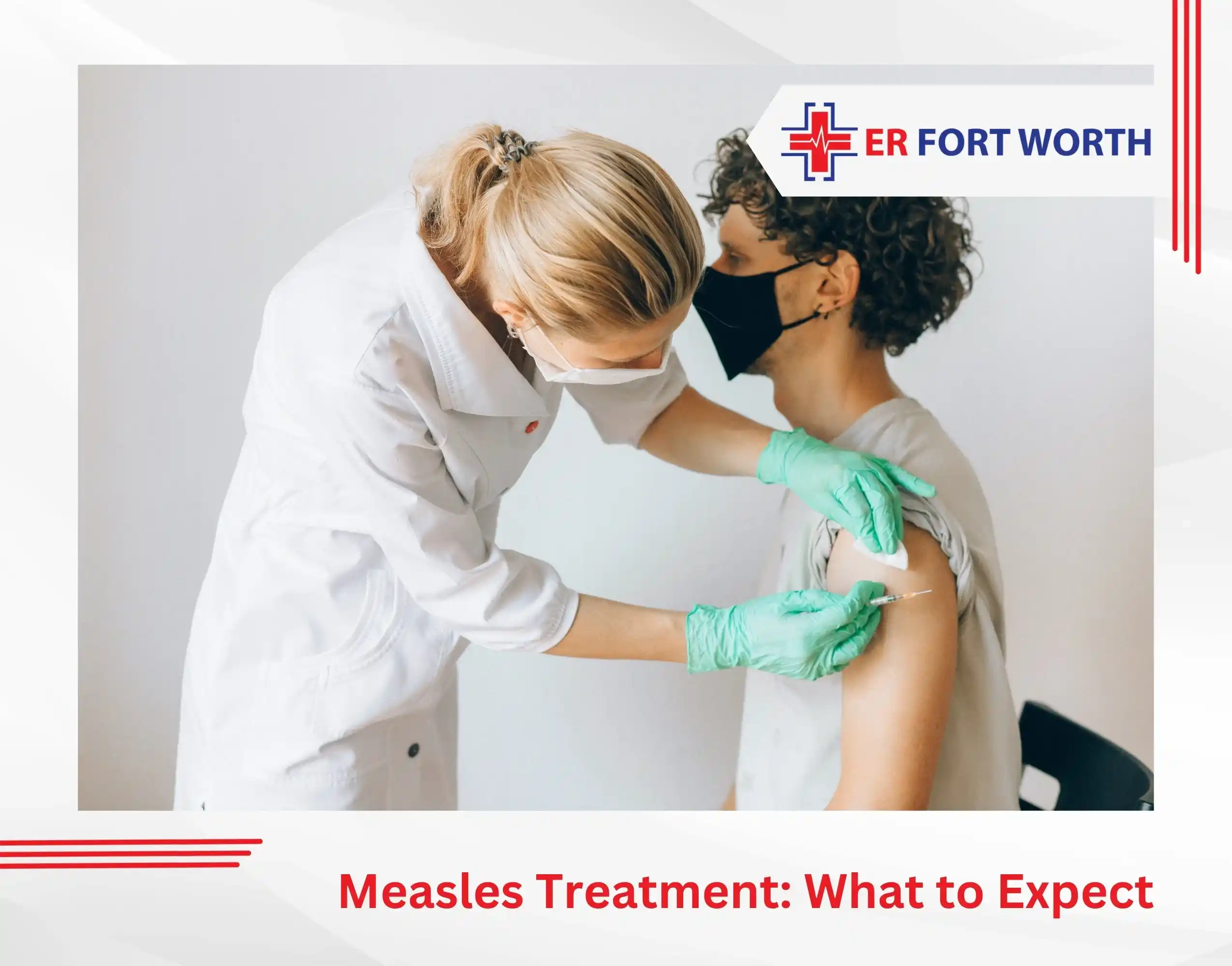
Since measles is a viral infection, treatment focuses on supportive care rather than antibiotics. There is no specific antiviral cure for measles. Treatment focuses on relieving symptoms and preventing complications.
Supportive Care Includes:
- Rest.
- Hydration.
- Fever control (e.g., acetaminophen).
- Vitamin A supplementation (in some cases).
Hospital Care May Include:
- Oxygen therapy.
- IV fluids.
- Treatment for complications.
- Preventing Measles.
The most effective protection against measles is vaccination.
Prevention Strategies:
Prevention is the most effective way to reduce the risk of measles infection and outbreaks. Here’s how you can do it:
- MMR vaccine (measles, mumps, rubella).
- Avoid exposure to infected individuals.
- Practice good hygiene.
- Isolate infected patients.
Vaccination not only protects individuals but also helps prevent outbreaks.
FAQs
1) What are the first symptoms of measles?
Early symptoms include high fever, cough, runny nose, and red, watery eyes.
2) What do measles spots look like?
Koplik spots are small white spots inside the mouth, while the rash appears as red spots starting on the face and spreading downward.
3) How contagious is measles?
Measles is extremely contagious and can spread through the air even before symptoms appear.
4) How long does measles last?
The illness typically lasts 7–10 days, though recovery time may vary.
5) When should you go to the ER for measles?
You should go to the ER if measles symptoms include difficulty breathing, seizures, confusion, severe dehydration, or a very high fever that does not improve.