Your symptoms determine where you should go. Not convenience, not cost assumptions, not which facility is closer. What your body needs right now should drive the decision between a freestanding ER vs urgent care.
A sore throat needs a rapid strep test and possibly antibiotics. Chest pressure needs cardiac monitoring, enzyme testing, and a physician trained to recognize heart attacks. Both are medical problems. Only one facility can handle both.
Urgent care exists for minor, predictable conditions during business hours. Freestanding emergency rooms exist for serious symptoms, diagnostic uncertainty, and situations where the wrong call means worse outcomes. Matching your condition to the right facility gets you appropriate care without wasted time or money.
What Urgent Care Can Handle
Urgent care centers bridge the gap between your primary care doctor and the emergency room. They work well for stable conditions with straightforward treatment paths.
Most urgent care facilities operate 10 to 12 hours daily with reduced weekend availability and holiday closures. Staffing includes family medicine physicians, physician assistants, or nurse practitioners rather than emergency specialists.
The urgent care model fits when symptoms are mild and stable, when you don’t need advanced diagnostic imaging or emergency IV medications, and when waiting a few hours wouldn’t change your outcome. Conditions matching these criteria include sore throats, ear infections, sinus congestion, minor cuts needing simple stitches, mild sprains, low fevers, skin rashes, and uncomplicated urinary tract infections.
What Freestanding Emergency Rooms Provide
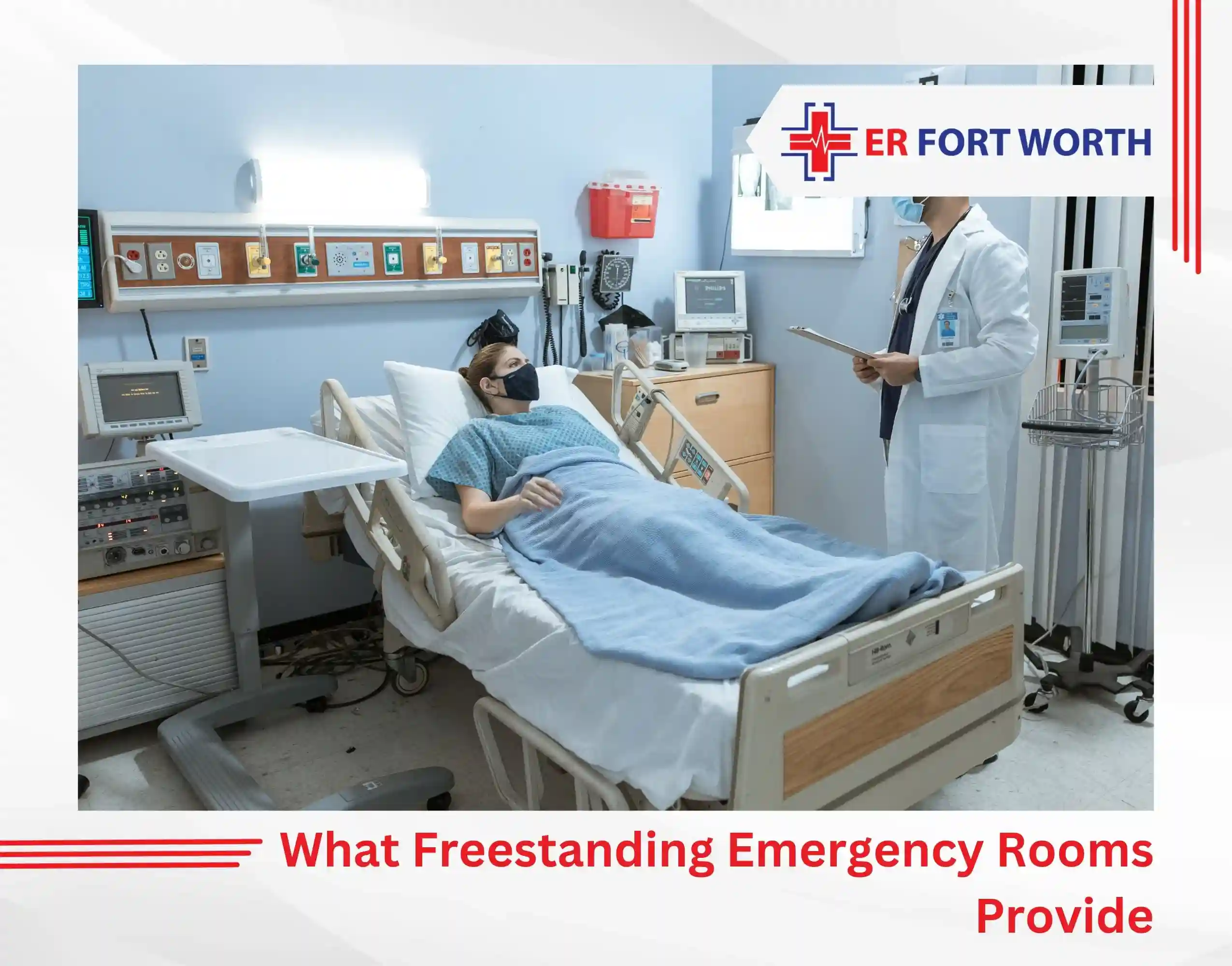
Freestanding ERs operate as fully licensed emergency departments meeting the same state regulations as hospital emergency rooms. The distinction is independence from hospital campuses, which eliminates the overcrowding and multi-hour waits typical of large hospital ERs.
These facilities maintain board-certified emergency physicians on-site around the clock. Equipment includes CT scanners, ultrasound, comprehensive laboratory services with cardiac enzyme panels, continuous monitoring capabilities, and full resuscitation resources.
When conditions require hospital admission or surgery, freestanding ERs stabilize patients and coordinate direct transfers with receiving facilities.
Freestanding ER vs Urgent Care: Quick Comparison
| Capability | Freestanding ER | Urgent Care |
| Open 24/7/365 | Yes | No |
| Board-Certified Emergency Physicians | Yes | Rarely |
| Emergency-Trained Nursing Staff | Yes | No |
| CT Scans | Yes | No |
| Ultrasound | Yes | Limited or None |
| Comprehensive Lab Testing | Yes | Basic Only |
| Cardiac Enzyme Testing | Yes | No |
| Continuous Cardiac Monitoring | Yes | No |
| IV Medications | Yes | Limited or None |
| IV Fluids | Yes | Limited |
| Fracture Reduction and Casting | Yes | Splinting Only |
| Life-Threatening Condition Treatment | Yes | No |
| Direct Hospital Transfer Coordination | Yes | Calls 911 |
What Your Symptoms Need: A Condition-First Guide
Rather than memorizing facility differences, consider what your specific symptoms require for proper evaluation and treatment.
- Chest discomfort needs cardiac monitoring to track heart rhythm, enzyme blood tests to detect heart muscle damage, and potentially CT imaging to rule out pulmonary embolism. Urgent care has none of these. Any chest symptom suggesting cardiac involvement belongs in an emergency room.
- Severe headache needs CT imaging to rule out brain bleeding, stroke, or aneurysm. Physical examination alone cannot exclude these possibilities. Headaches described as the worst ever, headaches with neck stiffness, and headaches accompanied by confusion or vision changes require emergency evaluation.
- Abdominal pain beyond mild discomfort needs imaging and lab work to identify causes ranging from appendicitis to bowel obstruction to kidney stones. Location, severity, and associated symptoms like fever or vomiting help determine urgency, but significant abdominal pain generally requires diagnostic tools urgent care doesn’t have.
- Breathing difficulty needs oxygen delivery capability, continuous monitoring, and potentially advanced airway management. Mild congestion fits urgent care. Struggling to breathe at rest, asthma attacks unresponsive to inhalers, and any sensation of not getting enough air warrant emergency care.
- Injuries with uncertainty need imaging to determine severity. Obvious minor injuries fit urgent care. Injuries involving head trauma with any confusion, possible fractures of major bones, deep wounds with heavy bleeding, or significant burns require emergency evaluation and treatment capabilities.
- High fever with concerning features needs comprehensive evaluation. Fever alone in an otherwise stable adult may fit urgent care. Fever combined with confusion, severe body aches, difficulty breathing, or inability to keep fluids down requires emergency assessment.
When Urgent Care Works
Certain conditions reliably fit the urgent care model.
Minor infections with localized symptoms respond to oral antibiotics prescribed after basic testing. Sore throats, ear infections, sinus infections, and uncomplicated urinary tract infections fall here.
Small injuries with obvious causes and limited severity heal with minimal intervention. Cuts needing a few stitches, mild sprains that bear weight, minor burns, and insect bites fit urgent care capabilities.
Common illnesses running predictable courses need confirmation rather than intervention. Colds, mild flu symptoms, low fevers, and stomach bugs often just require ruling out complications and guidance on home management.
The pattern: stable symptoms, predictable causes, straightforward treatments, no risk of sudden deterioration.
When Emergency Care Becomes Necessary
Some conditions demand resources urgent care cannot provide.
- Cardiac emergencies present as chest pain or pressure, discomfort radiating to arm, jaw, or back, chest symptoms combined with shortness of breath, and palpitations with dizziness or fainting. These need cardiac monitoring and enzyme testing available only in emergency settings.
- Neurological emergencies include sudden facial drooping, arm weakness, or speech difficulty suggesting stroke. Also the worst headache of your life, sudden confusion, loss of consciousness, seizures, and abrupt vision changes. CT imaging identifies strokes and brain bleeding within minutes.
- Respiratory emergencies involve difficulty breathing at rest, severe asthma attacks not responding to home treatment, choking, and chest pain accompanying each breath. These require oxygen delivery and potentially advanced airway intervention.
- Traumatic injuries requiring emergency care include head injuries with confusion or vomiting, deep lacerations bleeding heavily, likely fractures of arms, legs, or ribs, significant burns, and eye injuries.
- Abdominal emergencies encompass severe or worsening belly pain, vomiting combined with abdominal pain, right lower quadrant tenderness with fever suggesting appendicitis, suspected kidney stones, and blood in stool or vomit.
- Other emergency conditions include high fever with confusion, severe dehydration with inability to keep fluids down, allergic reactions causing throat swelling or breathing difficulty, bleeding that won’t stop, and poisoning or overdose.
Diagnostic Capability Differences Between Freestanding ER vs Urgent Care
What conditions can be identified depends entirely on available equipment.
Urgent care relies on basic X-rays, simple lab tests often sent to outside facilities, and physical examination. These tools confirm straightforward diagnoses like strep throat or sprained ankles. They cannot identify conditions requiring deeper investigation.
Emergency rooms maintain CT scanners that visualize strokes, brain bleeding, blood clots in lungs, appendicitis, kidney stones, diverticulitis, and internal injuries. Ultrasound identifies gallbladder disease, abdominal fluid, cardiac dysfunction, and deep vein clots. Comprehensive labs detect heart attacks through enzyme testing, identify severe infections, assess organ function, and reveal electrolyte emergencies.
The diagnostic gap matters most when symptoms could indicate something serious. Back pain might be muscular or might signal an aortic emergency. Leg swelling might be minor or might indicate a clot heading toward your lungs. Without CT and comprehensive labs, these distinctions cannot be made reliably.
Treatment Capability Differences Between Freestanding ER vs Urgent Care
Diagnosis matters only if appropriate treatment follows. Here the gap widens.
Emergency rooms deliver IV medications working within minutes rather than hours. IV fluids reverse dehydration and stabilize blood pressure. Cardiac medications address rhythm problems and chest pain. IV antibiotics fight serious infections faster than pills. IV pain management controls severe suffering beyond what oral medications can touch.
Beyond medications, emergency rooms provide continuous respiratory monitoring, blood transfusions, fracture reduction before casting, complex wound repair requiring layered closure, and full resuscitation capabilities.
Urgent care provides oral medications, limited IV options, basic wound closure, simple splinting, and standard breathing treatments. Conditions requiring more deserve emergency room treatment.
The Cost of Choosing Wrong
Urgent care costs less for minor problems. That math holds for sore throats, simple cuts, and mild sprains.
The calculation reverses when symptoms suggest something serious. Visiting urgent care with chest pain or severe abdominal symptoms means paying that facility, then paying the emergency room when they transfer you. Two evaluations, two bills, and treatment delayed while your condition potentially worsens.
Starting at the ER for genuine emergencies means one facility, one evaluation, immediate access to needed diagnostics and treatment, and often better outcomes.
Insurance covers freestanding ERs similarly to hospital emergency rooms. Verify network details with your specific plan, but never delay emergency care over cost concerns. True emergencies receive coverage regardless.
What Happens When Urgent Care Cannot Help
Urgent care staff recognize symptoms beyond their scope. When they identify concerning findings, they refer you to an emergency room.
This creates predictable problems. Time passes during travel to a new facility. The emergency room begins evaluation from scratch because records rarely transfer cleanly. Tests may repeat. You pay two facilities.
For time-sensitive conditions, these delays carry consequences. Heart attacks damage more muscle with each passing minute. Strokes kill brain cells continuously until blood flow returns. Severe infections spread faster than oral antibiotics can work. Appendicitis progresses toward rupture.
Starting at the appropriate facility eliminates these problems entirely.
When Hospitals Become Necessary
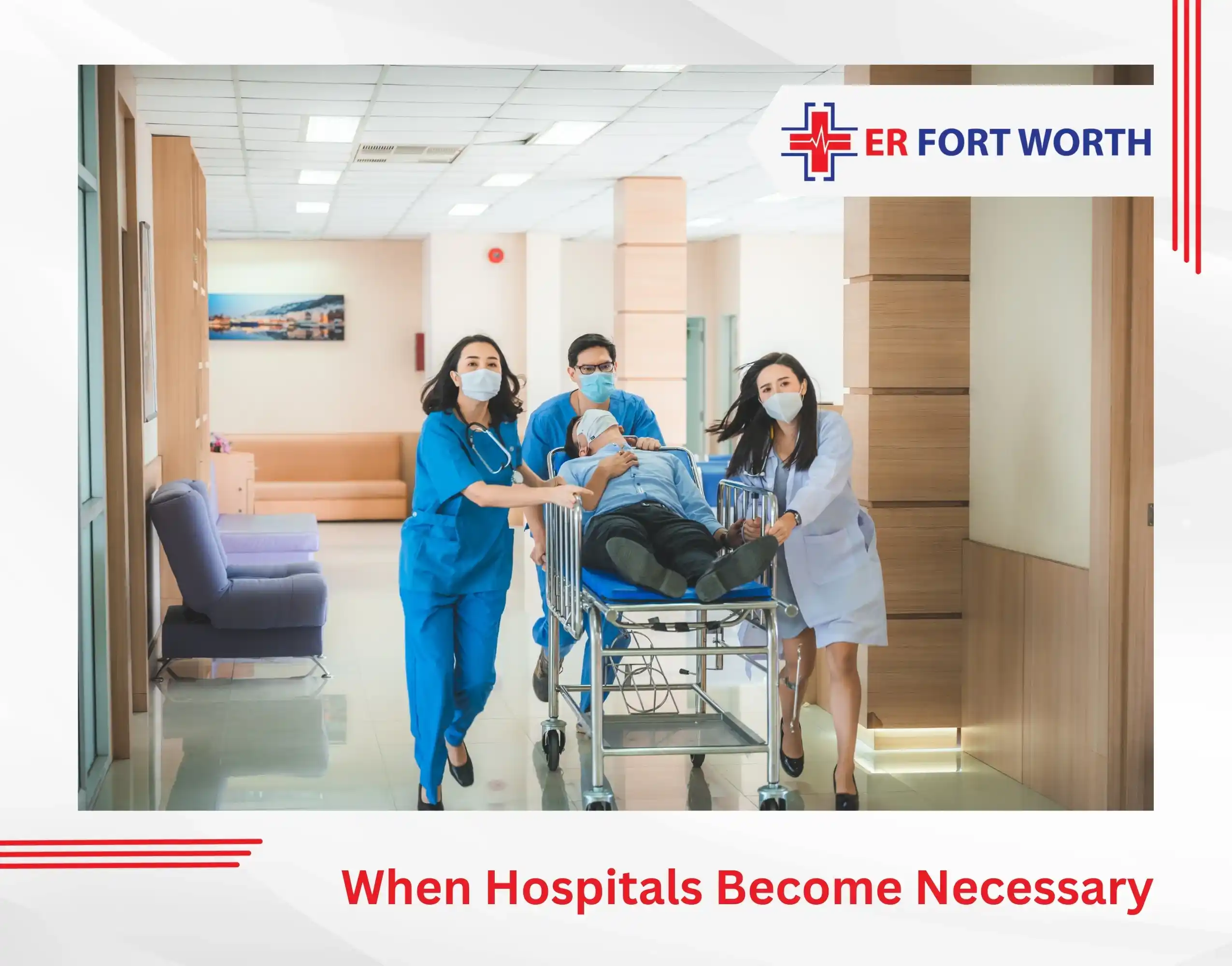
Certain conditions require resources beyond any emergency room. Cardiac catheterization, emergency surgery, intensive care admission, and highly specialized interventions happen at hospitals.
Freestanding emergency rooms stabilize these patients and coordinate transfers physician to physician. Medical records, imaging, and laboratory results travel with you. The receiving hospital understands your situation before arrival.
This coordination often provides faster access to definitive care than arriving at a crowded hospital ER and waiting for specialists. Stabilization plus rapid transfer frequently beats extended waiting room time with an active emergency.
ER of Fort Worth: Care Matched to Your Condition
ER of Fort Worth provides emergency capabilities designed for efficient diagnosis and treatment when your condition demands more than urgent care can offer.
- Board-certified emergency physicians 24/7. Our doctors completed specialty residency training in emergency medicine. They evaluate your symptoms and begin treatment immediately regardless of when you arrive.
- Complete diagnostic resources. On-site CT scanning, ultrasound, digital X-ray, comprehensive laboratory testing, and continuous cardiac monitoring allow rapid identification of serious conditions. Faster diagnosis means faster treatment.
- Full treatment capabilities. IV medications, fluid resuscitation, cardiac interventions, respiratory support, fracture stabilization, and complex wound care happen here. Pediatric emergencies receive age-appropriate care with properly sized equipment and pediatric protocols.
- Always open. Every hour, every day, every holiday. Walk in whenever symptoms develop.
- Private treatment rooms. Care happens in private rooms where family can stay with you throughout your visit.
- Insurance and payment options. We accept most major insurance carriers and maintain a no balance billing policy preventing surprise charges. Uninsured patients receive upfront cost information and flexible payment arrangements.
When hospitalization or surgery becomes necessary, we stabilize you and coordinate transfer directly with receiving hospitals to ensure continuous care.
Match Your Condition to the Right Facility
Understanding freestanding ER vs urgent care means recognizing what your symptoms actually require.
Minor, stable conditions with predictable treatments fit urgent care during business hours. Serious symptoms, diagnostic uncertainty, severe pain, and any situation where delays could worsen outcomes belong in an emergency room.
Chest symptoms need cardiac monitoring and enzyme testing. Stroke signs need CT imaging within minutes. Severe infections need IV antibiotics. Breathing emergencies need oxygen and advanced intervention.
ER of Fort Worth maintains these capabilities around the clock. When your condition needs more than urgent care provides, we deliver the diagnostic technology, treatment resources, and emergency expertise to help.
[Get Emergency Care Now] | [Call ER of Fort Worth]
Frequently Asked Questions
How do I know if my condition needs urgent care or an emergency room?
Consider what your symptoms require for proper evaluation. Chest pain needs cardiac monitoring and enzyme tests. Severe headaches need CT imaging. Breathing problems need oxygen capability. If your symptoms require resources urgent care doesn’t have, choose the emergency room.
Can urgent care diagnose a heart attack?
No. Heart attack diagnosis requires cardiac enzyme blood tests and continuous monitoring. Urgent care facilities usually lack both. Chest pain, pressure, or discomfort should always be evaluated in an emergency room.
What if I pick urgent care and my condition is serious?
Urgent care will refer you to an emergency room. You’ll lose time traveling to a second facility, pay two bills, and delay treatment while your condition potentially worsens.
Do freestanding ERs have the same equipment as hospital ERs?
Yes. Freestanding emergency rooms maintain CT scanners, ultrasound, comprehensive labs, cardiac monitoring, and resuscitation equipment matching hospital ER capabilities. They operate under identical state licensing requirements.
Are freestanding emergency rooms open at night?
Yes. Freestanding ERs operate 24 hours daily, 365 days yearly, including nights, weekends, and holidays. Urgent care centers typically close evenings and holidays.
Does insurance cover freestanding ER visits?
Most major insurance plans cover freestanding emergency room visits similarly to hospital ER visits. Confirm your specific plan’s network, but never delay emergency care due to insurance concerns.
Can freestanding ERs handle pediatric emergencies?
Yes. Freestanding emergency rooms maintain pediatric equipment and protocols. Emergency physicians receive training in pediatric emergencies as part of their specialty certification.