
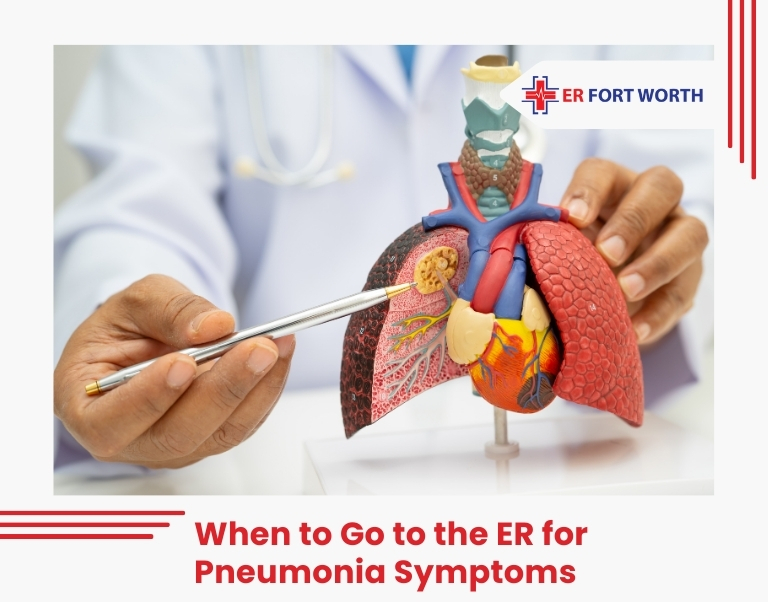
Pneumonia symptoms Fort Worth residents experience in winter are often mistaken for a simple cold or flu , but Pneumonia can quickly become life-threatening without fast treatment. Pneumonia symptoms Fort Worth patients face are often overlooked until oxygen levels drop dangerously, making early recognition crucial. Every year, our ER team sees patients with dangerously low oxygen levels because early warning signs were missed. If you or your child has a worsening cough, chest pain, or trouble breathing, this guide explains how pneumonia symptoms progress, how it differs from flu, and when you should go straight to the ER in Fort Worth.
Many people ignore or delay care because pneumonia can initially look like a simple cold, allergies, or bronchitis. Unfortunately, waiting too long can lead to dangerous oxygen loss, respiratory failure, and other life-threatening complications. This is something our ER team sees far too often during the winter months.
This guide covers:
- Early pneumonia symptoms
- How pneumonia differs from flu or a cold
- When symptoms become an emergency
- Why Fort Worth winters increase pneumonia risk
- How ER of Fort Worth diagnoses & treats pneumonia
What Is Pneumonia? (Fort Worth Overview)
Understanding pneumonia symptoms Fort Worth patients face is crucial for timely intervention. Pneumonia is a serious lung infection that causes swelling and fluid to collect in the tiny air sacs of the lungs. When this happens, oxygen has a harder time reaching the bloodstream, which is why breathing can suddenly feel difficult and exhausting.
It can be caused by:
- Bacteria
- Viruses (flu, RSV, COVID-19)
- Fungal infections (rare)
Because oxygen levels can drop quickly, pneumonia can become a medical emergency before many people realize what’s happening.
Why Pneumonia and Winter Respiratory Infections Spike in Fort Worth
Winter in Fort Worth increases the risk of pneumonia symptoms in both children and adults.Winter in Tarrant County and North Texas creates the perfect conditions for pneumonia to develop. Several factors come together during this time of year:
- Viruses spread more easily indoors when people spend more time inside
- Cold air can irritate and inflame lung tissue
- Cedar pollen and winter allergies weaken the lungs
- Sudden temperature swings put extra stress on the immune system
These winter respiratory infections in Fort Worth often act as a trigger for pneumonia, especially in high-risk patients.
ERs across Fort Worth, Keller, Haslet, Saginaw, Alliance, and Watauga see a strong rise in pneumonia cases from December to March. Many patients are surprised by how quickly a simple winter illness can turn serious.
Pneumonia vs Flu vs Cold Symptoms (What Fort Worth Residents Should Know)

Understanding pneumonia vs flu is critical, because flu symptoms can suddenly shift into pneumonia symptoms that require ER care.
| Symptom | Pneumonia | Flu | Cold |
| Fever | High (102–104°F) | Medium-high | Mild |
| Cough | Deep & painful | Strong | Mild |
| Shortness of breath | Yes | Sometimes | Rare |
| Chest Pain | Sharp | Rare | No |
| Fatigue | Severe | Moderate | Mild |
| Mucus | Yellow/green | Sometimes | Clear |
Shortness of breath is one of the first and strongest signs that pneumonia may be developing.
How Pneumonia Symptoms Progress in Adults and Children
Tracking pneumonia symptoms Fort Worth patients experience day by day helps families know when to visit the ER
- Day 1–2: Cold-like symptoms
- Day 3–4: Rising fever, chest tightness
- Day 5+: Breathing difficulty, chest pain, oxygen drop
Rapid progression like this is a major red flag — and it’s often what brings patients into the ER.
Early Warning Signs of Pneumonia

- Deep, persistent cough
- Trouble walking without feeling breathless
- Chest tightness
- Green or yellow mucus
- Fever that keeps returning
These early pneumonia symptoms are your first sign that a simple winter illness may be turning into something more serious. If symptoms worsen after flu or COVID recovery, bacterial pneumonia may be starting. Many patients think they are getting better before suddenly taking a turn for the worse.
When to Go to the ER for Pneumonia Symptoms in Fort Worth
If you are unsure when to go to the ER for pneumonia symptoms Fort Worth residents should watch for, use the signs below as your guide.
Severe Breathing Problems
- Rapid breathing
- Blue lips or fingernails
- Ribs pulling in during breathing
- Grunting (babies)
High Fever
- 103–104°F or higher
- Fever lasting more than 3 days
- Fever returning after medication
Chest Pain
- Sharp, stabbing pain
- Pain that worsens while taking deep breaths
Dangerous Illness Signs
- Confusion
- Severe weakness
- Dizziness or fainting
- Inability to stay awake
Children & Babies
- No wet diapers
- Not feeding
- Lethargy
- Fast breathing
- Vomiting
If a child shows breathing stress, they should be evaluated urgently with Pediatric Emergencies care. Parents often tell us they weren’t sure when to worry, these are the signs you should never ignore.
How ER of Fort Worth Diagnoses Pneumonia Symptoms
We provide fast, on-site diagnostics including:
- Imaging (immediate results)
- Blood oxygen testing
- Lab Testing for infection
- Blood Test
- Rapid flu, RSV & COVID tests
Choosing a Fort Worth ER that offers on-site imaging and labs helps diagnose pneumonia symptoms quickly and start treatment without delay. All results are available quickly with no urgent-care delays, so treatment can begin right away.
Pneumonia Treatment in the ER (Adults & Children)
Pneumonia symptoms Fort Worth patients show determine the ER treatment approach, including IV fluids, oxygen therapy, and monitoring.
Bacterial Pneumonia
- IV antibiotics
- IV Fluids
- Oxygen therapy
- Fever control
- Continuous monitoring
Viral Pneumonia
- Breathing treatments
- IV hydration
- Steroids (case-by-case)
- Antivirals for flu or COVID-related pneumonia
Pediatric pneumonia can progress faster than in adults, which is why any child with fast breathing, chest pulling, or persistent high fever should be evaluated in the ER immediately.
Severe Cases
- Nebulizer therapy
- Oxygen support
- Continuous cardiac and oxygen monitoring
ER of Fort Worth treats infants, children, adults, and seniors 24/7.
Who Is at Higher Risk for Pneumonia (Adults, Seniors, and Pediatric Patients)
Adults and children who experience pneumonia symptoms Fort Worth ER staff frequently treat should seek care promptly, especially high-risk groups.
- Adults over 60
- Children under 5 are especially vulnerable to pediatric pneumonia and should be evaluated quickly if breathing problems or high fever develop.
- Infants under 12 months
- Asthma or COPD patients
- Heart disease patients
- Immunocompromised people
- Smokers
- Recent flu or COVID patients
If you fall into any of these groups, do not wait. Pneumonia can progress much faster in high-risk patients.
Pneumonia Prevention for Fort Worth Residents
Preventing pneumonia symptoms Fort Worth residents face begins with vaccines, good hand hygiene, and controlling winter respiratory infections.
✔ Get your flu shot
✔ Stay updated on COVID boosters
✔ Wash hands frequently
✔ Avoid smoking
✔ Use a humidifier
✔ Wear a mask in crowded indoor areas during winter outbreaks
For Texas-specific respiratory illness trends and seasonal virus updates, guidance is available from the Texas Department of State Health Services
ER of Fort Worth, 24/7 Pneumonia & Respiratory Emergency Care
If you or your child is struggling to breathe, experiencing chest pain, persistent high fever, or worsening cough after flu or COVID, visit ER of Fort Worth immediately. Our emergency room in Fort Worth is equipped to manage severe pneumonia symptoms, breathing problems, and pediatric emergencies 24/7.
We offer:
- No-wait emergency care
- On-site X-rays
- Lab testing
- IV fluids
- Oxygen therapy
- Pediatric emergency care
Open 24/7 for Fort Worth, Keller, Haslet, Saginaw, Watauga, and surrounding areas
For general medical information about pneumonia, its causes, and how it spreads, you can also review guidance from the Centers for Disease Control and Prevention