Sore throat is one of the most common reasons people visit a doctor, but not all sore throats are the same. Understanding the difference between tonsillitis vs strep throat is critical, especially when symptoms become severe.
While both conditions can cause pain, fever, and difficulty swallowing, their causes and treatments are very different. In some cases, delaying care can lead to serious complications.
This guide explains how to tell the difference, what symptoms to watch for, and when to visit urgent care or a 24/7 emergency room for immediate treatment.
What Is Tonsillitis?
Tonsillitis is the inflammation of the tonsils, which are two oval-shaped tissues at the back of your throat. It can be caused by viruses or bacteria, though viral infections are the most common.
Common Tonsillitis Symptoms
Tonsillitis symptoms can range from mild irritation to severe throat inflammation. Common signs include shortness of breath and:
- Red, swollen tonsils.
- White or yellow coating on tonsils.
- Sore throat.
- Pain when swallowing.
- Fever.
- Swollen lymph nodes.
Because it can have multiple causes, tonsillitis may range from mild to severe.
What Is Strep Throat?
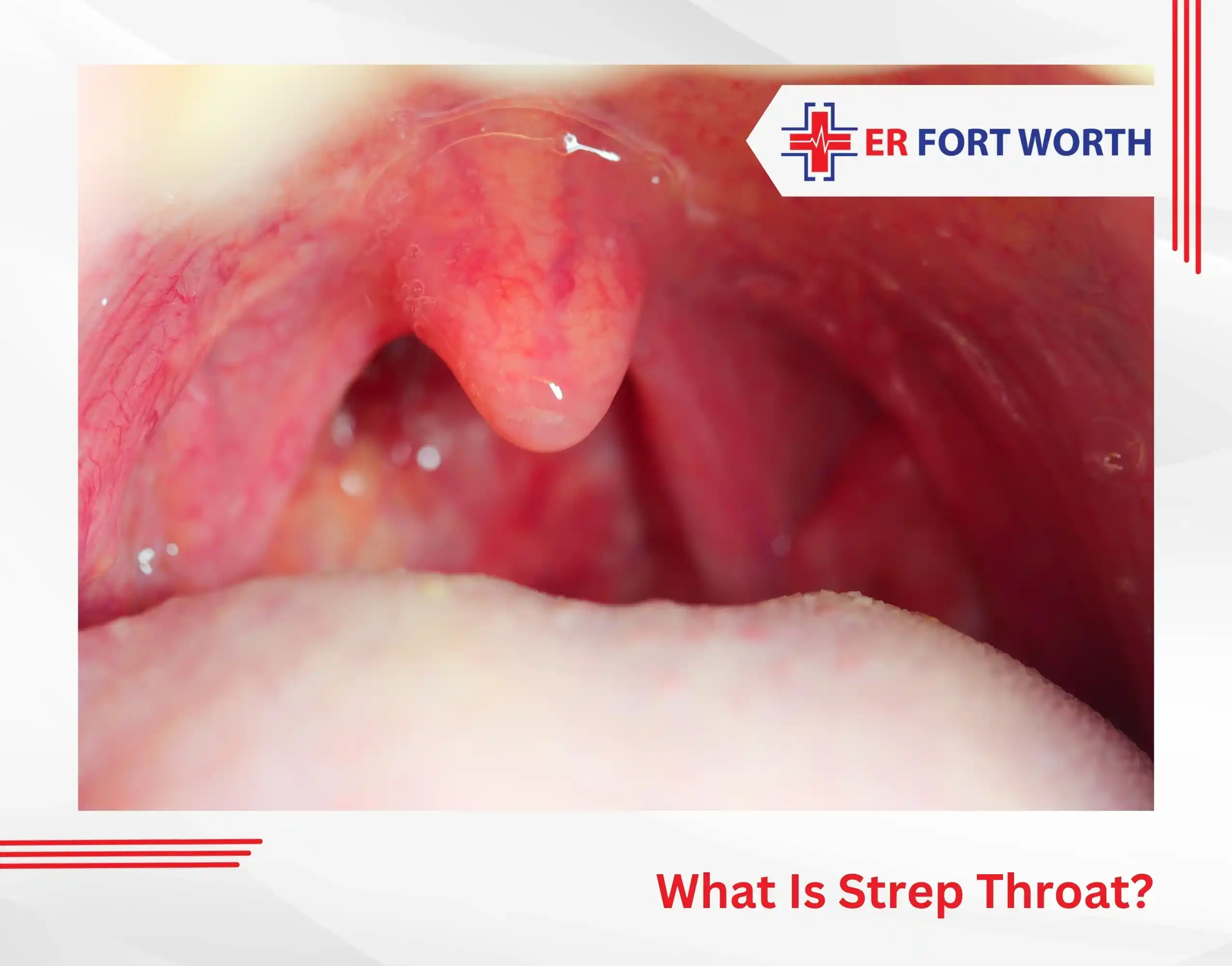
Strep throat is a specific bacterial infection caused by Streptococcus. It attacks the throat and tonsils, making it a specific form of bacterial tonsillitis.
Common Strep Throat Symptoms
Strep throat symptoms usually appear suddenly and are often more severe than viral infections. Common signs include:
- Sudden, severe throat pain.
- High fever.
- Tonsils that are red, swollen, and have white patches.
- Pain when swallowing.
- Swollen lymph nodes.
- Small red dots on the roof of the mouth.
Because strep throat is a bacterial infection, unlike viral tonsillitis, it needs to be treated with antibiotics.
Tonsillitis vs Strep Throat: Key Differences
Although these conditions overlap, the main difference lies in the cause. Here’s a quick comparison of tonsillitis vs strep throat symptoms, causes, and treatment:
| Feature | Tonsillitis | Strep Throat |
| Cause | Viral or bacterial | Always bacterial |
| Onset | Gradual or sudden | Usually sudden |
| Fever | Mild to moderate | Often high |
| Tonsil appearance | Swollen, may have coating | Red with white pus streaks |
| Other symptoms | Cough, cold symptoms possible Nausea | body aches (especially in children) |
| Treatment | Supportive care or antibiotics | Requires antibiotics |
Symptom Comparison in Detail
Although tonsillitis and strep throat share several symptoms, some signs can help differentiate between viral and bacterial infections.
Shared Symptoms
Both conditions often cause:
- Sore throat
- Difficulty swallowing
- Swollen lymph nodes
- Fever
- Headache
- Symptoms More Common in Tonsillitis
- Cough
- Runny nose
- Hoarseness
- Gradual onset
These symptoms usually indicate a viral infection.
Symptoms More Frequently Seen in Strep Throat
- Sudden severe throat pain.
- High fever.
- Nausea or vomiting (especially common in children).
- Red spots in the mouth
These are telltale signs of a bacterial infection.
Causes of Tonsillitis Strep Throat: Why They Occur
Understanding the underlying cause is key when comparing bacterial vs viral sore throat infections.
Tonsillitis Causes
- Viruses (most common).
- Bacteria (including strep).
- Environmental exposure.
Strep Throat Causes
Only caused by group A Streptococcus bacteria.
That’s what makes strep throat more predictable, and more likely to need medication.
How Doctors Diagnose the Difference Between Tonsillitis and Strep Throat
Because symptoms overlap, doctors rely on testing to confirm the diagnosis.
- Diagnosis Methods.
- Physical throat examination.
- Swollen lymph node check.
- Rapid strep test.
- Throat culture.
A positive strep test is consistent with bacterial infection; a negative result suggests viral tonsillitis. Accurate diagnosis ensures the right treatment, especially when distinguishing tonsillitis vs strep throat in adults and children.
Treatment: Tonsillitis vs Strep Throat

Treatment depends on whether the infection is viral or bacterial, which is why proper diagnosis is essential.
Tonsillitis Treatment
Depends on the cause:
- Viral → Rest, fluids, pain relievers.
- Bacterial → Antibiotics.
- Repeated occurrences → Possible tonsillectomy.
Strep Throat Treatment
- Antibiotics (essential).
- Pain relief medications.
- Hydration and rest.
Early treatment prevents complications such as rheumatic fever or kidney problems.
When to Go To Emergency Room for Tonsillitis Strep Throat
Most cases of tonsillitis and strep throat don’t need emergency care, but there are some situations that do.
Go to the nearest 24/7 emergency room if you are experiencing:
- Difficulty breathing or shortness of breath.
- Trouble swallowing saliva or drooling.
- Severe throat swelling or inability to open your mouth.
- High fever (above 103°F / 39.4°C) that won’t go down.
- Signs of dehydration (dry mouth, dizziness, low urine output).
- Severe pain that worsens rapidly.
- Symptoms lasting more than 3–4 days without improvement.
These symptoms may indicate serious complications such as:
- Abscess formation.
- Airway obstruction.
- Severe bacterial infection.
Complications of Untreated Strep Throat
If left untreated, strep throat can lead to serious health complications, including:
- Rheumatic fever (can damage the heart valves).
- Kidney inflammation (post-streptococcal glomerulonephritis).
- Peritonsillar abscess (pus collection near tonsils).
- Spread of infection to sinuses or bloodstream.
Prevention Tips
You can reduce your risk of both tonsillitis and strep throat by following these preventive measures:
- Wash hands frequently.
- Avoid sharing utensils.
- Cover coughs and sneezes.
- Stay away from infected individuals.
- Maintain strong immunity.
FAQs
1) Is tonsillitis the same as strep throat?
No. Tonsillitis is inflammation of the tonsils, while strep throat is a specific bacterial infection that can cause tonsillitis.
2) How can you tell if it’s strep throat or tonsillitis?
The only way to confirm the difference between strep throat vs tonsillitis is through a rapid strep test or throat culture. However, symptoms like sudden throat pain, high fever, and no cough often indicate strep throat.
3) Can tonsillitis go away on its own?
Yes. Viral tonsillitis usually resolves within a few days with rest and fluids.
4) Do you always need antibiotics for strep throat?
Yes. Antibiotics are required to treat strep throat and prevent complications.
5) When should you go to the ER for a sore throat?
Go to the ER if you have difficulty breathing, severe swelling, inability to swallow, or very high fever.