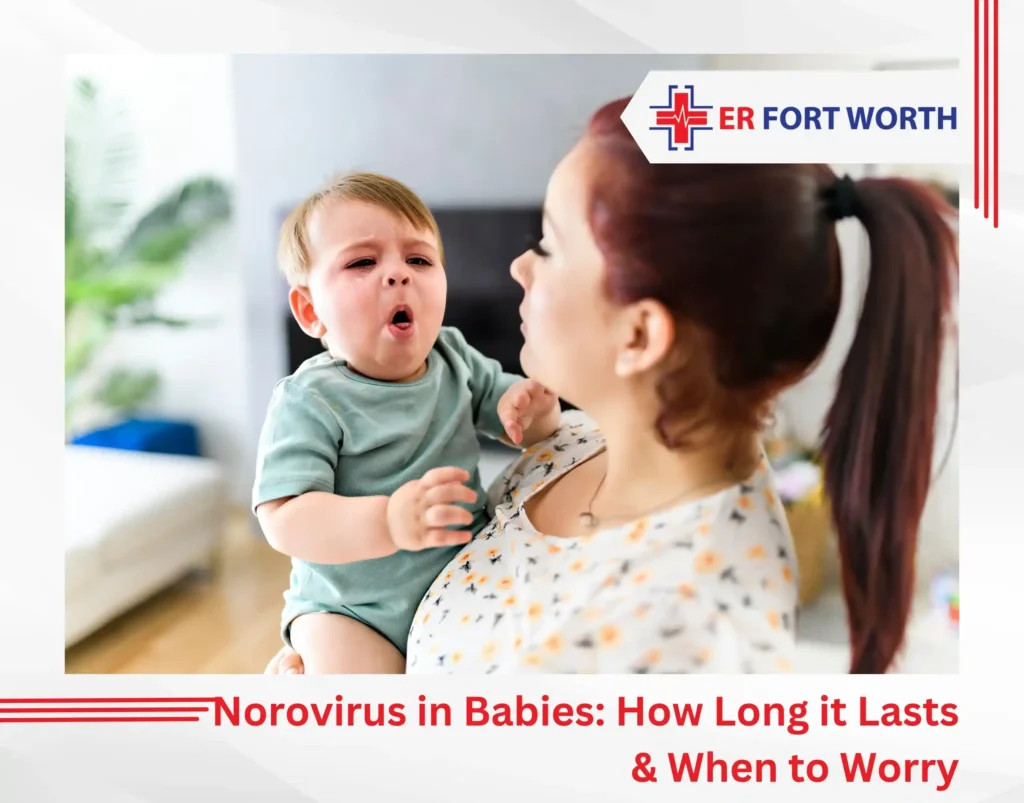
Norovirus in babies causes intense vomiting and diarrhea that can lead to dehydration within hours. Most infants recover in 1 to 3 days, but babies can lose fluids quickly, so even a short illness requires urgent attention.
The vomiting often stops first. The diarrhea lingers. And somewhere between those two phases, parents face a critical question: wait it out or head to the ER? Here’s how to tell the difference.
What Is Norovirus?
Norovirus is a highly contagious baby stomach virus that causes sudden vomiting, diarrhea, and stomach cramps. It spreads through contaminated surfaces, food, and close contact with infected people. Symptoms typically appear 12 to 48 hours after exposure.
The virus survives on hands, toys, and household surfaces for days. A tiny amount can cause infection and make babies sick. Norovirus outbreaks are common in daycares, playgroups, and anywhere children gather in close quarters.
Why Are Babies More Vulnerable to Norovirus?
Babies face higher risks from norovirus for several reasons:
- Developing immune systems: Their bodies respond more slowly to infection, which can extend symptom duration.
- Hand-to-mouth behavior: Babies constantly touch surfaces and put fingers in their mouths, increasing exposure.
- Smaller fluid reserves: A few hours of vomiting or diarrhea can deplete hydration levels that would take an adult much longer to lose.
- Dependence on caregivers: Unlike older children, babies can’t drink more fluids on their own when they feel sick.
Norovirus in babies under 1 can escalate quickly because their immune systems aren’t fully developed. This explains why the same virus that causes mild discomfort in adults can become serious in infants.
Read More: Dehydration Symptoms in Children
How Norovirus Shows Up in Babies: Key Symptoms
Norovirus symptoms usually appear within a day or two after your baby is exposed. Because babies can’t say what’s wrong, watch for changes in their behavior or appearance.
Common signs of norovirus in babies include:
- Sudden vomiting: Vomiting often starts without warning and may happen several times in a short period.
- Watery diarrhea: Stools become loose and frequent, causing babies to lose fluids quickly.
- Irritability: A baby may cry more than usual, seem uncomfortable, or stay restless because of stomach pain.
- Poor feeding: A baby may drink less, push the bottle away, or refuse breastfeeding because they feel sick.
- Low-grade fever: Some babies may have a mild fever along with stomach problems, but others may not have a fever at all.
How Long Does Norovirus Last in Babies?
Norovirus typically lasts 1 to 3 days in babies, though diarrhea may persist up to 5 days in some cases.
Typical Duration of Symptoms
Most infants experience:
- Vomiting: 24–48 hours
- Diarrhea: 1–3 days
- Stomach cramps and irritability: 1–2 days
- Lingering loose stools: up to 4–5 days in some babies
Why Does Diarrhea Last Longer?
Vomiting often stops first, but diarrhea may continue. Even after the virus is gone, your baby’s digestive system needs time to heal. The gut may stay irritated for a few days, so it’s normal if your baby still has loose stools after vomiting stops.
Older Children vs. Infant Norovirus Duration
Norovirus can last a bit longer in babies because:
- They lose fluids faster
- Their immune systems respond more slowly
- They can’t increase their fluid intake without help
- Dehydration slows recovery
Older children usually recover quickly, often within 1 to 2 days, because they can drink on their own and have stronger immune systems.
Is Norovirus Dangerous for Babies?
Most babies recover from norovirus without serious complications. The biggest risk is dehydration, which can develop within hours when fluid loss outpaces intake. Closely monitor norovirus in babies under 1 because they have smaller bodies and lose fluid more quickly.
Why Dehydration Is the Main Risk
Norovirus causes repeated vomiting and diarrhea, which quickly uses up the body’s fluids. Babies can’t replace these fluids by themselves, so complications can quickly develop.
Watch for these warning signs:
- Fewer wet diapers (less than 6 in 24 hours)
- Dry lips or mouth
- No tears when crying
- Unusual sleepiness
- Sunken soft spot on the head
When Vomiting Becomes Serious
Vomiting beyond 24 hours increases dehydration risk significantly. Seek medical help if your baby can’t keep any fluids down or refuses to drink entirely.
How to Care for a Baby With Norovirus at Home
With extra care at home, most babies recover from norovirus without problems. The most important steps are keeping your baby hydrated, helping their stomach heal, and stopping the virus from spreading to others in the family.
Keep Your Baby Hydrated
Since babies lose fluids quickly with vomiting and diarrhea, keeping them hydrated is the most important step in norovirus recovery. Offer small sips often instead of larger amounts at once. This can help calm their stomach and reduce the risk of more vomiting.
Use Oral Rehydration Solutions
Oral rehydration solutions (ORS) replace both fluids and electrolytes. Give small amounts every few minutes, especially after vomiting episodes. If your baby resists a cup or spoon, try a syringe or slow-flow nipple.
Feeding: Continue Breastmilk or Formula
Don’t stop breastfeeding or formula during norovirus. These provide hydration and nutrition simultaneously. Offer smaller, more frequent feeds instead of full portions. For infants under 6 months, avoid water-only hydration.
These feeds are gentle on your baby’s stomach and help them recover.
Pause Solids When Needed
If your baby eats solids, pause them during active vomiting. Once symptoms ease, reintroduce bland foods gradually. These include:
- Mashed banana
- Plain cereal
- Applesauce
- Toast or crackers
How to Prevent Norovirus in Babies
Norovirus spreads easily, but these steps reduce transmission risk:
- Wash hands thoroughly. Soap and water for at least 20 seconds, especially after diaper changes and before feeding. Hand sanitizer alone doesn’t kill norovirus effectively.
- Disinfect surfaces daily. Use a bleach-based cleaner on changing tables, toys, doorknobs, and high-touch areas.
- Isolate contaminated items. Wash soiled clothes and linens separately in hot water.
- Keep sick family members apart. Limit contact between your baby and anyone showing symptoms.
- Avoid shared utensils. Don’t taste your baby’s food or share cups during outbreak periods.
When Is Norovirus in a Baby an Emergency?
Most norovirus cases resolve without medical intervention. However, bring your baby to the ER immediately if you notice:
- Your baby shows signs of dehydration
- Vomiting doesn’t stop
- Your baby refuses fluids
- You see blood in the stool or vomit
- Your baby has a high fever or extreme lethargy
- Your baby is under 3 months old and vomiting
- Diarrhea lasts more than 72 hours
Doctors can quickly treat dehydration, vomiting, and stomach infections in babies. If your baby needs more help, they may receive IV fluids to restore electrolyte balance and supportive care to help them recover safely and comfortably.