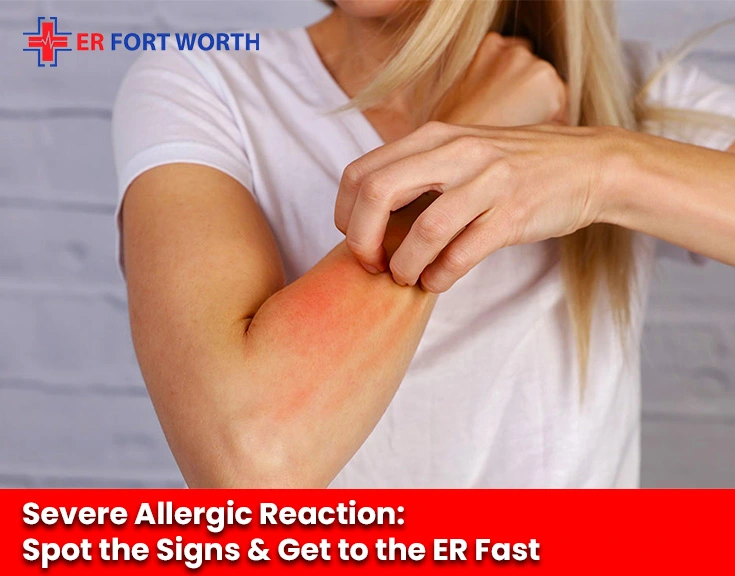
A severe allergic reaction can go from bad to worse just in moments, and understanding whether what you’re experiencing is a severe allergic reaction is often the difference between a quick recovery and a genuine emergency. If you or someone in your household is reacting to something right now in Fort Worth and you’re not sure how serious it is, this guide is for you.
I’ll walk you through what actually happens in your body, how to recognise the warning signs, and when to get in the car and come straight to the ER of Fort Worth, no appointment needed.
What Actually Happens in Your Body During a Severe Allergic Reaction
Your immune system is designed to keep you safe. However, people with allergies can mistakenly treat harmless substances, peanuts, a bee sting, penicillin, latex, as a threat. When one of these allergens enters your body, your immune cells release a flood of chemicals, especially histamine, to fight it off.
With mild reactions, the response usually stays limited to one area, for example, a rash on your arm or some sneezing. In a severe allergic reaction, the immune response spreads throughout the entire body. Blood vessels widen, blood pressure drops, airways can swell shut, and organs start receiving less oxygen. This condition is called anaphylaxis, the most dangerous form of allergic reaction, and it can be fatal within 30 to 60 minutes if not treated.
This is not a slow process. I have seen patients walk into our Fort Worth ER looking flushed and anxious, and within 15 minutes need epinephrine, IV fluids, and oxygen. That’s not meant to scare you. It’s meant to help you understand why timing matters so much.
Symptoms of Severe Allergic Reaction to Food (and Other Triggers)
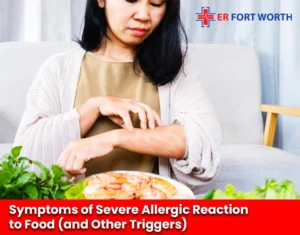
One of the most common things we hear from patients in the ER is: “I didn’t think it was that serious at first.” Allergic reactions have a way of escalating quietly, so it helps to know what you are actually looking for, not just a list of medical terms, but how these symptoms actually feel in real life.
What a Mild-to-Moderate Reaction Feels Like
These symptoms need to be monitored carefully, but don’t automatically require an ER visit:
- Hives or itchy skin, often described as a burning, prickly rash that spreads quickly
- Runny nose, sneezing, or watery eyes
- Mild stomach cramping or nausea after eating
- Slight swelling around the lips or eyes that is not getting worse
- A single round of vomiting after exposure to a known food trigger
What a Severe Allergic Reaction Actually Feels Like
The symptoms of severe allergic reaction to food and other triggers often do not appear as dangerous at first. And that’s the problem. Here is the experiential layer most articles skip:
- Throat tightness, patients describe this as “something squeezing my neck from the inside” or the sensation that their airway is shrinking
- Tongue or lip swelling, it comes on fast, within minutes, and can make it hard to swallow or speak clearly
- Shortness of breath, not just “I feel a little winded” but a real struggle to pull air in
- Dizziness or sudden faintness, the blood pressure is dropping, and your brain is telling you something is very wrong
- Rapid or pounding heartbeat, your body is compensating for falling blood pressure by working the heart harder
- Skin that suddenly turns pale and clammy, even if the person looked flushed only minutes before.
- A sense of “impending doom”, this one sounds dramatic, but it’s real, and patients say it’s unmistakable
- Confusion or inability to focus, a sign the brain is not getting adequate blood flow
Go to the ER Now, Red Flag Symptoms You Cannot Ignore
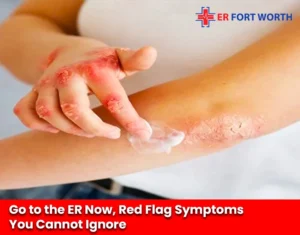
CALL 911 OR GO TO THE ER IMMEDIATELY IF YOU NOTICE:
- Difficulty breathing, wheezing, or stridor (a high-pitched sound when inhaling)
- Throat tightening or swelling that makes it hard to speak or swallow
- Tongue or lips swelling rapidly
- Fainting, near-fainting, or sudden extreme weakness
- Chest pain or a feeling of chest pressure
- Pale, bluish, or grayish skin (especially lips or fingertips)
- Severe dizziness or confusion
- Loss of consciousness
- Rapid drop in blood pressure with sweating and clamminess
- Symptoms progressing quickly after epinephrine, a second dose and ER care are needed
Severe Allergic Reaction Treatment: What We Do at the ER
Many people hesitate to seek care because they are unsure what will happen once they arrive. Let me walk you through it, because understanding the treatment of severe allergic reaction can help take away some of that uncertainty.
The First Steps of Severe Allergic Reaction Treatment
- Emergency injection , The most critical treatment is administered by injection in a hospital setting to quickly reduce airway swelling, raise blood pressure, and stop the body’s widespread allergic response.
- IV access and fluids, An IV line is placed immediately. If blood pressure is low, IV fluids help stabilize circulation and support the body during treatment.
- Medications to control the allergic response , Certain medications may be given intravenously or by injection to help calm the body’s reaction, though they act more slowly than the emergency injection.
- Oxygen therapy, If breathing is affected in any way, supplemental oxygen is started immediately to support oxygen levels.
No one here is going to judge you for coming in over what turns out to be a mild reaction. I’d much rather evaluate you and send you home reassured than have you wait at home while anaphylaxis progresses.
Monitoring at Home vs. Going to the ER, How to Decide
You CAN likely monitor at home if…
- Symptoms are limited to mild skin reactions (small hives, localized redness)
- No throat tightness, breathing difficulty, or dizziness
- Reaction is stable or improving after 20–30 minutes
- You have antihistamines and no severe symptom escalation
- You have had this exact mild reaction before and know your pattern
Go to the ER immediately if…
- Any breathing difficulty, even mild wheezing
- Throat feels tight or voice sounds different than normal
- Symptoms involve two or more body systems (skin + stomach + dizziness)
- You have already used an EpiPen (always requires ER follow-up)
- You are unsure, when in doubt, come in
What We See in Fort Worth, Common Triggers and Timing

At our Fort Worth ER, allergic reactions don’t follow a random calendar, they cluster. Here’s what we actually see:
- Spring (March–May): North Texas cedar and oak pollen season drives a surge of respiratory reactions. Most are manageable, but we also see patients who cross the threshold into severe territory, especially those with asthma as a comorbidity.
- Summer (June–August): Outdoor activities mean more insect stings. Bee and wasp sting anaphylaxis is a genuine warm-weather concern in Tarrant County, particularly for kids playing outside.
- Fall and back-to-school season: Food allergy reactions spike as kids return to school cafeterias and share snacks. This is the time of year we see the most peanut and tree-nut reactions in children.
- Holiday weekends: New foods at family gatherings, unfamiliar restaurant meals, and the disruption to regular medication routines all contribute to more reactions showing up at our ER from Thanksgiving through New Year’s.
- Year-round: Medication allergies, especially to antibiotics like penicillin and NSAIDs like ibuprofen, don’t follow a season. If you are starting a new prescription and develop hives, face swelling, or difficulty breathing, that’s a same-day ER visit.
We also see older adults in Fort Worth who have a new food or medication reaction and assume it’s something minor, because they have never had allergies before. New-onset allergic reactions in adults are not uncommon, and they can be just as severe as reactions in people who have had known allergies for years.
If You’re in Fort Worth and Things Are Getting Worse, Don’t Wait
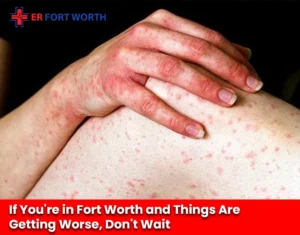
Allergic reactions can not be easily predicted. A reaction that you think can be managed at 8pm can become highly serious by 9pm. If your symptoms are getting serious with each passing moment, if breathing is getting harder, if your throat feels like it’s closing, if you are dizzy and weak, stop reading and come in. Our ER in Fort Worth is open 24 hours a day, 7 days a week, with no appointment needed. We’re here specifically for moments like this.
Frequently Asked Questions
What is considered a severe allergic reaction?
A severe allergic reaction,also called anaphylaxis, happens when the immune system overreacts to a trigger, causing symptoms like airway swelling, low blood pressure, hives, and dizziness that can become dangerous.
What is a Stage 4 allergic reaction?
A Stage 4 allergic reaction is the most serious level of allergy, often reaching anaphylaxis, where breathing and blood flow are seriously affected and urgent medical attention is essential.
What is the first aid for an allergic reaction?
Inject epinephrine immediately, call 911, use antihistamines for mild symptoms, and monitor breathing until emergency help arrives.
How to get rid of severe allergies?
Severe allergies can not always be “cured,” but treatments like allergen avoidance, immunotherapy, and emergency medications can help manage reactions and lower the risk of anaphylaxis.
What is the difference between anaphylaxis and an allergic reaction?
A regular allergic reaction causes mild symptoms like hives or itching, while anaphylaxis is a highly serious emergency with airway swelling and crashing blood pressure requiring immediate epinephrine.