
Fever Treatment in Fort Worth, TX, 24/7 Emergency Care, No Wait
Most fevers clear on their own. The hard part is knowing which ones will. A fever paired with severe headache, difficulty breathing, confusion, or a rash that does not fade under pressure is a different situation, and one that needs same-visit diagnosis instead of waiting for a clinic to open.
ER of Fort Worth provides fever treatment in Fort Worth with on-site labs that return results in minutes, IV-grade treatment when needed, and board-certified emergency medicine physicians who see you within minutes of arrival.
ER of Fort Worth delivers walk-in fever treatment in Fort Worth, every hour of every day. We have board-certified physicians, on-site labs, imaging, and no long wait
What Is a Fever?
A fever is a temporary rise in body temperature of 100.4°F (38°C) or higher in adults and children. It is one of the body’s oldest and most reliable defense mechanisms: when your immune system detects an infection or threat, it raises your core temperature to create a hostile environment for bacteria and viruses. Most fevers in otherwise healthy adults are short-lived and manageable, but that doesn’t mean every fever is harmless.
According to the CDC, fever is among the most common reasons patients visit emergency departments across the United States each year, and for good reason. In many cases, a persistent or rapidly rising fever is the first visible sign of an underlying infection that requires diagnosis and treatment, not just over-the-counter fever reducers and rest.

Common Fever Symptoms You Should Not Ignore
A fever rarely travels alone. These accompanying fever symptoms matter, both for your comfort and for helping our physicians identify what’s driving the temperature:
- Chills and shivering: Your body is actively generating heat to raise its temperature, the shaking you feel is involuntary muscle contractions trying to warm you up faster, and it often signals the fever is still climbing.
- Sweating: When the fever starts to break, your body sweats to release excess heat. Heavy, drenching sweats can also lead to rapid dehydration.
- Headache: Fever increases blood flow and causes mild swelling in tissues; the resulting pressure is a common source of the pounding headache that makes it hard to think clearly.
- Muscle aches and fatigue: Inflammatory chemicals called cytokines flood the body during a fever response and cause the deep, whole-body soreness that makes even lying still uncomfortable.
- Loss of appetite: Your body is redirecting energy toward fighting the underlying cause, so food rarely helps, but staying hydrated is critical.
- Confusion or disorientation: In high fevers above 103°F, neurological symptoms can emerge; any sudden confusion, especially in older adults, is a red flag that warrants immediate evaluation.
- Sensitivity to light: When paired with a stiff neck or severe headache, this combination can signal a serious condition like meningitis and should never be dismissed.
- Skin flushing or a rash: A fever accompanied by a spreading rash may indicate a systemic infection or an allergic reaction requiring emergency assessment.
Common Causes of Fever We Treat
A fever is almost always a symptom of something else. The point of an ER visit is not just to treat the temperature; it is to identify what is driving it. Our physicians evaluate the full range of causes in a single visit:

Bacterial infections
Strep throat, urinary tract infections, kidney infections, pneumonia, cellulitis, sinus infections, and ear infections all produce fever and need targeted antibiotic therapy.

Viral infections
Flu, COVID-19, RSV, mono, and a broad range of viral exanthems present with fever, body aches, and fatigue. On-site rapid testing identifies the cause within minutes.

Heat-related illness
Heat exhaustion and heatstroke are common in North Texas summers and require fast cooling, IV fluids, and electrolyte correction.

Medication reactions
Drug-induced fevers, including from antibiotics, anticonvulsants, and recreational stimulants, are not rare and benefit from same-visit identification.

Severe infections that have spread
Sepsis, meningitis, and bloodstream infections require immediate IV antibiotics and fast escalation. These are the cases where minutes matter most.

Abdominal and pelvic infections
Appendicitis, diverticulitis, and pelvic inflammatory disease can all present with fever as an early sign.

Inflammatory and autoimmune flares
Rheumatoid arthritis, lupus, and other autoimmune conditions can cause fevers that need workup to rule out infection.
When Does a Fever Become a Medical Emergency?
A fever becomes an emergency when the temperature crosses a threshold or pairs with symptoms beyond the fever itself. The thresholds differ by age, and the symptoms that matter are specific.
In adults, a fever at or above 103°F is considered high and warrants prompt medical attention, particularly if it is accompanied by difficulty breathing, a stiff neck, severe headache, a skin rash, persistent vomiting, or confusion. These combinations don’t just indicate a worse fever in adults, they can indicate that an infection has spread, that your body is struggling to manage the immune response, or that a complication is already developing.
For infants under three months of age, the threshold is much lower, and the urgency is much higher. Any temperature at or above 100.4°F in a newborn or very young infant is a medical emergency, full stop. Their immune systems don’t have the reserves older children and adults rely on, and infections can progress from manageable to life-threatening with very little warning. If your baby has a fever, do not call your pediatrician’s voicemail and wait; bring them in.
Older children between three months and three years present their own considerations. A fever above 102°F that persists beyond 48 hours, or any fever in children paired with extreme lethargy, refusal to drink fluids, or a bulging fontanelle, deserves emergency evaluation. Our pediatric emergency care team is specifically equipped to assess and treat children safely, with age-appropriate dosing, diagnostic tools, and a calm environment designed to ease a frightened child.
If you’re experiencing any of these warning signs, don’t wait. Visit ER of Fort Worth now, open 24/7, no appointment needed
Fever in Children, What Parents Need to Know
Children’s fevers follow different rules than fever in adults. The age of the child sets the threshold for when to go to ER for fever, and waiting for the pediatrician to open in the morning is the wrong call in specific situations.
Bring your child in immediately if:
- Any baby under three months has a fever of 100.4°F or higher, regardless of how the child looks
- Temperature exceeds 104°F at any age
- The child is unusually difficult to wake, limp, or unresponsive
- A rash appears alongside the fever
- A febrile seizure occurs
- The child refuses fluids and shows signs of dehydration
- A fever above 102°F lasts more than 48 hours in a child aged three months to three years
Fever in children is one of the most common reasons families come through our doors, and most cases resolve without complications. The cases that do not are the ones to catch early. Our pediatric emergency care team treats children of all ages, from newborns to teenagers, with age-appropriate dosing, equipment, and genuine care for small patients who can not always tell you exactly where it hurts.

Can a Fever Become Life-Threatening?
Yes. An untreated high fever can lead to severe dehydration, febrile seizures in young children, and in serious cases, sepsis, a life-threatening immune response that can develop within hours when an underlying infection reaches the bloodstream. According to the NIH, sepsis affects more than 1.7 million adults in the United States each year and is one of the most dangerous complications of untreated infection.
The patients most vulnerable to rapid escalation are also the ones least able to communicate clearly: newborns and infants, adults over 65, patients undergoing cancer treatment, immunocompromised individuals, and anyone with underlying cardiovascular or pulmonary conditions. For these groups, a fever that might be a mild inconvenience in a healthy 30-year-old can become a genuine emergency within hours.
Fast emergency evaluation is what prevents these outcomes. At ER of Fort Worth, we identify the cause of your fever quickly using on-site laboratory testing, begin targeted treatment immediately, and get IV fluids or IV antibiotics on board the same visit when needed. You do not have to wonder whether your fever is serious enough. That is exactly what we’re here to determine.
What to Expect During Your Visit to ER of Fort Worth
One of the biggest reasons people delay emergency care, even when they know something is wrong, is not knowing what will happen when they walk through the door. So let us walk you through it.
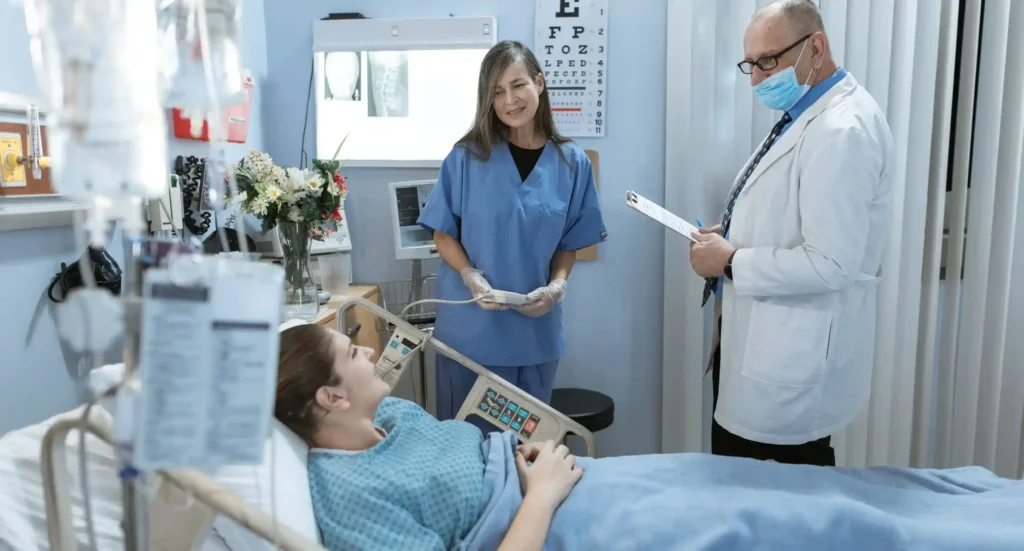
Step 1: Arrival and Check-In
If you check in online before you arrive, our team will already have your basic information and be prepared for you when you walk in. You will not navigate a crowded waiting room or fill out a clipboard’s worth of paperwork while running a 103°F fever. You will be greeted, triaged promptly, and moved into a private exam room quickly. Our freestanding ER model means we don’t have the overcrowding that hospital emergency departments deal with, the care is just as comprehensive, and the experience is meaningfully different.

Step 2: Evaluation and Diagnosis
A board-certified emergency medicine physician will evaluate you personally. They will take your history, perform a focused physical exam, and order whatever diagnostic tests are needed. In most fever cases, that means a blood panel to check for infection markers, a urinalysis, and potentially a rapid flu or COVID test. Because our laboratory is on-site, those results come back in minutes. If imaging is needed, a chest X-ray for suspected pneumonia, for example, is available immediately in the same facility.

Step 3: Treatment and Discharge
Once we know what’s driving your fever, treatment begins right away. That might mean IV fluids to correct dehydration, IV antibiotics for a confirmed bacterial infection, targeted medications to bring your temperature down safely, or a combination of these. Our goal is to get you feeling significantly better before you leave, and to send you home with a clear, specific plan for follow-up care. Most fever patients are evaluated, treated, and discharged the same visit, with no hospital admission required.
How ER of Fort Worth Diagnoses Fevers
The point of an ER visit for a fever is finding the source fast. A board-certified emergency physician evaluates you within minutes of arrival and orders targeted testing based on symptoms, age, and exposure history
Our on-site diagnostic capability includes:
- Complete blood count and metabolic panel to identify infection markers, electrolyte imbalances, and signs of systemic involvement
- Rapid testing for flu, COVID-19, strep, mono, and RSV with results during the visit
- Urinalysis and urine culture to identify UTIs and kidney infections
- Blood cultures when sepsis or a bloodstream infection is suspected
- Chest X-ray to evaluate pneumonia and respiratory infections
- CT scan when appendicitis, kidney stones, or another abdominal source is suspected
- Lumbar puncture when meningitis is a concern, with stabilization and transfer for inpatient management
Every test is processed in our on-site laboratory and read during your visit. Treatment begins as soon as the cause is clear.

Fever Treatment Options Available at ER of Fort Worth
Our approach to fever treatment is not one-size-fits-all, it is built around what’s actually causing your temperature to climb. Depending on what diagnosis reveals, your visit may include:
- IV fluid therapy: For patients who are dehydrated from prolonged fever and sweating, IV fluids restore hydration faster and more effectively than drinking alone.
- IV antibiotic therapy: When a bacterial infection is confirmed or strongly suspected, IV antibiotics deliver the medication directly into the bloodstream for faster, more reliable results than oral medication.
- Antiviral therapy: For flu, COVID-19, or other viral infections, antiviral therapy is administered within the effective window.
- Antipyretic medications: Fever reducers administered in medically appropriate doses, monitored by our team throughout your visit.
- Observation: Continuous monitoring for severe cases or any patient at risk of sepsis
ER of Fort Worth vs. Urgent Care for a Fever
A board-certified emergency physician is on-site every hour of every day, including holidays and overnights. Emergency medicine training matters most when a fever is paired with red flags, because the physician needs to recognize sepsis at first contact and act on it before it progresses.
Urgent care handles mild, uncomplicated fevers in otherwise healthy adults and older children. The line where urgent care stops being the right choice is specific.
Urgent care typically cannot run blood cultures, administer IV antibiotics or IV fluids, perform CT imaging, or manage the complications that develop when a fever is paired with breathing difficulty, severe dehydration, or a possible sepsis presentation. Most urgent care centers also close by evening, leaving the late-night decision to an emergency room for fever either way.
A freestanding emergency room like ER of Fort Worth sits in a completely different category. We carry the same diagnostic and treatment capability as a hospital ER without the wait and crowding. High fever, fever with red-flag symptoms, fever in children, infants or elderly patients, or a fever that has not improved with home care are all reasons to choose an emergency room for fever care rather than an urgent care clinic.
If you want the full breakdown, you can review how a freestanding ER compares to urgent care on our website, but if you’re asking the question because you’re scared, trust that instinct and come in.

Our team can help you figure out the right level of care in seconds. Or read more about the difference between a freestanding ER and urgent care
Why Patients Choose Us for Fever Treatment in Fort Worth
Our diagnostic capability is what changes the experience. Lab results return during your visit. Blood work, cultures, and imaging are processed and read on-site by the same physician who is treating you. That speed is not a marketing claim, it is the difference between a two-hour visit and a six-hour one, and it is the difference between getting treatment started today versus tomorrow.
The environment itself is different from what most people picture when they hear “emergency room.” There is no overwhelming crowd of patients, no chaotic waiting area, no sense of being lost in a system. It is a clean, calm, focused facility built around moving patients through efficiently and making them feel cared for, not processed.
ER of Fort Worth accepts most major insurance plans and processes all emergency visits at in-network benefit levels under the federal No Surprise Act. Our team can answer coverage questions before or during your visit. You won’t arrive without knowing whether your plan is accepted. And if you have questions before you leave home, calling (817) 945-4200 connects you to our staff directly. Learn more about our facility and the standard of care we hold ourselves to at our about page.
For patients across the greater DFW metroplex, the combination of always-open access, physician-level care, minutes-not-hours diagnostics, and a genuinely welcoming environment is what keeps them choosing ER of Fort Worth, not once, but every time they need emergency care.

What Our Patients Are Saying
Here is what patients across Fort Worth are saying about their experience at ER of Fort Worth.
David M., Fort Worth, TX
"My daughter spiked a fever of 104°F on a Saturday night and I panicked, every urgent care nearby was already closed. We came straight to ER of Fort Worth and were seen within minutes. The doctor was calm, thorough, and explained everything clearly. We left with answers and a treatment plan, not just a 'wait and see.' I can't thank this team enough."
Jennifer , Keller, TX
"I came in feeling terrible, high fever, chills, completely wiped out. The check-in was so easy, and the staff made me feel like I actually mattered. Blood work came back fast, the doctor walked me through exactly what was going on, and I had IV fluids started before I even had time to worry. This is nothing like a hospital ER. It is calm, clean, and they actually move quickly."
Fever Treatment Near You in Fort Worth: Areas We Serve
ER of Fort Worth is proud to serve patients across Fort Worth and the greater Dallas-Fort Worth area, with convenient locations near you.
Whether you are searching for fever treatment near me in Fort Worth, Keller, Euless, or anywhere across the DFW metroplex, our board-certified emergency physicians are ready to help, 24 hours a day, every day.
Find the ER of Fort Worth nearest to you:
- Fort Worth TX
- Highland Village TX
- Haltom City TX
- Saginaw TX
- North Richland Hills TX
- Keller TX
- Euless TX
- Bedford TX
- Hurst TX
- Colleyville TX
- Southlake TX
- Grapevine TX
- Flower Mound TX
- Richland Hills TX
- Watauga TX
- Coppell TX
We accept most major insurance plans. Questions about coverage? Visit our insurance information page before your visit

Come In Now, We're Open 24/7, Every Day of the Year
A fever that is climbing, lasting longer than expected, or paired with red flags should not wait until morning. ER of Fort Worth is open right now, with no appointment required, no long wait, and fever treatment that begins within minutes of arrival.
Phone: (817) 945-4200 | Open 24 hours a day, 7 days a week, every day of the year
Frequently Asked Questions About Fever
What is considered a fever?
A fever is a body temperature at or above 100.4°F (38°C). The commonly cited “normal” of 98.6°F is an average, and healthy people can run slightly higher or lower throughout the day.
What temperature is a fever in adults?
In adults, a temperature at or above 100.4°F is a fever. A temperature above 103°F is a high fever and warrants medical evaluation. At 104°F or above, the risk of serious complications climbs and emergency care should not wait.
When should I go to the ER for a fever?
Go to the ER if your temperature reaches 103°F or higher as an adult, if any fever is present in an infant under three months, if the fever comes with a stiff neck, severe headache, difficulty breathing, a rash, confusion, or a seizure, or if it has not improved after 48 to 72 hours of home care. These are the situations where emergency-level diagnostics and treatment make the difference.
How do you break a fever at home?
Mild fever usually respond to over-the-counter fever reducers, adequate fluid intake, and rest. Fever reducers treat the symptom, not the cause. If the fever lasts more than 48 to 72 hours, continues to climb, or comes with red flags, professional evaluation is needed rather than continued home management.
Can a fever be dangerous?
Yes. Prolonged or high fever can cause severe dehydration, febrile seizures in young children, and in serious cases, signal an infection progressing toward sepsis. Infants, older adults, and immunocompromised patients are at higher risk of rapid escalation. Fast evaluation is the safest course of action.