Whooping cough, or pertussis, can irritate your airways and make breathing harder at night. Lying down lets mucus build up in the airways instead of draining, so coughing fits feel longer, louder, and harder to control. These episodes can sometimes cause vomiting, gasping for air, or even pauses in breathing.
If you are looking to stop whooping cough at night, understanding what changes after dark and which steps actually reduce coughing makes a measurable difference.
This guide focuses on practical tips to ease nighttime coughing, pertussis treatment realities, and the signs that call for urgent care.
Whooping Cough Stages and How Long Symptoms Last
Whooping cough develops gradually and tends to worsen before it improves. Most people move through three stages, with nighttime coughing peaking in the middle phase.
Early stage (Catarrhal)
- Duration: 1–2 weeks
- Cold-like symptoms such as a runny nose, sneezing, and mild fever
- Occasional cough that may seem harmless
- Highly contagious, but nighttime coughing is usually limited
Coughing stage (Paroxysmal)
- Duration: 2–8 weeks
- Severe, repetitive coughing fits that are worse at night
- Gasping or a “whooping” sound after coughing
- Vomiting or exhaustion following prolonged episodes
- Significant sleep disruption for both patients and caregivers
Recovery stage (Convalescent)
- Duration: weeks to months
- Gradual reduction in coughing frequency
- Airways remain sensitive and easily irritated
- Nighttime coughing may return with colds, laughter, or exertion
| Stage | Duration | What Happens |
| Catarrhal | 1-2 weeks | Cold-like symptoms, mild cough, runny nose, low fever |
| Paroxysmal | 2-8 weeks | Severe coughing fits, “whooping” sound, nighttime symptoms peak |
| Convalescent | Weeks to months | Gradual improvement, cough can return with other infections |
Whooping cough is often called the “100-day cough.” Nighttime symptoms typically peak during weeks two through eight before slowly easing, even with appropriate treatment.
7 Ways to Stop Whooping Cough at Night
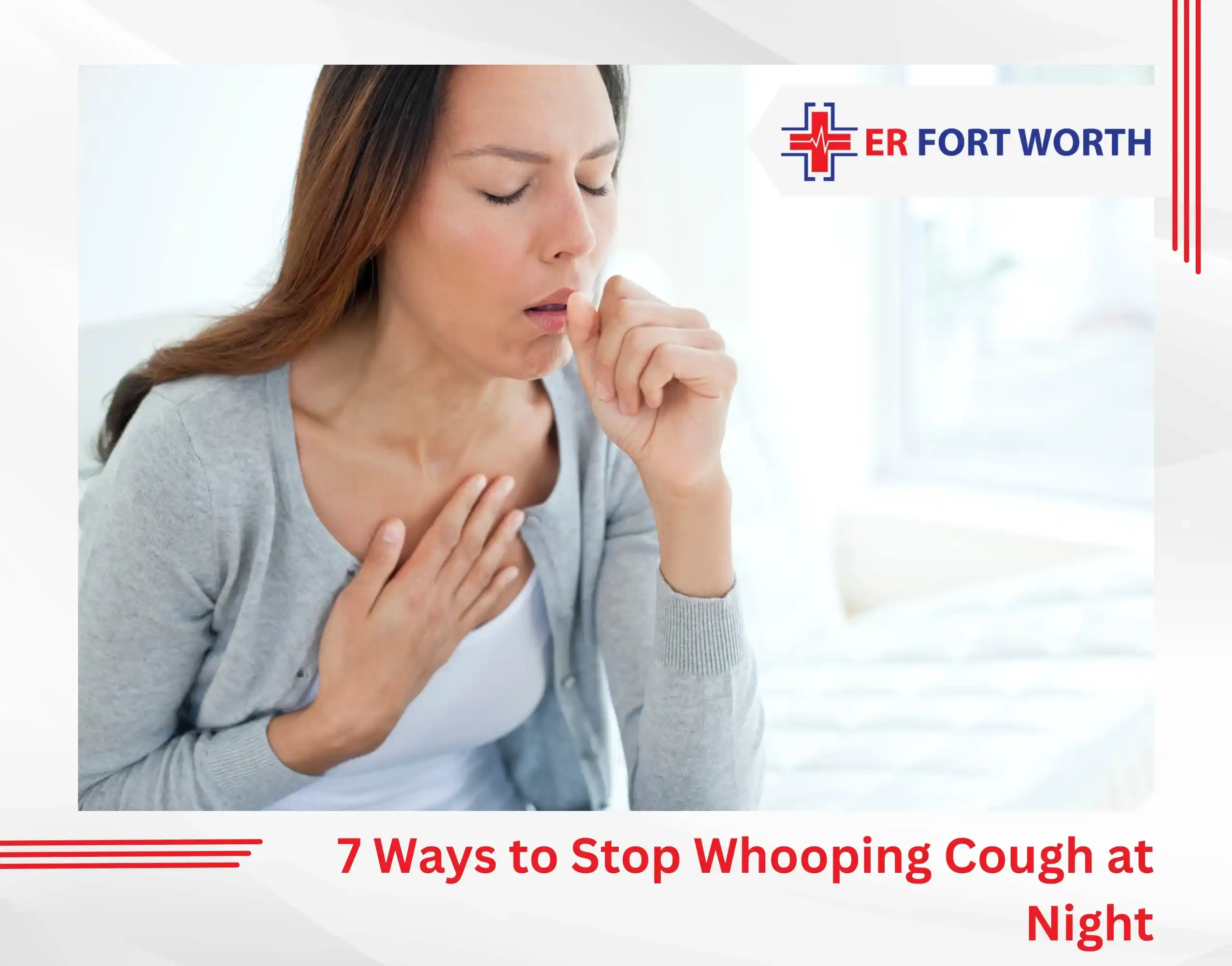
Nighttime coughing relief begins with reducing airway irritation and limiting triggers once the body is at rest. Whooping cough doesn’t stop right away, but these steps can shorten coughing fits and make breathing easier for both children and adults.
1. Elevate the Head and Chest
Sleeping with your head and chest slightly raised helps mucus drain rather than collect in the airways. Using a wedge pillow or an extra pillow can reduce the length and intensity of coughing spells at night. This position also eases pressure on the chest and back that sometimes develops after repeated coughing, especially in patients who experience cough and back pain.
2. Use a Cool-Mist Humidifier
Moist air helps soothe irritated airways and loosen thick mucus that can trigger coughing. A cool-mist humidifier placed near the bed provides steady relief through the night, as long as it is cleaned regularly to prevent mold or bacteria buildup.
3. Keep the Room Air Clean
Stay away from smoke, strong smells, and dust. Even mild irritants can provoke coughing fits when the airway is already inflamed.
4. Drink Warm Fluids Before Bed
Warm water, broth, or caffeine-free herbal tea can thin mucus and provide nighttime coughing relief. Small, frequent sips are usually more effective than drinking large amounts at once. Warm fluids can also help with stomach discomfort due to frequent coughing.
5. Try Honey for Natural Relief
Honey can coat and soothe the throat before sleep and may help reduce nighttime coughing. One teaspoon before bed is enough for children over one year and adults. Honey should never be given to infants under one year due to the risk of botulism.
6. Keep Bedtime Calm
Crying, stress, and overstimulation can intensify coughing fits. A quiet, dimly lit routine before bed helps reduce sudden coughing episodes and makes it easier for the body to settle.
7. Avoid OTC Cough Medicines Unless Prescribed
Most OTC cough suppressants aren’t safe for infants and may not help with whooping cough. The cough itself is the body’s way of clearing irritated airways. Always follow your doctor’s advice.
Pertussis Treatment: What Helps and What Doesn’t
Medical treatment plays an important role in managing whooping cough, but it helps to understand what treatment can realistically do and what it cannot. Many people expect medication to stop the cough quickly, which is rarely how recovery works.
How Antibiotics Help with Whooping Cough
Antibiotics are used to treat the bacterial infection causing whooping cough. When started early, usually within the first one to two weeks, they can reduce how contagious the illness is and help protect others in the household. Antibiotics are still prescribed later in the illness to limit spread, even if symptoms are already severe.
Why the Cough Continues After Treatment
Antibiotics clear the bacteria, but they do not immediately calm the cough. By the time most patients seek care, the airways are already inflamed and sensitive. That irritation takes time to heal, which is why coughing can persist for weeks after treatment begins, particularly at night when the airway is more reactive.
Starting Treatment Later in the Illness
After the first few weeks, antibiotics are less likely to shorten the duration of symptoms. At this stage, treatment focuses on preventing complications, reducing transmission, and supporting breathing and hydration. Nighttime care becomes especially important, as coughing fits may still be intense even though the infection itself is resolving.
When Nighttime Coughing Becomes an Emergency
Whooping cough becomes an emergency when breathing becomes difficult. Go to the ER right away if you notice any of the following warning signs:
- Struggling to breathe or gasping for air during or after coughing fits
- Bluish lips or fingertips, which signal low oxygen levels
- Vomiting after coughing fits
- Pauses in breathing, particularly in infants and young children
- Extreme exhaustion or inability to sleep at all due to nonstop coughing
If these symptoms appear at night, don’t wait for them to resolve on their own. Head to the nearest ER right away.
Whooping Cough in Infants and Young Children
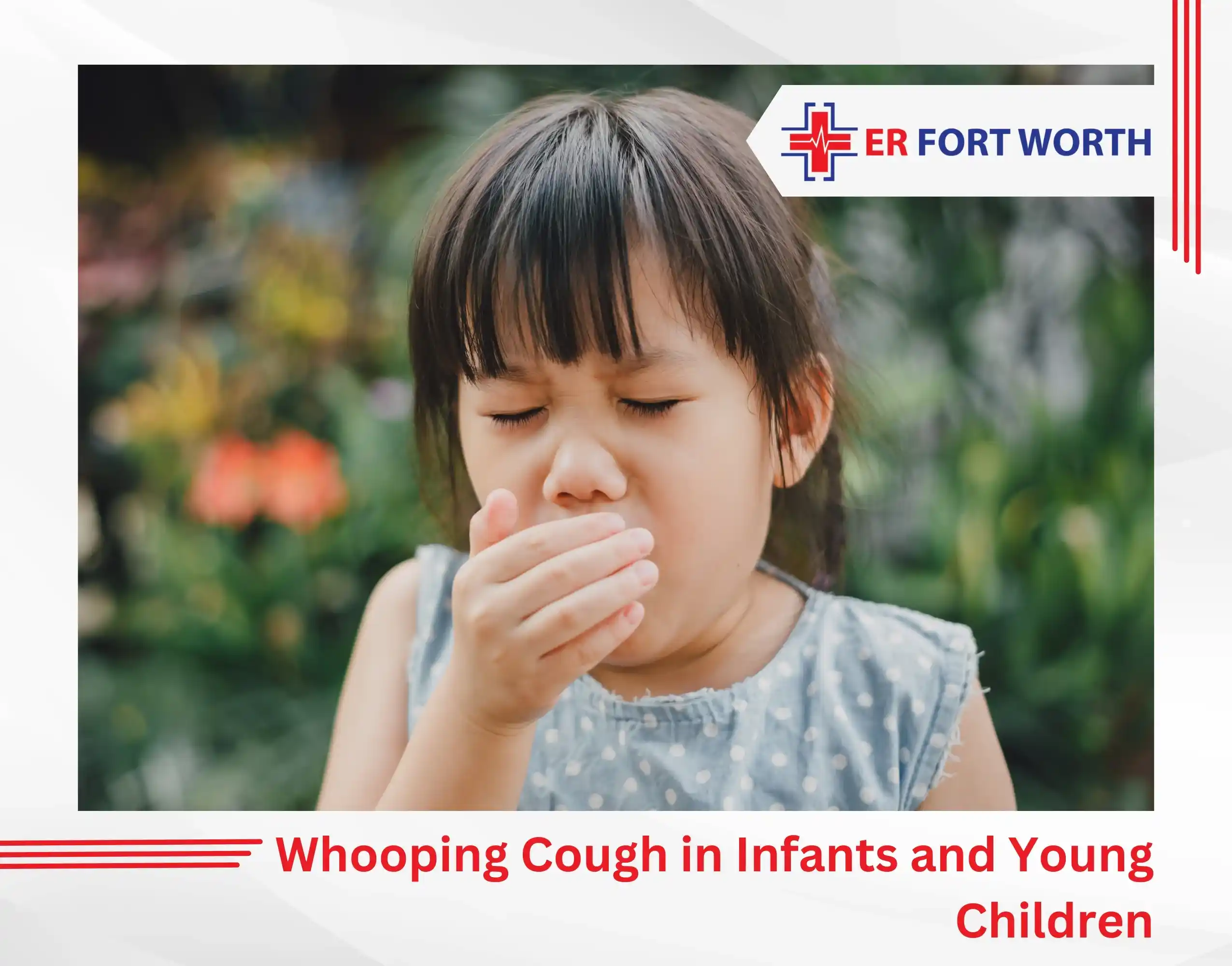
Whooping cough is more dangerous in infants and young children, and nighttime symptoms are often harder to recognize. Many babies do not produce a strong cough or the classic “whoop,” which can delay care.
In infants, symptoms may show up as:
- Quiet or labored breathing instead of loud coughing
- Pauses in breathing (apnea), especially during sleep
- Pale or bluish skin around the lips or face
- Difficulty feeding or repeated vomiting after coughing
Because infants have smaller airways and limited breathing reserve, their condition can worsen quickly overnight. Prolonged coughing can lead to exhaustion, dehydration, and low oxygen levels.
Even mild symptoms in newborns can require an ER visit. About one in three infants with whooping cough needs hospital care for monitoring or breathing support. If breathing looks abnormal, pauses occur, or color changes appear at night, seek emergency care immediately.
Preventing Whooping Cough
Whooping cough is preventable, and a few targeted steps can significantly reduce the risk of infection and severe illness.
- Stay up to date on vaccinations. Children should complete the DTaP vaccine series, while adolescents and adults need Tdap boosters to maintain protection over time.
- Limit exposure during the contagious period. Keep infected individuals away from others, especially infants, until they are no longer contagious.
- Protect newborns early. Receiving the Tdap vaccine during pregnancy helps pass protective antibodies to the baby before birth.
These measures are especially important in households with infants or young children, where complications from whooping cough are more likely.
Don’t Ignore Whooping Cough at Night
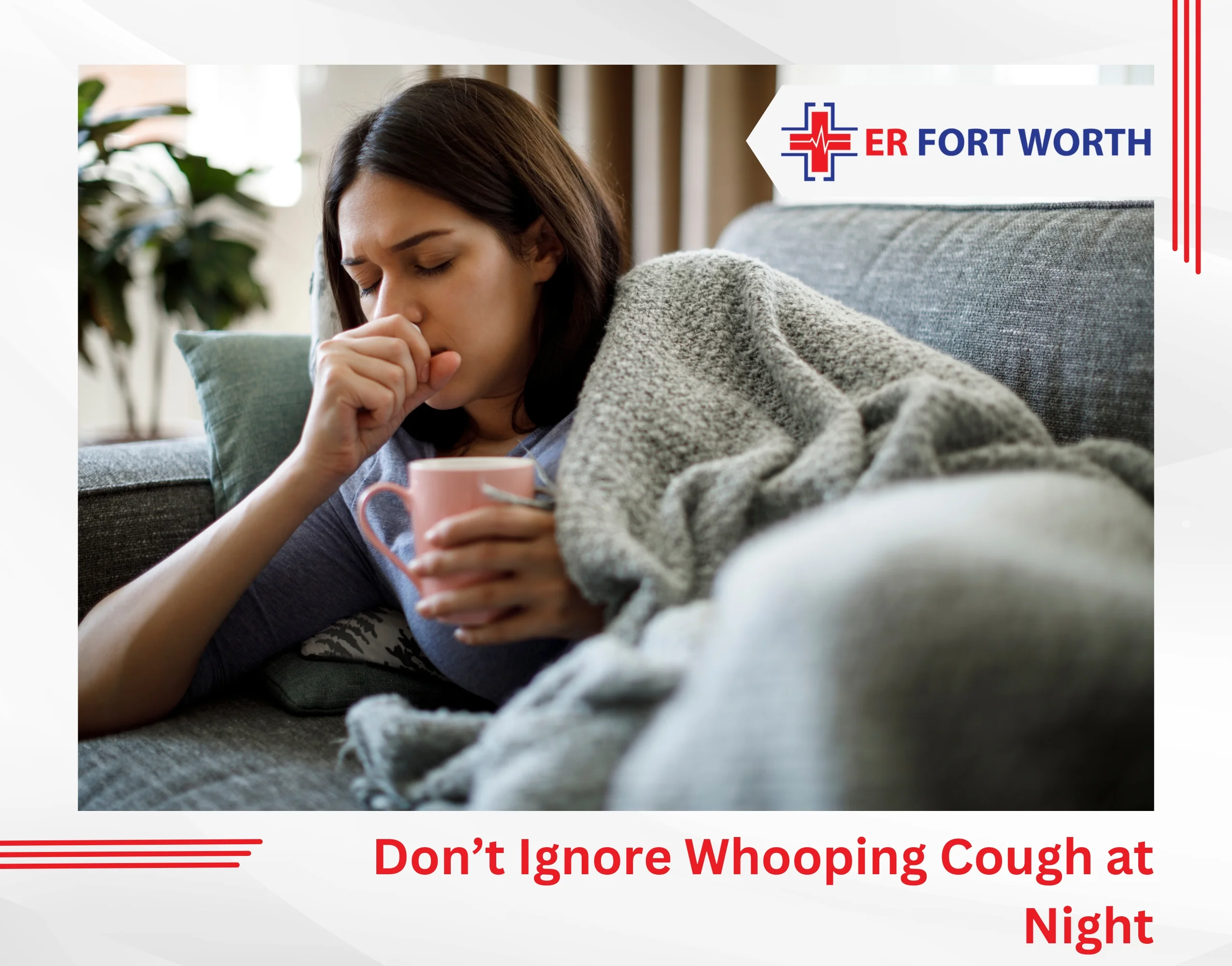
Most cases of whooping cough improve with home care, but nighttime symptoms should not be ignored when breathing becomes the concern. If coughing worsens, breathing sounds strained, or symptoms escalate suddenly, prompt evaluation matters.
At ER of Fort Worth, patients are seen 24/7 by emergency physicians with on-site diagnostics, breathing treatments, and IV support available when needed. If nighttime coughing feels unsafe or unmanageable, a timely assessment can provide clarity and immediate care.