

Streptococcal pharyngitis symptoms most of the time start suddenly, and in Fort Worth ERs, we see patients every week who are confused if their
is “just a cold” or something more serious. Knowing how these symptoms typically feel,and when they start getting worse, can help you decide whether to monitor at home, visit urgent care, or come to the emergency room.
As ER clinicians in North Texas,we see firsthand how confusing throat infections can be, especially during winter illness spikes and back-to-school seasons in Tarrant County.
Streptococcal pharyngitis symptoms explained clearly
Streptococcal pharyngitis is a bacterial throat infection caused by Group A Streptococcus. It’s commonly referred to as strep throat, but symptoms can overlap with viral illnesses, which is why testing is often necessary.
Common symptoms we see in Fort Worth ER patients
- Sudden, severe sore throat
- Pain when swallowing, even saliva
- Fever (often over 101°F)
- Swollen, tender lymph nodes in the neck
- Red, inflamed throat, sometimes with white patches
- Fatigue and body aches
These are classic symptoms of streptococcal pharyngitis, but not everyone experiences them the same way, particularly children and older adults.
What streptococcal pharyngitis symptoms feel like day by day (ER perspective)

Patients often ask if strep “feels different” from a cold. From years in the ER, this is how many describe it:
Day 1–2:
A sore throat that is rapidly getting worse. Many patients say it feels “raw” or “on fire,” not scratchy.
Day 3–4:
Swallowing becomes painful. Fever and chills may appear. Kids may stop eating or drinking.
Day 5+:
If untreated, symptoms may intensify, with worsening weakness or dehydration, this is when Fort Worth ER visits increase.
This lived pattern is a key difference between Strep throat and most viral sore throats, which usually improve gradually.
Can you tell the difference without a test?

Short answer: not reliably.
Even experienced ER clinicians cannot confirm streptococcal pharyngitis based on symptoms alone. Viral infections, flu, COVID-19, and mononucleosis can look similar.
That’s why testing matters, especially if symptoms are severe, persistent, or worsening.
When to go to the ER immediately
Come to the ER now if you or your child experiences:
- Trouble breathing or swallowing
- Drooling or inability to manage saliva
- Chest pain or confusion
- Persistent high fever that won’t come down
- Signs of dehydration (dark urine, dizziness, dry mouth)
- Bluish lips or extreme weakness
These are red-flag symptoms of streptococcal pharyngitis we take seriously in Fort Worth ERs.
When symptoms may be monitored at home
You may be able to monitor symptoms if:
- Throat pain is mild and improving
- No fever or only low-grade fever
- Normal breathing and hydration
- Symptoms began very recently
If symptoms worsen or don’t improve, reassessment is important.
Streptococcal pharyngitis symptoms in kids and older adults
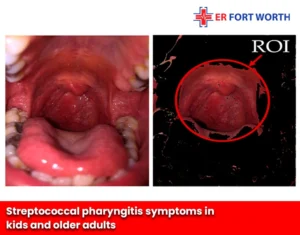
Children may show signs like stomach pain, vomiting, or refusing to eat instead of complaining about a sore throat.
Older adults may have fewer throat symptoms but more weakness or confusion.
In both groups, delayed care increases complication risk, which is why we often advise earlier evaluation.
When Fort Worth patients should consider ER care

If streptococcal pharyngitis symptoms are getting worse, severe, or accompanied by red-flag warning signs, emergency evaluation can help clarify what’s happening and prevent complications.
According to the CDC, strep throat commonly causes sudden fever, painful swallowing, red or swollen tonsils, and swollen lymph nodes. Medical sources such as Wikipedia also note fever, sore throat, enlarged lymph nodes, and tonsillar exudate as hallmark features of this bacterial throat infection.
If you’re in Fort Worth, Tarrant County, or North Texas and symptoms are getting worse, ER of Fort Worth is open 24/7 to evaluate serious throat infections and related concerns, no appointment needed.