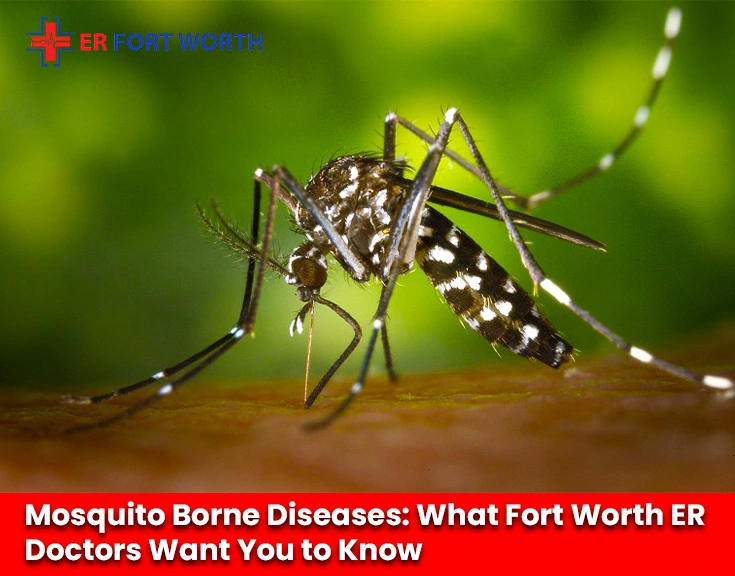
Mosquito borne diseases are something we regularly see in Fort Worth ERs, especially during North Texas heat waves and late summer months. In the emergency room, these illnesses often start with vague early symptoms that can worsen quickly, making it hard for patients to decide whether home care is enough or the ER is the safer choice.
From firsthand ER experience, most of the time patients arrive saying, “I thought it was just a virus” or “I didn’t realize a mosquito bite could cause this.” Understanding what these infections feel like, how symptoms evolve, and when to seek emergency care can make a critical difference.
What Are Mosquito Borne Diseases?
Mosquito borne diseases are infections transmitted through mosquito bites when a mosquito carries a virus or parasite from another host. In the U.S. these illnesses are most common during warm months when mosquito activity is highest, particularly in Texas.
From a clinical standpoint, these infections can be difficult to identify early on because early symptoms often overlap with flu, COVID, or other viral illnesses. Testing may be required to clarify the cause, especially when symptoms escalate or persist.
What is the most Common Mosquito Borne Disease in the US?
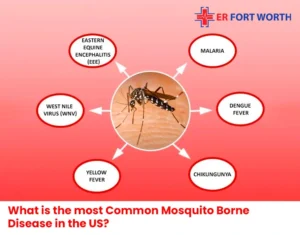
When patients ask ER clinicians what we see most often, the most common mosquito borne disease in the US is West Nile virus. Texas consistently reports cases every year, including in Tarrant County.
Other mosquito-related illnesses we see less often, but still relevant, include dengue, Zika, and chikungunya, especially in travelers or during regional outbreaks. While many cases are mild, our ER teams remain alert for complications involving the nervous system, dehydration, or breathing.
Symptoms of Mosquito Borne Diseases: What They Feel Like Day by Day
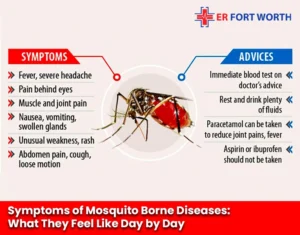
Early Symptoms of Mosquito Borne Diseases (Days 1–3)
The early symptoms of mosquito borne diseases are often subtle and easy to dismiss:
- Low-grade fever or chills
- Headache behind the eyes
- Body aches or joint pain
- Fatigue that feels heavier than a typical cold
- Mild nausea
Patients often describe feeling “off” rather than clearly sick.
Worsening Symptoms of Mosquito Borne Diseases (Days 4–7)
As the illness progresses, symptoms of mosquito borne diseases may intensify:
- Persistent high fever
- Severe headache or neck stiffness
- Confusion or difficulty concentrating
- Vomiting or inability to keep fluids down
- Rash or worsening joint pain
This is the stage where many patients present to a Fort Worth ER because symptoms stop improving, or suddenly worsen.
Can You Tell Which Mosquito Borne Disease You Have Without Testing?
This is one of the most common ER questions we hear. Clinically, mosquito borne disease symptoms overlap heavily. Without testing, it is often not possible to distinguish between them, especially early on.
This uncertainty is why coming to ER matters a lot, particularly when symptoms escalate, neurological signs appear, or dehydration becomes a concern. Early identification also matters because some antiviral treatments are most effective when started within approximately 48 hours, when appropriate.
When to Go to the ER Immediately
Seek emergency care right away if you or a loved one experiences:
- Trouble breathing or chest pain
- Confusion, disorientation, or fainting
- Severe weakness or inability to stand
- Persistent vomiting or signs of dehydration
- High fever that will not come down
- Bluish lips or skin
- Seizures or severe headache with neck stiffness
In the ER, we prioritize ruling out serious complications and stabilizing symptoms safely.
When Symptoms May Be Monitored at Home
You may be able to monitor symptoms at home if:
- Mild Fever or improving
- You can drink fluids and urinate normally
- No confusion, breathing issues, or chest pain are present
- Symptoms are not worsening after several days
However, if symptoms change, escalate, or feel different from a routine viral illness, ER evaluation is appropriate.
Special Considerations for Kids and Older Adults

Children and older adults in North Texas can sometimes get sicker more quickly. In the ER, we often see dehydration, high fevers, and confusion develop faster in these groups. If you’re unsure, it’s always safer to get them checked sooner rather than later.
Fort Worth ER Care, When You Need It Most

If you are in Fort Worth, Tarrant County, or anywhere in North Texas and symptoms are escalating or no longer manageable at home, ER of Fort Worth is open 24/7. Our emergency team is equipped to evaluate mosquito-related illnesses safely and promptly, with no appointment required.
If something feels wrong, trust that instinct and come in now.
In North Texas, including Fort Worth and Tarrant County, mosquito borne diseases are most common during late summer and heat waves, according to CDC and WHO guidance. Early symptom recognition and prompt evaluation at an ER can help prevent complications and keep families safe.
Frequently Asked Questions
How long do mosquito borne diseases last?
Symptoms may last days to weeks, depending on the infection and individual response.
Are mosquito borne diseases contagious?
They are not spread person-to-person through casual contact.
Do all mosquito bites cause illness?
No. Most mosquito bites do not transmit disease.
Is testing always required?
Not always, but testing may be needed if symptoms are severe, persistent, or concerning.
Can symptoms come and go?
Yes. Many patients report waves of fatigue or fever before improvement.