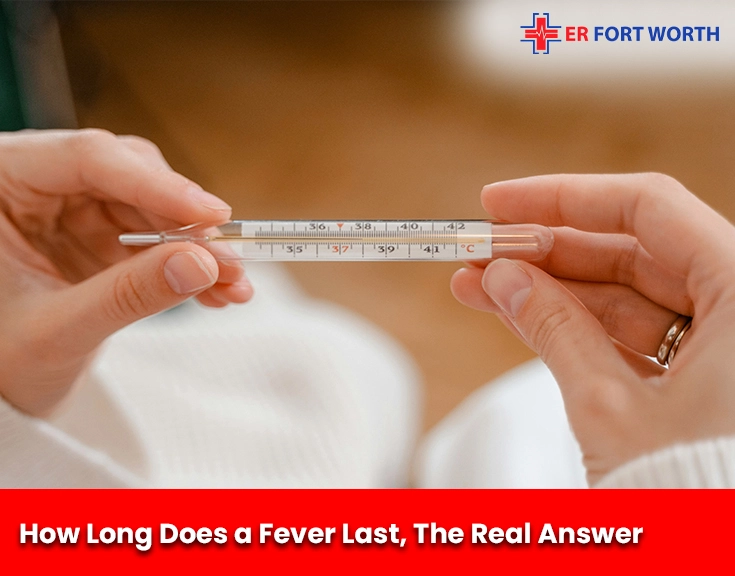
How long does a fever last is probably the most common question we get at our Fort Worth ER, usually at 11 PM, from a parent holding a thermometer that just read 103°F. The short answer: most fevers from viral infections run their course in 2 to 3 days. But that number depends a lot on what’s causing the fever, how old the person is, and what the fever is doing while it’s there.
And sometimes 2 days isn’t the whole story. Here’s what we actually see, and what you genuinely need to know.
What Is a Fever, and What’s Your Body Actually Doing?

What Is a Fever?
A fever is a temporary rise in body temperature above your normal baseline, typically above 100.4°F (38°C) when measured orally. According to the U.S. Centers for Disease Control and Prevention (CDC), fever is one of the body’s primary immune responses to infection. It’s not an illness itself, it’s your immune system doing its job.
Think of it this way: your hypothalamus, the brain’s thermostat, gets a signal that something foreign has entered the body. It cranks the heat. The goal is to make the internal environment less hospitable to bacteria or viruses. It’s a smart system. It’s also an uncomfortable one.
What Is a Low-Grade Fever?
A low-grade fever generally means your temperature sits somewhere between 99.5°F and 100.3°F (37.5°C–37.9°C). You might feel run-down, mildly achy, or just ‘off’, but not
floored. Low-grade fevers are common with early viral infections, post-vaccination reactions, and some autoimmune conditions.
On their own, low-grade fevers don’t usually need medication. Rest, fluids, and monitoring are typically all that’s needed. That said, if a low-grade fever in an infant under 3 months old, it warrants a call, or a visit.
What Are the Four Stages of Fever?
Fever doesn’t just appear and disappear. It moves through recognizable stages, and knowing them can actually help you feel less panicked when you’re in the middle of one.
- Stage 1: Onset (the chill phase): Your body is raising its internal temperature set point. Blood vessels near the skin constrict. You feel cold, shivery, and may have goosebumps, even though your temp is climbing. This is where many people pile on blankets.
- Stage 2: Plateau (the heat phase): Your body has hit its new temperature target. Shivering stops. You feel hot, flushed, and fatigued. This is usually the ‘I feel awful’ window.
- Stage 3: Defervescence (the break): Your set point drops back to normal. Your body tries to release the accumulated heat, through sweating, mostly. You will notice a drenching sweat followed by some relief.
- Stage 4: Resolution: Temperature normalizes. You still feel wiped out, that’s normal. Full energy takes another day or two.
Knowing you’re in Stage 3 when you start sweating heavily actually helps. It means the fever is breaking on its own.
How Long Does a Fever Last, The Real Answer
How Long Should a Fever Normally Last?
Most fevers from viral infections, the most common cause, last 2 to 3 days. Some stretch to 4 or 5. A fever that clears by Day 3 and leaves behind mild fatigue? That’s the typical arc.
Bacterial infections tend to run longer and hit harder. If a fever is hanging in at Day 4 or 5 and getting worse, not better, that’s the signal to stop waiting it out and get evaluated. We have seen plenty of patients in Tarrant County who waited too long on what turned out to be a serious bacterial infection.
Quick Reference: How Long Fevers Last by Cause
|
What Is the 24-Hour Fever Rule?
The 24-hour fever rule is a guideline many pediatricians use for school and daycare decisions: keep a child home until they have been fever-free for at least 24 hours without fever-reducing medication. This matters because a child can still spread infection even if they feel fine when medicated.
The same logic applies for adults returning to work. If you have been managing your temperature with ibuprofen or acetaminophen, that’s masking the fever, not ending it. Wait for a full 24 hours off medication before calling yourself in the clear.
How Long Does a Fever Last in Kids vs. Adults?
In general, children, especially younger ones, spike higher fevers than adults. That is not necessarily more dangerous, young immune systems are more reactive. What matters more than the number is how your child is acting.
A child with a 104°F fever who is still asking for juice and playing with toys is doing better than a child with a 102°F fever who is unresponsive and won’t drink. Temperature is data. Behavior is context. We weigh both.
In older adults (65+), the fever response can be blunted. Some seriously ill older patients don’t spike classic high fevers. If an elderly family member seems confused, unusually weak, or stops eating and drinking, don’t wait for a big number on the thermometer.
Fever Symptoms: What You Feel vs. What the Thermometer Says
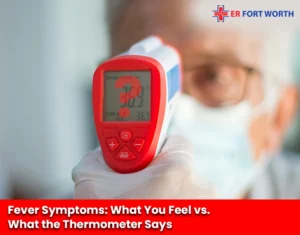
Fever temperature is only part of the picture. What we actually see in the ER is that the felt experience of fever varies enormously from person to person. Some people feel destroyed at 101°F. Others walk in with 103°F and are texting on their phone.
Common fever symptoms include:
- Chills and shivering, even when the room is not cold (classic onset-phase sign)
- Body aches and headache, often described as feeling like you have been hit by a truck
- Fatigue and brain fog, sometimes more disabling than the temperature itself
- Flushed skin and hot to the touch, especially forehead, neck, and torso
- Sweating, which usually means the fever is on its way out
- Loss of appetite and reduced thirst, watch this in children especially
One thing that catches people off guard: you can feel awful with a fever temperature that reads only 100.5°F. And you can have a high fever with minimal symptoms. Neither scenario is automatically alarming, but both deserve attention.
Can You Have the Flu Without a Fever?
Yes, and it is more common than people think. Some people, particularly older adults and immunocompromised individuals, may have influenza without ever developing a classic fever. They will still have body aches, fatigue, cough, and respiratory symptoms.
So ‘no fever’ does not mean ‘no flu.’ If you’re in Fort Worth during our peak flu season (typically November through March in North Texas) and you’re feeling the trademark full-body exhaustion of flu, it’s worth getting tested, especially if your symptoms come on fast. We offer rapid flu testing right here.
| When Should You Go to the ER Right Now? Do not scroll past this section. These are the signs that a fever is more than a fever.
If you’re reading this list and nodding, we are open 24/7 at the ER of Fort Worth. Come in. |
| You Can Probably Wait If… Not every fever means an ER visit. Here’s when watchful waiting is the right call:
|
Duration of Fever: What to Expect and When to Worry
A fever usually lasts a few days and often resolves on its own, but longer or recurring fever can indicate an underlying condition that needs medical evaluation.
| Fever Duration | Symptoms | Possible Cause | When to See a Doctor | Care Tips |
| 1–3 Days | Mild fever, body aches | Viral infection | Fever above 102°F | Rest and fluids |
| 3–5 Days | Cough, sore throat | Flu or infection | Symptoms worsen | Monitor and hydrate |
| 5+ Days | High fever, weakness | Serious infection | Seek medical care | Visit ER or clinic |
| Recurring Fever | Chills, sweating | Chronic illness | Frequent episodes | Get tested |
| Fever in Children | Irritability, rash | Viral/bacterial illness | Infant under 3 months | Pediatric evaluation |
What Happens If You Come to Our Fort Worth ER With a Fever?
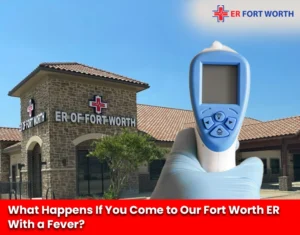
We get this question from a lot of patients, usually people who have never been to an ER and are not sure what to expect. Here’s what actually happens when you walk through our doors with a fever.
First: you are not going to sit for hours before anyone looks at you. We triage immediately. If you are showing any of the red flags above, you are going back right away.
Once you are seen, we will take a full history, how long, how high, what other symptoms, any recent travel or exposures, medications you have taken. Then depending on what we find, we have everything on-site to get answers quickly:
- Rapid flu and COVID-19 testing , results while you wait
- Blood work and urinalysis, to rule out bacterial infection, sepsis, or kidney involvement
- Chest X-ray, if we are concerned about pneumonia
- IV fluids , if you’re dehydrated or can’t keep anything down
- Direct evaluation by an ER physician, not a PA reviewing a chart remotely
We are not the place for routine sick visits. But we are exactly the place when you are genuinely unsure whether this fever is serious, when your child is worrying you, or when things have been going on too long.
What Our Patients Say
| “My son had a fever of 104°F at 2 in the morning and I didn’t know what to do. The team at ER of Fort Worth saw him immediately, ran labs, and found he had a UTI that had spread. They were calm, thorough, and made both of us feel like we weren’t overreacting. I’m so glad I came in when I did.” Maria T., Fort Worth, TX |
| “I’m a 68-year-old woman and I came in with a three-day fever I couldn’t shake. No dramatic symptoms, just tired and not right. The doctor here took it seriously, did bloodwork, and caught an early infection I didn’t know I had. Quick, professional, and genuinely caring.” Dorothy R., Tarrant County, TX |
You Do not Have to Figure This Out Alone
Fevers are stressful, especially in the middle of the night, especially with a child who can’t tell you how they are feeling. We know that. We are here for exactly those moments.
ER of Fort Worth is open 24 hours a day, 7 days a week, including weekends and holidays. No appointments needed. We serve Fort Worth, Tarrant County, and all of the surrounding DFW communities. If you’re worried, come in. That’s what we’re here for.
ER of Fort Worth eroffortworthtx.com
Open 24/7 · No Appointment Needed · On-Site Labs, Imaging & IV Fluids
Frequently Asked Questions About Fever
How long does a fever last in adults?
In healthy adults, most fevers from viral infections last 2 to 3 days. A fever from influenza may stretch to 4 or 5 days. If yours is still climbing at Day 4 or you are not improving, don’t wait. Get evaluated. Bacterial infections won’t resolve without treatment.
What is the 24-hour fever rule?
The 24-hour fever rule means a person should be fever-free for a full 24 hours, without using fever-reducing medication, before returning to school, work, or group settings. This is especially important for children in daycare or school environments in the Fort Worth area.
Can you have the flu without a fever?
Yes. Some people, especially older adults or those who are immunocompromised, can have influenza without a classic fever. They will still experience body aches, fatigue, and respiratory symptoms. Don’t rule out the flu just because the thermometer looks normal.
How do you break a fever quickly?
Acetaminophen or ibuprofen are the most reliable options for bringing down a fever temperature. Staying well-hydrated is equally important. A lukewarm bath can help. Avoid cold water, which causes shivering and can actually spike core temperature. Rest is non-negotiable.
When is a fever an emergency in a child?
Any fever in an infant under 3 months requires an immediate ER visit, full stop. For older children, come in if the fever exceeds 104°F, if they’re not drinking, if they’re unusually lethargic or difficult to wake, or if they have a stiff neck, rash, or trouble breathing. Trust your gut.
Do I need a lab test to know what’s causing my fever?
Not always. Many fevers are caused by common viral illnesses that resolve on their own. But if your fever is persistent, you have specific symptoms like burning urination or ear pain, or you are in a high-risk group, lab work can make a meaningful difference in how you’re treated. We can run those tests on-site.