
Every minute of a heart attack, heart muscle dies.You cannot get those minutes back, but you can stop losing them right now. Walk in to ER of Fort Worth immediately, or use our fast online check-in and our cardiac team will be ready the moment you arrive.
When the chest tightens and something feels deeply wrong, you shouldn’t be searching the internet, you should be walking through our doors. Heart attack treatment requires immediate emergency evaluation, and at ER of Fort Worth, that care is available right now, around the clock, every single day of the year. A heart attack happens when blood flow to part of the heart muscle is cut off, often without warning. Minutes matter. The longer the heart goes without blood, the greater the permanent damage.
Our board-certified emergency physicians are ready to perform chest pain evaluation, ECG testing, cardiac monitoring, oxygen therapy, and emergency imaging the moment you arrive. No appointment needed. No waiting rooms full of non-urgent cases ahead of you. Just fast, focused emergency cardiac care in Fort Worth, TX, because when your heart is telling you something is wrong, this is exactly where you need to be.
A heart attack, medically called a myocardial infarction, occurs when blood flow through one of the coronary arteries becomes severely restricted or completely blocked. Those arteries are responsible for delivering oxygen-rich blood to the heart muscle itself. When that supply is cut off, the affected tissue begins to die. It doesn’t heal the way a bruise does. That’s what makes rapid treatment so critical.
The blockage is usually caused by a buildup of cholesterol, fat, and other substances, collectively called plaque, inside the artery walls. When that plaque ruptures, a blood clot can form around it instantly, blocking the artery within seconds. In some cases, a severe arterial spasm can produce the same result even without plaque rupture.
Not every heart attack arrives like a thunderbolt. Some are dramatic: crushing chest pain, sudden collapse, inability to breathe. Others are quieter, an uncomfortable pressure in the chest that comes and goes, fatigue that seems out of proportion, a jaw ache that doesn’t quite make sense. Both types cause real damage, and both require emergency evaluation.
CDC / AHA Statistic: Someone in the United States has a heart attack every 40 seconds, roughly 805,000 Americans every year. Of those, about 1 in 5 are silent heart attacks, meaning the person never knew it was happening until damage was already done.

Heart attack symptoms vary from person to person, and they don’t always announce themselves loudly. If you or someone near you experiences any of the following, treat it as a potential cardiac emergency:
Women, people with diabetes, and older adults are more likely to experience atypical symptoms, no dramatic chest pain, just vague discomfort, back pain, or profound tiredness. This is one of the most important reasons to seek emergency evaluation rather than waiting to see if symptoms resolve.
CRITICAL: This is the question that costs lives when the answer is wrong. Go to the ER. Now.
There is no symptom combination that clears you to wait at home and monitor. Chest pain and cardiac symptoms require an ECG, troponin blood tests, and monitoring that simply cannot happen in your living room, at an urgent care clinic, or via telehealth. Any of the following means you should be in an emergency room immediately:
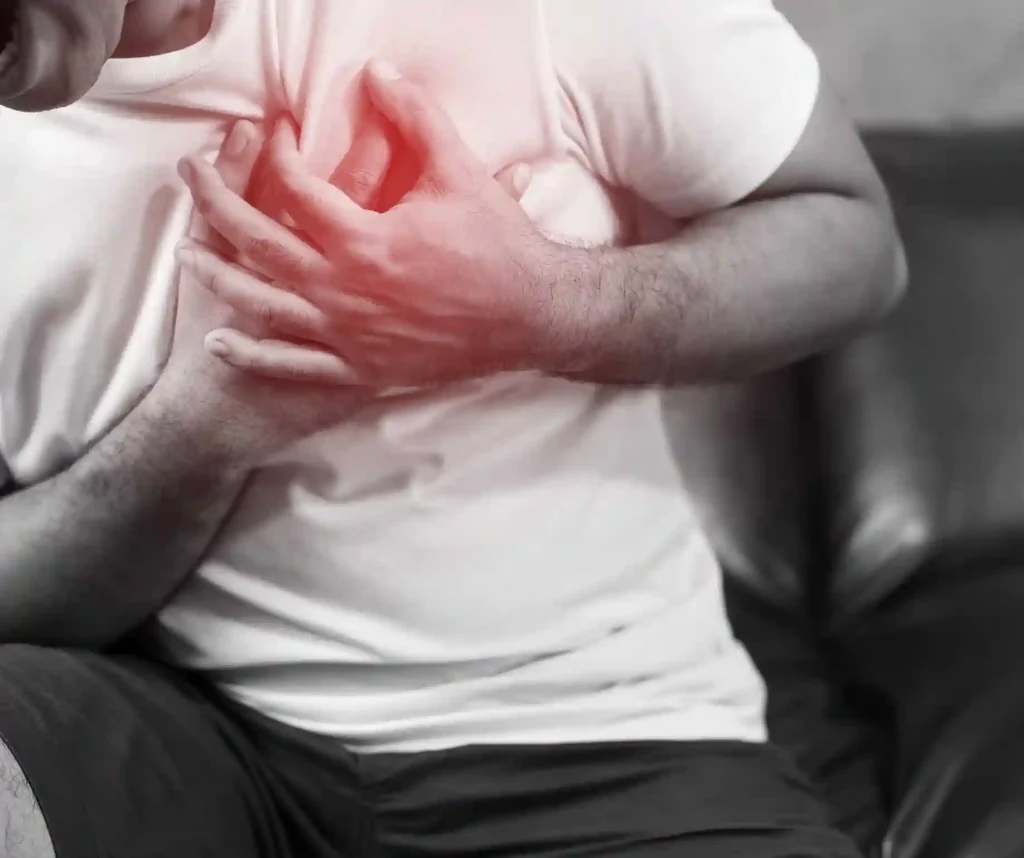
Urgent care clinics are excellent for many conditions, a sprained ankle, a sinus infection, a minor laceration. But they are not equipped for cardiac emergencies. They typically lack on-site ECG interpretation by emergency medicine physicians, cardiac monitoring capabilities, stat troponin test infrastructure, IV medication administration for cardiac stabilization, or the protocols to manage a deteriorating cardiac patient. If your symptoms are cardiac, going to urgent care could cost you irreplaceable time.
Every minute of blocked blood flow kills more cardiac tissue. Cardiac muscle, unlike skin or bone, cannot regenerate. Damage from a heart attack is permanent. The earlier treatment begins, oxygen, cardiac monitoring, IV medication, and potential coordination of transfer for advanced intervention, the more heart muscle survives. The difference between arriving at an ER in the first 60 minutes versus the first 4 hours is measured in how much of your heart still works afterward.
Chest pain? Arm pain? Jaw pressure? Don’t second-guess it.
Yes, and the risk escalates rapidly with every minute of delayed treatment.
When a coronary artery is blocked, the heart does not just hurt. It begins to malfunction. As the affected muscle becomes starved of oxygen, the heart’s electrical system, which controls the rhythm of every beat, can become unstable. This is how a heart attack triggers ventricular fibrillation, the chaotic, uncoordinated electrical activity that causes cardiac arrest. Cardiac arrest is not the same as a heart attack, but it is one of the most feared complications of one, and it can happen with frightening speed.
Even without cardiac arrest, prolonged oxygen deprivation causes permanent muscle death, a process called infarction. The result is a weakened heart wall, reduced pumping capacity, and a significantly higher risk of heart failure in the months and years that follow. Large areas of permanent damage can affect how well the heart pumps blood to the rest of the body, impair kidney function, reduce exercise tolerance, and shorten life expectancy.
There are additional serious complications beyond the heart itself. Blood clots that form during a cardiac event can travel to the brain, causing stroke. Damaged heart muscle can rupture in rare cases. Fluid can accumulate around the heart. Arrhythmias may become chronic, requiring long-term management. None of these outcomes are inevitable, but they all become far less likely when a patient receives rapid emergency evaluation and stabilization. That is exactly what ER of Fort Worth exists to provide.
Walking into an emergency room when you are frightened is hard. Here’s what happens so you know exactly what to expect.
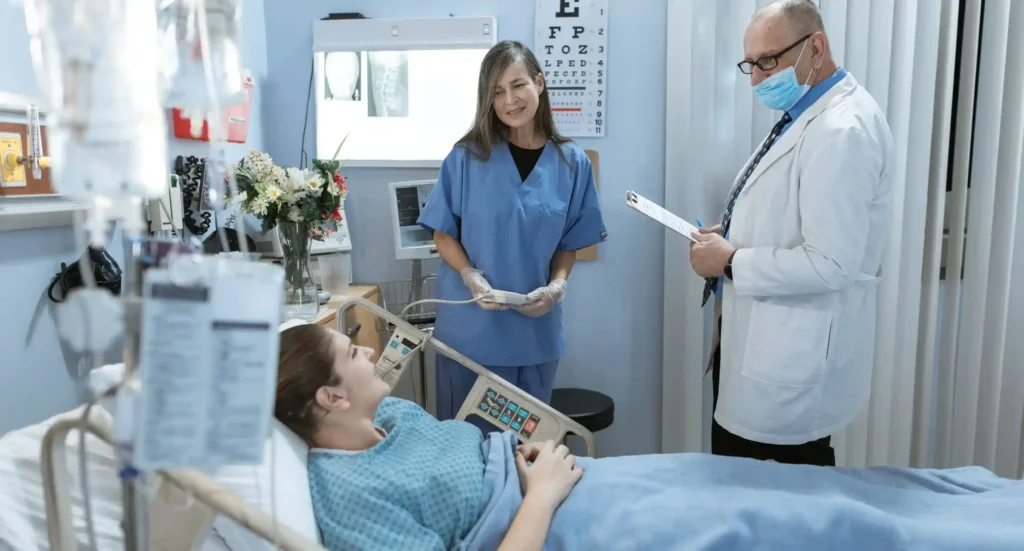
The moment you arrive and report chest pain or possible cardiac symptoms, our team begins. You will not be sent to a waiting area to fill out forms. Cardiac symptoms trigger immediate triage. You will be brought to an evaluation area where your vital signs, heart rate, blood pressure, oxygen saturation, are checked within minutes of arrival. If you have used our online check-in, the process moves even faster.
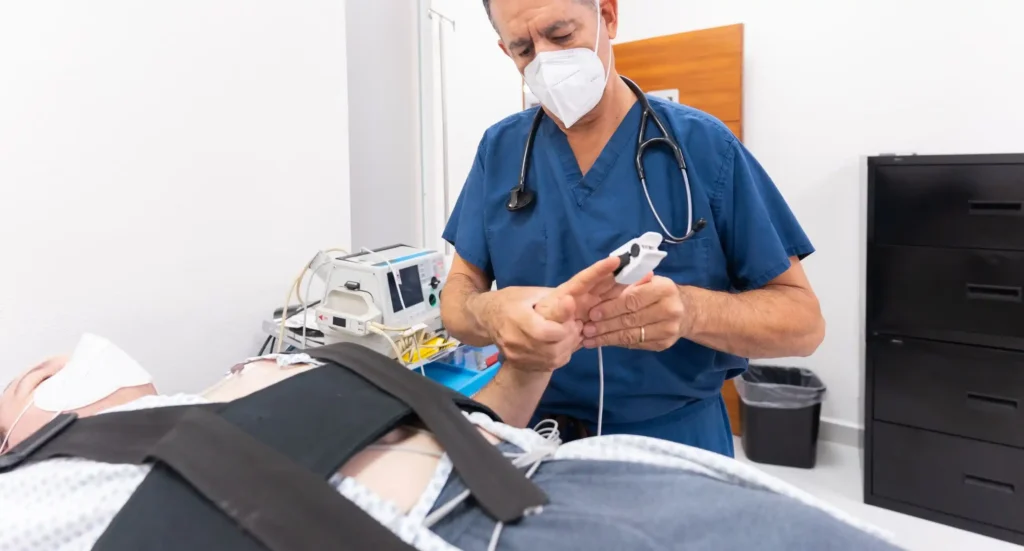
Our board-certified emergency physicians order the tests needed to evaluate your heart without delay:

Once we understand what’s happening, treatment begins. Oxygen therapy, IV access, pain management, and medications to support heart function are initiated immediately. If your situation requires intervention beyond our scope, such as cardiac catheterization or bypass surgery, we coordinate rapid transfer to the appropriate cardiac facility while continuing your care throughout the process. You are never left waiting for someone else to take over.

Our on-site diagnostic capabilities allow us to evaluate cardiac emergencies completely, without delays from sending tests off-site or waiting for equipment to become available. When you arrive with symptoms, testing begins immediately:

Stabilizing a cardiac emergency patient requires speed, coordination, and the right tools in the right hands. Our board-certified emergency physicians initiate treatment simultaneously with diagnostics:

Our team is equipped to evaluate and treat the full spectrum of emergencies that can present with overlapping symptoms:
This comparison matters, and it could save your life.
Urgent care centers are designed for non-life-threatening conditions: ear infections, minor fractures, strep throat. They are staffed by skilled providers, but they are structurally and procedurally unprepared for active cardiac emergencies. Most urgent care clinics cannot:
ER of Fort Worth is a freestanding emergency room, not a clinic, not a walk-in center, but a fully equipped emergency facility staffed by board-certified emergency medicine physicians. We have on-site laboratory, on-site imaging, cardiac monitoring, IV access, oxygen therapy, and emergency stabilization capabilities available 24/7.
When every second matters, hearing from people who have trusted us with their lives means everything. These are real experiences from patients we have had the privilege of caring for across Fort Worth and the greater DFW area.
“I came in with chest tightness and shortness of breath and honestly wasn’t sure if it was serious. The physician ordered an EKG and cardiac enzymes immediately, results were back in minutes, and I had a clear diagnosis and a treatment plan before I even had time to process what was happening. The level of care here is exceptional. This is nothing like sitting in a hospital waiting room for hours.” Marcus T., Euless, TX
“My husband had classic heart attack symptoms on a Sunday afternoon. We were terrified. From the moment we walked in, the staff moved with urgency but stayed completely calm. On-site labs, immediate EKG, a board-certified ER physician who took charge right away. We were not made to feel like we were overreacting. We were made to feel safe. That is everything when you think your heart is failing.” Linda S., Keller, TX
“I started feeling chest pressure and left arm pain in the middle of the night. My family drove me straight to the ER of Fort Worth and I was on a cardiac monitor within minutes of walking in. The team acted fast, ran an EKG and blood work on-site, and the physician explained everything clearly. I didn’t have to wait for a hospital bed to get real treatment. I genuinely believe being there saved my life.” Robert K., Fort Worth, TX
ER of Fort Worth is proud to provide emergency heart attack treatment to patients across Fort Worth and the greater Dallas–Fort Worth metroplex, with convenient locations close to you. Whether you are searching for heart attack treatment near me in Fort Worth, Keller, Euless, or anywhere across the DFW area, our board-certified emergency physicians are ready to respond, 24 hours a day, every single day of the year. Time is muscle when a heart attack strikes. Do not drive past the nearest emergency room. We are here, open now, and ready to act.
Find the ER of Fort Worth nearest to you:
Use our online check-in to let us know you are on your way, we will be ready when you arrive.
Most people describe a heart attack as pressure, squeezing, or fullness in the chest, not always sharp pain. Some patients say it feels like someone is sitting on their chest. Others report a burning sensation similar to heartburn, discomfort that spreads to the arm or jaw, or simply a profound sense that something is very wrong. The variability is real, which is why any unusual, persistent chest symptom warrants emergency evaluation
A heart attack begins when blood flow is blocked and continues until that flow is restored through treatment, or until the affected tissue has been irreversibly damaged. Symptoms may begin subtly and intensify over 20-30 minutes, or they can arrive severely all at once. Some patients experience symptoms that come and go over several hours before seeking help. There is no ‘safe’ window to wait. The longer a heart attack goes untreated, the greater the permanent damage to the heart muscle.
Yes, and this is one of the most important things to understand. Not every heart attack is a dramatic, sudden-onset event. Many begin with mild, intermittent symptoms, subtle chest discomfort, fatigue, or mild nausea that the person dismisses as something minor. These gradual-onset heart attacks are particularly dangerous because patients delay seeking help. If you have vague symptoms that feel ‘off’ in your chest, arms, jaw, or back, evaluate them with us rather than waiting.
Both conditions can cause racing heart, chest tightness, shortness of breath, and a feeling of dread or impending doom. The critical difference: you cannot reliably distinguish them at home. Panic attacks are real, they are frightening, and they deserve treatment, but attempting to talk yourself out of cardiac symptoms because ‘it’s probably anxiety’ can have fatal consequences. The only way to know with certainty is an ECG and blood work. Come in. Let us tell you it’s a panic attack. That’s a good outcome.
A silent heart attack occurs when a heart attack causes little to no recognizable symptoms. The damage is real, but the person may experience only mild fatigue, a brief episode of indigestion-like discomfort, or nothing at all. Silent heart attacks are estimated to account for roughly 1 in 5 heart attacks. They are more common in people with diabetes and in women. Many are discovered incidentally on ECGs performed for other reasons.
Any chest pain or pressure that is new, unexplained, or lasts more than a few minutes warrants emergency evaluation. You should go immediately if you have chest pain combined with shortness of breath, sweating, arm or jaw pain, dizziness, or nausea. If chest pain disappears and returns, even if it feels mild, go to the ER. At ER of Fort Worth, you can walk in any time, 24 hours a day.
Yes. ER of Fort Worth has the diagnostic and stabilization capabilities to evaluate and treat heart attack symptoms 24 hours a day, 7 days a week, 365 days a year. Our board-certified emergency physicians, on-site laboratory, on-site imaging, cardiac monitoring equipment, and IV therapy capabilities allow us to begin evaluation and treatment within minutes of your arrival. Walk in any time, no appointment needed.
If you are reading this while experiencing chest pain, arm pain, jaw pressure, shortness of breath, or any symptom that feels like it could be your heart, stop reading and come in now.
If you are reading this to prepare, to understand, to protect someone you love: ER of Fort Worth is here. We are a fully equipped, freestanding emergency room staffed by board-certified emergency medicine physicians, available 24 hours a day, every single day of the year, including weekends, holidays, and the middle of the night.
When you walk through our doors with possible cardiac symptoms, you are not starting a paperwork process. You are beginning emergency medical care. Our team moves fast. Our diagnostic capabilities are on-site. Our physicians are board-certified and experienced in exactly this kind of emergency.
You’ll get:
Call Us Right Now, Available 24/7, Every Day of the Year
Need help?