
If you think a bone might be broken, you do not have to wait until morning. ER of Fort Worth is open right now, board-certified physicians, on-site imaging, and real answers within minutes
Fracture treatment in Fort Worth, TX is available around the clock at ER of Fort Worth, and that matters more than most people realise in the first moments after an injury. A fracture is simply a break in a bone, and the two terms are medically identical, more on that below. What is not simple is what happens when a fracture goes undiagnosed or gets improper care: bones can heal in the wrong position, infections can set in within hours, and what feels like a manageable injury can become a genuinely serious problem. Our facility is open 24 hours a day, every single day, with no appointment needed. On-site X-ray and CT imaging mean we can confirm a fracture diagnosis during the same visit, and start treatment immediately. If you’re worried about a bone injury right now, we’re ready for you.
A fracture is a break in a bone, and yes, “fracture” and “broken bone” mean exactly the same thing. If a physician tells you a bone is fractured, that’s not a lesser injury than a break. It’s the identical thing, described with the clinical term. According to the American Academy of Orthopaedic Surgeons (AAOS), approximately 6.8 million fractures occur in the United States each year, affecting people of all ages, from young children who fall off playground equipment to older adults whose bones have been weakened by osteoporosis.
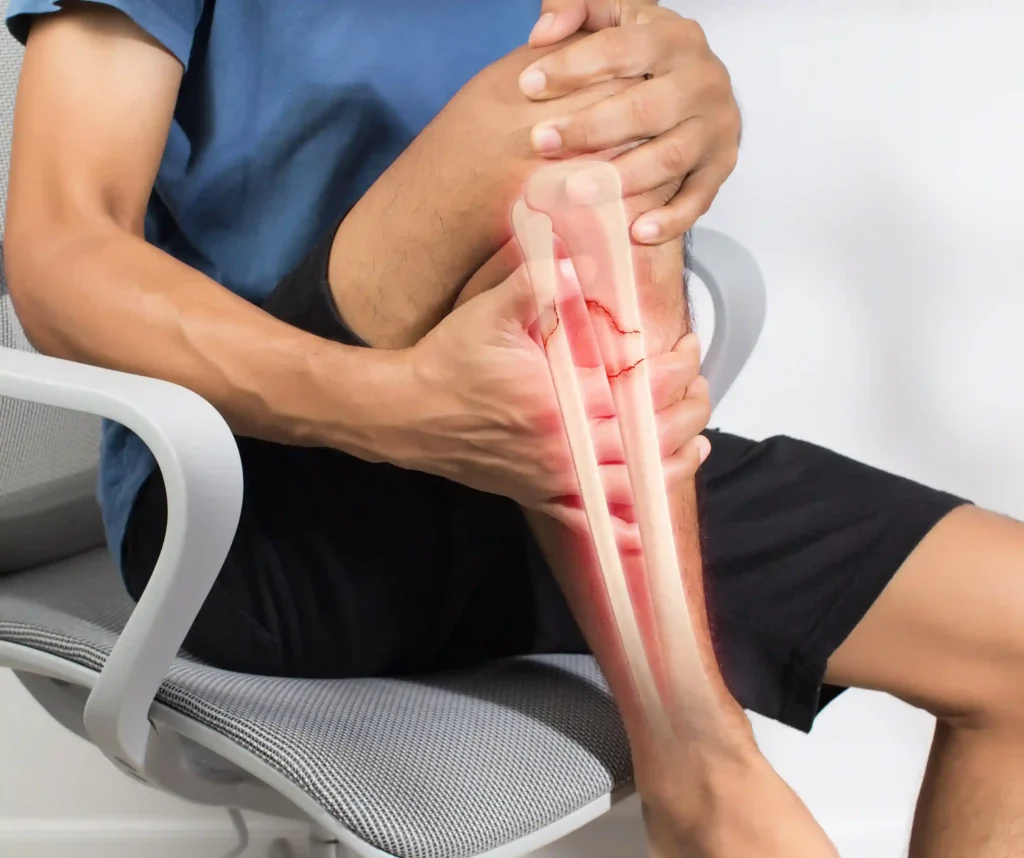
Any of the following symptoms after a fall, impact, or sudden pain suggest a possible fracture and warrant immediate evaluation:
| Fracture type | Description |
|---|---|
| Compound fracture (open fracture) | The broken bone pierces through the skin, creating an open wound. Always a true medical emergency. Osteomyelitis (bone infection) can develop within hours. No appropriate home treatment exists. |
| Comminuted fracture | The bone shatters into three or more pieces. Typically caused by high-impact trauma, serious falls, car accidents, crush injuries. More complex to treat, often requires orthopaedic specialist involvement after ER stabilisation. |
| Stress fracture | A tiny crack caused by repetitive force rather than a single impact. Common in runners, athletes, military recruits, and anyone who dramatically increases activity level quickly. Texas's high youth sports participation makes these common in DFW. |
| Buckle fracture (torus fracture) | The bone compresses and buckles on one side without fully breaking. The most common fracture type in children under 10. Bones in young children are softer and more flexible. |
| Greenstick fracture | The bone cracks on one side only, common in toddlers and young children. Named for the way a young branch bends rather than snapping cleanly. |
| Hairline fracture | Thin, stress-related crack, often invisible on initial X-ray but detectable on CT or MRI. Requires appropriate rest and management. |
| Displaced vs non-displaced | Whether the bone ends have shifted out of alignment (displaced) or remained in position (non-displaced). Displaced fractures typically require reduction (realignment) before immobilisation. |
Healing time for a fracture depends on which bone is involved, the severity and type of the fracture, the patient’s age, and whether treatment began promptly. Minor fractures, a single clean break in a small bone, typically heal in three to six weeks with proper immobilisation. Complex fractures, particularly comminuted or compound fractures involving larger bones, can take three to six months or significantly longer. Children’s bones generally heal faster than adult bones, but growth-plate injuries can have long-term consequences if not properly managed from the start.
Here’s the part patients most often do not account for: delayed treatment reliably extends healing time and raises the risk of permanent consequences. A fracture that could heal cleanly in four weeks with immediate care may heal in the wrong position if untreated, causing deformity, chronic pain, and loss of function that can last years. Nerve damage from bone fragments pressing on nearby nerves, when not treated promptly, can become permanent.
Compound fractures are in their own category for urgency. Osteomyelitis can begin developing within four to eight hours of bone exposure. Once a deep bone infection takes hold, treatment becomes far more complex and recovery far longer.
Watch for these warning signs that a fracture has complications and requires immediate ER care: pain that gets worse after the initial injury rather than stabilising, numbness, tingling, or coldness in the fingers or toes below the injury, skin that turns pale or bluish around the fracture site, or any open wound near the injury.

If you suspect a broken bone, do not wait for the swelling to tell you it’s serious. Visit ER of Fort Worth now, open 24/7, no appointment needed.
For most fractures in otherwise healthy patients, the answer is no, a properly treated fracture is not life-threatening. But certain types of fractures, under specific conditions, can escalate into genuinely dangerous medical situations when treatment is delayed. Understanding the realistic risks is important, not to frighten you, but because it’s the honest reason prompt ER evaluation matters.
A compound fracture that is not treated within hours carries a real risk of osteomyelitis (deep bone infection), which can progress to sepsis, a life-threatening systemic infection, if bacteria enter the bloodstream. Compartment syndrome is another serious complication: pressure builds inside the muscle compartments surrounding a fracture, cutting off blood supply to tissues. Without treatment, this causes permanent muscle and nerve damage and can require emergency surgery. Fat embolism, where fat droplets enter the bloodstream from fractured bone marrow, is a rare but recognised complication of major fractures, particularly of the femur or pelvis, that can cause respiratory failure if undetected.
| Risk Group | Specific Risk |
|---|---|
| Elderly patients with osteoporosis | More fragile bones, more complex fracture patterns, higher risk of significant blood loss. |
| Children with growth-plate fractures | Damage to growth plates affects bone development, a seemingly minor fracture can have long-term consequences. |
| Athletes training through stress fractures | Risk of complete fracture through the weakened bone. |
| Patients with diabetes or poor circulation | Much higher risk of infection and significantly delayed healing. |
| Anyone with a compound fracture | Infection timeline measured in hours regardless of age or health status. |
The reassuring reality is that with fast, proper emergency treatment, the overwhelming majority of these complications are entirely preventable. That’s what ER of Fort Worth is here for. Every hour of delay adds risk, every hour of proper care reduces it.
A lot of people with a suspected fracture hesitate before coming in. They wonder how long they’ll be waiting, whether it’s “bad enough” for an ER, or what the whole experience will feel like. Here’s the honest answer, and it’s better than most people expect.
| Step | What Happens |
|---|---|
| Step 1: Arrival and Check-In | Use online check-in before leaving home and the team is already prepared when you walk through the door. There's no crowded waiting room, no queue. You are seen by a real physician quickly. Patients with visible deformity, an open wound, or severe inability to use a limb are prioritised immediately. |
| Step 2: Diagnosis | On-site X-ray and CT imaging are performed during the same visit. Results are available within minutes. Your physician explains the images in plain language: whether it's a fracture, what type, and how significant. You know what's actually going on before any treatment begins. |
| Step 3: Treatment and Discharge | Treatment begins as soon as the diagnosis is confirmed. Pain management comes first, IV medications for moderate to severe fracture pain. Splinting or casting follows. Open fractures receive immediate wound care and IV antibiotics. At discharge, your physician gives you a clear plan: what to do at home, when to follow up with an orthopaedic specialist, and which symptoms should bring you back. |
From the moment you arrive, the clinical process at ER of Fort Worth is built for speed without sacrificing accuracy. On-site imaging eliminates the biggest bottleneck in traditional ER care, the wait for imaging results from an outside facility. Your X-ray or CT scan is performed in the same building, reviewed by your physician on-site, and factored into your treatment plan before you have had time to wonder what’s taking so long.
| Test | What It Detects | Availability |
|---|---|---|
| X-ray | Primary imaging tool for diagnosing most fractures, shows bone alignment, fracture line location, and displacement. | On-site, immediate results |
| CT scan | Complex fractures, spinal injuries, or when X-ray findings are unclear; cross-sectional detail X-ray cannot provide. | On-site, immediate results |
| Ultrasound | Soft tissue evaluation alongside fractures, blood flow assessment, certain fracture types in children. | On-site |
| CBC (Complete Blood Count) | Ordered when significant blood loss or infection is suspected. | On-site laboratory |
| Vital sign monitoring | Continuous monitoring for patients with trauma-related injuries or signs of circulatory compromise. | Continuous on arrival |
| Treatment | Description |
|---|---|
| IV pain management | Intravenous medication for moderate to severe fracture pain, administered on-site for fast relief while the full evaluation proceeds. |
| Splinting and casting | Immobilisation of the fractured bone to prevent further displacement and begin the healing process, approach depends on fracture location and type. |
| Fracture reduction | Realignment of a displaced fracture by the treating physician where appropriate in the ER setting, restoring the bone to its correct position before immobilisation. |
| Wound care for compound fractures | Thorough cleaning, irrigation, and sterile dressing of open fractures to reduce infection risk before orthopaedic referral. |
| IV antibiotics | Administered immediately for open or compound fractures to prevent osteomyelitis, one of the most important interventions in open fracture management. |
| Orthopaedic referral & discharge planning | Clear next steps with a specialist — what to watch for, when to follow up, and when to return to the ER if symptoms change. |
Children’s fractures are not simply smaller versions of adult fractures, they behave differently, heal differently, and carry specific risks that require careful evaluation. The bones of children and adolescents contain growth plates, areas of developing cartilage near the ends of long bones where new bone tissue is produced. A fracture that damages a growth plate (known as a Salter-Harris fracture) can affect long-term bone development if it is not properly identified and managed.
| Fracture Type | Description | ER Urgency |
|---|---|---|
| Salter-Harris (growth-plate) | Fracture damages the growth plate, can affect long-term bone development if missed. | Immediate specialist evaluation required |
| Buckle fracture (torus) | Bone compresses and buckles without fully breaking. Most common in under-10s. | ER evaluation + proper immobilisation |
| Greenstick fracture | Bone cracks on one side only, common in toddlers and young children. | ER evaluation + imaging |
If your child can not use or move an injured limb, is crying with consistent point tenderness, has visible swelling or deformity, or has any open wound near a bone, don’t wait to see if it improves.
Patients often wonder whether an urgent care centre or an emergency room is the appropriate place for a suspected fracture. It’s a fair question, and here’s a straight answer, because choosing the wrong one can mean delayed diagnosis, inadequate treatment, and a longer, harder recovery.
| Urgent Care | ER of Fort Worth | |
|---|---|---|
| Basic X-ray | ✓ Yes | ✓ Yes |
| CT scan imaging | ✗ No | ✓ Yes, on-site |
| IV pain management | ✗ No | ✓ Yes |
| Compound fracture treatment | ✗ No | ✓ Yes |
| Fracture reduction (displaced) | ✗ No | ✓ Yes |
| IV antibiotics | ✗ Limited | ✓ Yes, immediate |
| Open 24/7 | ✗ Usually 8am–9pm | ✓ 24/7, 365 days |
| Pediatric fracture evaluation | ✗ Limited | ✓ Yes, all ages |
| Nerve/vascular involvement | ✗ Cannot manage | ✓ Full ER capability |
Still unsure? Call us at (817) 945-4200, our team can help you figure out the right level of care in seconds.
What makes a genuine difference when you are in pain and need answers fast is knowing there’s a board-certified emergency physician in the building, right now, at this hour, on this day. That’s not a marketing statement at ER of Fort Worth, it’s the operational reality, every shift, every day of the year including major holidays. When you walk through our doors with a suspected fracture, a specialist in emergency medicine is evaluating you.
On-site imaging is one of those capabilities that sounds routine until you have sat in a facility that sends its films out and been told results will come back tomorrow. Our X-ray and CT scan equipment are in the building. Results are available in minutes. Your physician reviews them with you during the same visit.
The environment matters too, and it’s different here than patients often expect. There’s no crowded, overwhelming waiting room. The pace is efficient because the entire model is built around seeing patients quickly and thoroughly. Many patients tell us the visit felt far calmer and faster than they’d anticipated.
Our insurance coverage includes most major plans. To learn more, visit our emergency facility.

Here is what patients across Fort Worth are saying about their experience at ER of Fort Worth for fracture and injury care.
"I came in with a badly swollen wrist after a fall, and the team at ER of Fort Worth had me through X-ray and diagnosed within minutes. The ER physician walked me through exactly what type of fracture it was and what to expect, I never felt rushed or dismissed. Hands down the best emergency care experience I've had in Fort Worth."
"My eight-year-old fell off the monkey bars and we were terrified it was a serious break. ER of Fort Worth got us in immediately, the pediatric staff were so calm and gentle with him, and the X-ray confirmed a buckle fracture, they explained everything to both of us in a way that actually made sense. Knowing there's a place like this close to home in Fort Worth is such a relief as a parent."
ER of Fort Worth is proud to serve patients across Fort Worth and the greater Dallas-Fort Worth area, with convenient locations near you.
Whether you are searching for fracture treatment near me in Fort Worth, Keller, Euless, or anywhere across the DFW metroplex, our board-certified emergency physicians are ready to help, 24 hours a day, every day.
Find the ER of Fort Worth nearest to you:
We accept most major insurance plans. Questions about coverage? Visit our insurance information page before your visit

Use our online check-in feature to let us know you’re on your way, we will be ready for you when you arrive.
Phone: (817) 945-4200 | Open 24 hours a day, 7 days a week, every day of the year
Our Fort Worth ER physicians answer the most common questions patients ask about fractures and broken bones.
A fracture is a break in a bone, and the word “fracture” is medically identical to “broken bone.” If a physician says you have a fracture, that means the bone is broken. There is no technical distinction between the two terms. Anyone can fracture a bone, though children, older adults with osteoporosis, and athletes under repetitive physical stress are at higher statistical risk. If you suspect a fracture, proper imaging is the only way to confirm it. Walk in to ER of Fort Worth any time for same-visit evaluation.
Yes, in medicine, a fracture and a broken bone are exactly the same thing. The word “fracture” is the clinical term, “broken bone” is the everyday description of the same injury. Patients sometimes believe “it’s just a fracture, not a break” is good news, but that distinction does not exist medically. Both require proper evaluation, imaging, and treatment
Yes, completely. “Fractured” and “broken” describe the identical condition, a disruption in the continuity of a bone. There is no clinical scenario where a bone can be “fractured but not broken” or vice versa. This misconception sometimes leads patients to underestimate an injury’s seriousness.
The timeline depends heavily on which bone is fractured and the patient’s age. Finger/toe fractures: 3–6 weeks. Wrist fractures: 6–8 weeks. Tibia or fibula: 8–16 weeks. Femur: 12–24 weeks or longer, often requiring surgical management. Children’s bones typically heal faster than adults. Starting proper treatment immediately is the best thing you can do to keep healing on track
A compound fracture,also called an open fracture, is one where the broken bone pierces through the skin, creating an open wound at the fracture site. This is always a medical emergency. Osteomyelitis (bone infection) can develop within hours of injury. Do not attempt to clean the wound, push the bone back, or treat a compound fracture at home. Go directly to an emergency room
Go to the ER immediately if you see visible deformity or bone through the skin; if there is numbness, tingling, or coldness below the injury site; if you cannot bear weight on the injured limb; if swelling or bruising is severe; if the injury involves the spine, pelvis, or hip; or if it is after hours when urgent care is closed. When in doubt, the cost of an unnecessary ER visit is always less than the cost of a missed fracture
Whether it’s your arm, your child’s wrist, or a foot that took the full force of a fall, bone pain that will not ease up deserves a real answer, not a wait-and-see approach.
At ER of Fort Worth, fracture treatment begins the moment you arrive. Our board-certified emergency physicians are here around the clock, every night, every weekend, every holiday, supported by on-site X-ray and CT imaging that delivers your diagnosis during the same visit.
IV pain management, splinting, casting, wound care for compound fractures, and IV antibiotics are all available on-site. No appointment needed, no referral, no crowded hospital waiting room. Use online check-in to let us know you’re coming, or walk straight in, we’ll be ready.
Most major insurance plans are accepted, and our team is happy to answer questions about your coverage before you arrive. Transparency is part of the care we provide.
Do not wait, relief is minutes away. ER of Fort Worth | Open 24 hours, 7 days a week. No appointment needed | Most insurance accepted
Serving Fort Worth, Haltom City, Saginaw, Keller, Euless, Bedford, Hurst, Colleyville, Southlake, Grapevine, Flower Mound, Richland Hills, Watauga, Coppell, North Richland Hills, and Highland Village, TX
Need help?