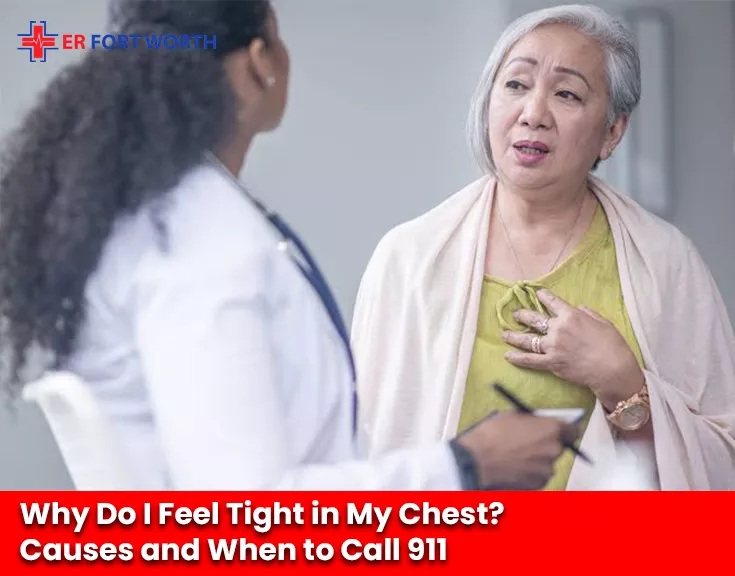
Why do I feel tight in my chest? Many causes are possible, and the feeling alone can’t tell you which one.
| CALL 911 NOW Call 911 right away if chest tightness or pain lasts more than a few minutes or comes and goes, spreads to your arm, jaw or back, or comes with shortness of breath, cold sweat, nausea or lightheadedness. Don’t drive yourself. Don’t wait to see if it passes. |
Chest tightness and chest pain overlap. In this article, “tightness” means pressure, squeezing or a band-like feeling, and “pain” means hurting or sharpness. Both can come from the same causes, so we cover them together.
| TL,DR • Chest tightness can come from the heart, lungs, digestive tract, chest wall or anxiety, and you can’t tell which by feel. • Many causes aren’t dangerous, but the serious ones can’t be ruled out at home. • Call 911 for pressure, squeezing or tightness lasting more than a few minutes or coming and going, or with other warning signs. Don’t drive yourself. • New, severe, unexplained or worsening chest tightness should be checked by a clinician. |
A clinician has to examine you and run tests to find the cause. If your symptoms don’t match the 911 list but still worry you, that’s what our ER Of Fort Worth emergency care team in Fort Worth is for.
Why do I feel tight in my chest?
Chest tightness has many possible causes, and the feeling alone can’t sort them out. It can start in the heart, the lungs and blood vessels, the digestive tract, the chest wall or from anxiety. Some serious causes feel mild. A physician’s exam and tests are how the cause gets found.
MedlinePlus groups the causes by body system:
- Heart and blood vessels: angina or a heart attack, a torn aorta (aortic dissection), inflammation around the heart (pericarditis).
- Lungs: a blood clot in the lung, a collapsed lung, pneumonia, pleurisy.
- Digestive tract: acid reflux, esophageal spasm, ulcers, gallstones.
- Chest wall: costochondritis, a strained muscle, shingles.
- Anxiety: a panic attack.
Some heart attack symptoms, like nausea or an upset stomach, can look like a stomach problem. No article can tell you which cause you have.
Common causes of chest tightness, by body system
This table shows common causes and clues, but it can’t diagnose you. Many causes overlap, and a heart problem can look like a lung or stomach problem. Use it to understand what a clinician may look for, not to pick a cause for yourself or to skip emergency care.
Not a way to diagnose yourself. When in doubt, call 911 or get checked.
| Cause | What it can feel like | Other clues | What to do |
|---|---|---|---|
| Heart: angina or heart attack | Pressure, squeezing, fullness or tightness; may spread to the arm, jaw or back | Shortness of breath, cold sweat, nausea, lightheadedness | Call 911 |
| Lungs: blood clot in the lung | Sudden sharp pain | Shortness of breath, especially after a long trip or bed rest; a swollen leg | Call 911 |
| Lungs: pneumonia | Chest pain with breathing or coughing | Fever, chills, cough with phlegm, shortness of breath | Get checked promptly |
| Lungs: pleurisy | Sharp pain that’s worse with a deep breath, cough or sneeze | Can follow a lung infection | Get checked; call 911 if breathing is hard |
| Asthma | Chest feels tight, or like someone is sitting on it | Wheezing, cough, trouble breathing | Follow your own asthma action plan; call 911 if medicines don’t help |
| Digestive: acid reflux or esophageal spasm | Burning or squeezing chest pain. Chest tightness, especially after eating. | Sour taste or acid in the throat. Frequent burping or bloating. | Get checked, because heart causes can look similar |
| Chest wall: costochondritis or muscle strain | Sharp pain at the front of the chest; tender when you press where the ribs meet the breastbone | Worse with a deep breath or cough | Get checked first; it can mimic a heart attack |
| Anxiety: panic attack | Chest pain, pounding heart, shortness of breath | Lightheadedness, nausea, intense fear | Can’t be told from a heart attack at home; call 911 or get checked |
Other lung causes, like a collapsed lung, and other heart causes, like pericarditis or aortic dissection, also exist. A clinician sorts these out with an exam and tests.
Symptoms of chest pain
Chest pain can feel like pressure, squeezing, fullness or tightness, and it often comes with other symptoms. The American Heart Association and CDC list shortness of breath, pain in the arm, jaw, neck or back, cold sweat, nausea, lightheadedness and a racing or irregular heartbeat. Any of these with chest discomfort is a reason to call 911.
Symptoms can build slowly or start suddenly. Weakness and unusual tiredness can also be part of a heart attack. If you notice any of these along with chest tightness, treat it as an emergency until a clinician says otherwise.
Types of chest pain
Chest pain comes in a few common patterns: crushing or pressure, sharp pain that changes with breathing, burning, pain that’s tender to the touch, and tightness with wheezing. Each pattern points to certain causes. But patterns overlap, and none of them is a safe way to rule out a heart problem.
- Crushing or pressure: sudden crushing, squeezing, tightening or pressure can signal angina or a heart attack. Call 911.
- Sharp or stabbing with breathing: pain that’s worse with a deep breath or cough can come from pleurisy or pneumonia. Sudden sharp pain with shortness of breath can point to a blood clot in the lung, so call 911.
- Burning: often linked to acid reflux, but heart attacks can also cause upset stomach.
- Tender to the touch: pain you can set off by pressing on the chest wall can be costochondritis, but MedlinePlus warns it can feel like a heart attack.
- Tightness with wheeze: a tight chest with wheezing and cough can come from asthma.
Chest pain in the middle of the chest
Pain in the middle of the chest has heart and non-heart causes. Most people having a heart attack feel discomfort in the center of the chest, according to the American Heart Association, but acid reflux, costochondritis at the breastbone and panic attacks can also cause it. Middle-chest pain that’s new, severe or comes with other warning signs needs emergency care.
The same goes for women. Chest pain is still the most common heart attack symptom in women, though some notice other signs too. You can’t tell the cause by where the pain sits.
Warning signs: when to call 911 for chest tightness
Call 911 right away for chest pressure, squeezing, fullness or tightness that lasts more than a few minutes or goes away and comes back. Also call if pain spreads to the arm, shoulder, neck, jaw or back, or comes with shortness of breath, cold sweat, nausea, lightheadedness or a racing heartbeat. Don’t drive yourself.
Call 911 for:
- Pressure, squeezing, fullness or tightness in the chest that lasts more than a few minutes, or goes away and comes back
- Pain or discomfort spreading to the arm, shoulder, neck, jaw or back
- Shortness of breath
- Cold sweat, nausea or vomiting
- Lightheadedness or fainting
- A racing or irregular heartbeat
- Sudden sharp chest pain with trouble breathing
- Coughing up blood
- Sudden severe pain in the chest or back
- Chest pain after an injury
- Chest pain with leg swelling or calf pain
Why call instead of driving? The American Heart Association says arriving by car can delay care because staff must assess you first, and the hospital gets no advance notice. It also says no one can treat you if you get worse on the way, and you could endanger other drivers.
A 911 dispatcher may tell you whether to take aspirin. Don’t take it unless a dispatcher or your doctor tells you to, and don’t delay your call.
Many causes of chest tightness aren’t dangerous, but you can’t tell at home which kind you have. That’s why the warning signs matter more than any guess about the cause.
What causes chest pain in women?
Women have the same list of causes as men: the heart, lungs, digestive tract, chest wall and anxiety. The difference is in how a heart attack can show up. Chest pain is still the most common sign in women, but some also notice shortness of breath, nausea, vomiting, or back, shoulder or jaw pain.
CDC says women are more likely than men to report unusual tiredness and nausea or vomiting. The ACC chest pain guideline also notes that women more often have nausea, palpitations or shortness of breath. These are tendencies, not rules, and many women have classic chest pressure.
When should women worry about chest pain?
Women should treat any new, severe, unexplained or worsening chest pain, tightness or pressure as a reason to get checked, and call 911 if warning signs appear. Women may also notice shortness of breath, nausea or vomiting, back, shoulder or jaw pain, or unusual tiredness, sometimes without crushing chest pain.
What causes chest pain in men?
The causes of chest pain in men are the same as in women: the heart, lungs, digestive tract, chest wall or anxiety. The American Heart Association says heart attack discomfort is most often felt in the center of the chest, and CDC adds the left side. Men should treat the same warning signs as a 911 emergency.
Can asthma cause chest pain?
Yes. Asthma can cause chest tightness, often with wheezing, cough or trouble breathing. NHLBI says the chest may feel tight, or like someone is sitting on it. But don’t assume it’s asthma without an exam, especially if the tightness is new. If you have asthma, follow your own asthma action plan and prescribed rescue inhaler.
Call 911 if your medicines aren’t relieving your symptoms or your breathing is still very hard.
Can stress and anxiety cause chest pain?
Yes, stress and anxiety can cause chest tightness, and a panic attack can bring chest pain, a pounding heart and shortness of breath. But a panic attack and a heart attack share many symptoms, so you can’t reliably tell them apart yourself. A new episode should be checked.
The American Heart Association says a panic attack is more likely when a medical workup shows a healthy heart, and that panic attacks usually peak in about 10 minutes. If you think it could be a heart attack, call 911. Anxiety shouldn’t be your first guess for chest symptoms.
Why does my chest hurt when I cough?
Coughing can make the chest hurt by straining the chest wall, inflaming cartilage or irritating the lining around the lungs, called pleurisy. It can also point to an infection like bronchitis or pneumonia. Pain with coughing doesn’t rule out a heart problem, so check the warning signs first.
MedlinePlus says pleurisy pain is often sharp and gets worse with deep breaths, coughing or sneezing. Pneumonia can cause chest pain with breathing or coughing, along with fever, chills and cough with phlegm. Costochondritis pain also gets worse with coughing.
How can you ease chest pain from coughing?
Once you’ve checked the warning signs and a clinician says the pain is cough-related, rest, warm or cold compresses and avoiding what makes it worse are common comfort steps. Ask a clinician or pharmacist which pain reliever, if any, is safe for you. See a doctor for fever, yellow-green phlegm or pain lasting more than 3 to 5 days.
Can dehydration cause chest pain?
Dehydration isn’t usually listed as a direct cause of chest pain. It can cause a rapid heartbeat, dizziness, lightheadedness and muscle cramps, which can feel alarming. Don’t blame chest pain on dehydration without an evaluation, and call 911 for chest pain with any warning sign on the list above.
MedlinePlus calls severe dehydration a life-threatening emergency. Call 911 if someone loses consciousness, becomes confused or has a seizure.
How to cure chest pain
There’s no single cure for chest pain because treatment depends on the cause. A heart attack needs emergency treatment, asthma needs its own plan, an infection needs a clinician’s care, and chest wall pain often settles with time. That’s why finding the cause comes first.
- Heart causes: emergency care starts with 911 and an ECG and blood tests at the hospital.
- Asthma: follow your own action plan and prescribed rescue inhaler.
- Infections: a clinician decides on treatment after an exam.
- Costochondritis: MedlinePlus lists compresses, avoiding activities that worsen the pain and, when a provider says it’s safe, pain relievers. It usually clears in days to weeks and can take months.
- Panic attack: treated after a clinician has looked for heart and lung causes.
When to see a doctor, go to the ER or call 911
Call 911 for any warning sign on the list above. Go to an ER if chest tightness is new, severe, unexplained or getting worse, or if you’re not sure. See your doctor for milder symptoms with a known cause, or a cough with fever and yellow-green phlegm. When in doubt, get checked.
| Level | When | Notes |
|---|---|---|
| Call 911 | Any warning sign in the list above | Don’t drive yourself. A dispatcher can guide you. |
| Go to an ER | Chest tightness that’s new, severe, unexplained or getting worse, or you’re unsure | The American Heart Association says to get checked promptly if you’re unsure. |
| See your doctor | Cough with fever or yellow-green phlegm, trouble swallowing, or pain lasting more than 3 to 5 days, with no warning signs | From MedlinePlus. Call 911 if warning signs appear. |
If you are not having 911 symptoms and want to be seen, you can check in online
What happens at an ER visit for chest pain?
At an ER Of Fort Worth , staff usually start with your symptoms and history, then run tests to look for heart damage and other causes. The 2021 AHA/ACC chest pain guideline highlights an ECG and a blood test called troponin, with other tests chosen based on risk. Which tests an ER offers varies.
The guideline says to call 911 for chest pain that may be a heart problem, and that care often includes repeat troponin tests. Imaging, like a chest X-ray, is chosen based on what the clinician suspects.
Chest pain care in Fort Worth and Tarrant County
Heart disease is a major health issue in Tarrant County. Tarrant County Public Health reports it was the second leading cause of death in 2024, about 1 in 5 deaths, though the county’s heart disease death rate was lower than Texas and the U.S. and fell from 2015 to 2024. The 2024 data is provisional.
The same brief reports adult heart disease prevalence of 5.5% in 2024, with no significant change.
What patients say
“I started experiencing tightness in my chest along with discomfort and shortness of breath. I wasn’t sure whether it was something minor or a serious medical issue, so I decided to seek emergency care. The medical team evaluated my symptoms, explained the possible causes, and discussed the next steps. Getting my chest discomfort checked helped me better understand the importance of taking these symptoms seriously.”
— David R.
“I noticed unusual pressure in my chest that wouldn’t go away. It made me anxious, especially because I didn’t know what was causing it. I visited the emergency room in Fort Worth, where the medical team assessed my condition and explained the evaluation process. The experience reminded me not to ignore unexplained chest tightness or delay seeking medical attention.”
— Robert M.
Getting care for chest tightness in Fort Worth
Call 911 for chest tightness with any warning sign, and don’t drive yourself. For symptoms that don’t need an ambulance but still worry you, get checked rather than waiting it out. A Physician’s exam and tests are how the cause gets found, and many causes can be treated once they’re known.
| CALL 911 NOW Call 911 right away if chest tightness or pain lasts more than a few minutes or comes and goes, spreads to your arm, jaw or back, or comes with shortness of breath, cold sweat, nausea or lightheadedness. Don’t drive yourself. Don’t wait to see if it passes. |
Not an emergency but still worried? Visit our Fort Worth emergency department
Address: 4561 Heritage Trace Parkway, Suite 117, Fort Worth, Texas, 76244 · Phone: 817-945-4300 · Hours: 24/7
Frequently asked questions
How long does chest tightness from a panic attack last?
The American Heart Association says panic attacks usually reach peak intensity in about 10 minutes. How long the tightness lasts overall varies. Because a panic attack and a heart attack share symptoms, a first episode, or any episode with warning signs, should be checked. Call 911 if you think it could be a heart attack.
Can heartburn feel like a heart attack?
They can feel alike. The American Heart Association lists upset stomach among less typical heart attack signs in women, and both problems can cause discomfort in the middle of the chest. You can’t tell them apart at home. If you have any warning sign, call 911 instead of waiting.
Is chest tightness that comes and goes serious?
It can be. MedlinePlus says angina that’s worse than usual, easier to trigger or happens at rest needs a 911 call. Tightness that keeps returning is a reason to be checked even if each episode passes. A clinician can find out whether it’s heart, lung or something else.
What tests will an ER run for chest pain?
The 2021 AHA/ACC chest pain guideline highlights an ECG and a blood test called troponin, often repeated. Other tests, such as imaging, are chosen based on your symptoms and risk. Which tests a specific ER offers varies, so ask the clinic about its services.
Is chest pain after a cold or bronchitis worth checking?
Yes, especially with fever or yellow-green phlegm, which MedlinePlus lists as reasons to contact a provider. Pneumonia can cause chest pain with breathing or coughing. Don’t assume a cough explains the pain. Check the 911 warning signs first, and call 911 if any appear.
Can a blood clot in the lung cause chest tightness?
Yes. MedlinePlus says sudden sharp chest pain with shortness of breath, especially after a long trip or bed rest or with a swollen leg, needs a 911 call. You can’t confirm a clot at home. It takes an exam and tests, so don’t wait to see if it passes.
What should I do if my inhaler doesn’t relieve chest tightness?
Call 911. NHLBI says to call if your medicines aren’t relieving symptoms or your breathing is still very hard. If you have asthma, follow your own asthma action plan and the prescription your doctor gave you. Don’t use someone else’s medicine.
Does costochondritis go away on its own?
MedlinePlus says it usually clears in a few days to weeks, though it can take up to a few months. But it can feel like a heart attack, so any chest pain should be evaluated first. A clinician can confirm the cause before you plan around it.