
⚠ EMERGENCY: Call 911 immediately for confusion, fainting, severe weakness, no urine for 12+ hours, bloody vomit or diarrhea, severe abdominal pain, neurological symptoms (blurred vision, slurred speech, muscle weakness), or any food poisoning symptoms in an infant under 3 months.
Most food poisoning is miserable but not dangerous. Vomiting, diarrhea, cramping, low fever, your body’s normal way of clearing out a contaminated meal. The problem is when fluid loss outpaces your ability to replace it. Severe dehydration is the most dangerous complication of food poisoning, and in children, elderly adults, pregnant women, and immunocompromised patients, it can become a true emergency surprisingly fast.
This guide explains what food poisoning actually is, the most common causes (and the rare-but-dangerous ones like botulism), how to recognize when dehydration has crossed from mild into severe, who is at highest risk for serious complications, the red flags that mean a hospital visit, and what we do for severe food poisoning and dehydration at ER of Fort Worth, 4561 Heritage Trace Pkwy, Suite 117, open 24/7 with IV fluids, on-site lab, and board-certified emergency physicians. Walk in any time or call +1 817-945-4200.
1. What Food Poisoning Is, and What’s Actually Making You Sick
“Food poisoning” is the everyday term for foodborne illness, symptoms caused by eating food or drinking water contaminated with a harmful organism or toxin. Each cause has its own typical timeline, symptom pattern, and severity profile.
Bacterial Causes
Bacteria multiplying in food, in your gut, or both. The major players:
- Salmonella: from undercooked poultry, eggs, raw produce, reptile contact. Symptoms 6 hours to 6 days after exposure: nausea, vomiting, cramping, diarrhea (sometimes bloody), fever.
- coli (especially O157:H7): from undercooked ground beef, raw produce, unpasteurized milk or juice. Severe bloody diarrhea is the hallmark. Can cause kidney failure (HUS) in children, never ignore bloody diarrhea in a child.
- Campylobacter: the most common bacterial cause in the US. From undercooked poultry, unpasteurized milk. Watery or bloody diarrhea, cramping, fever.
- Shigella: easily spread person-to-person, daycare outbreaks common. Bloody diarrhea, high fever.
- Staphylococcus aureus: from pre-formed toxin in foods left at room temperature (potato salad, mayonnaise dishes, cream-filled pastries). Sudden, severe vomiting within 1–6 hours of eating.
- Listeria: from deli meats, soft cheeses, smoked fish. Particularly dangerous in pregnancy, can cause miscarriage.
- Vibrio: from raw or undercooked shellfish, especially oysters from warm coastal waters. Significant risk in liver disease.
Viral Causes
Viruses don’t multiply in food, but they spread readily through food, water, and surfaces:
- Norovirus: the most common cause of foodborne illness overall. Cruise ships, restaurants, daycare centers. Sudden vomiting and diarrhea, usually self-limited in 1–3 days. Spreads explosively in households.
- Rotavirus: primarily affects young children. Less common since the vaccine became routine.
- Hepatitis A: transmitted through contaminated food or water, causes prolonged illness with jaundice.
Parasitic Causes
- Giardia: from contaminated water (streams, wells, pools). Bloating, gas, prolonged diarrhea lasting weeks.
- Cryptosporidium: waterborne, common in recreational water outbreaks.
- Cyclospora: linked to imported fresh produce, prolonged watery diarrhea.
Toxin-Mediated Causes (The Less Common but More Dangerous)

- Botulism: from improperly home-canned foods or, in infants under 12 months, raw honey. Causes blurred or double vision, drooping eyelids, slurred speech, difficulty swallowing, descending muscle weakness, a neurological emergency, NOT primarily a GI illness. Immediate 911 call.
- Scombroid fish poisoning: from improperly refrigerated fish (tuna, mackerel, mahi-mahi). Sudden flushing, headache, rash, palpitations, looks like an allergic reaction.
- Ciguatera: from reef fish in tropical waters. Numbness around the mouth, temperature reversal (hot feels cold), prolonged neurological symptoms.
- Mushroom poisoning: varies wildly by species; some cause severe liver damage with a deceptive symptom-free window after initial GI distress. Any wild mushroom ingestion warrants ER evaluation.
- Shellfish poisoning: from algal toxins concentrated in mussels, clams, scallops. Numbness, tingling, paralysis.
2. Recognizing Severe Dehydration, The Key Safety Section
Dehydration is what makes most food poisoning dangerous. Knowing how to recognize the severity ladder lets you decide between staying home with fluids and coming to the ER for IV rehydration.
Mild Dehydration
Usually manageable at home with oral fluids:
- Increased thirst
- Dry mouth or slightly dry lips
- Slightly decreased urine output, darker yellow color
- Mild headache or fatigue
- Patient is alert, talking normally, and able to drink
Moderate Dehydration
Warrants medical attention if not improving:
- Significant thirst, dry mouth, cracked lips
- Markedly reduced urine output (less than every 4–6 hours in adults)
- Sunken-looking eyes
- Dizziness, especially when standing
- Rapid heart rate
- Tiredness, irritability
- Reduced sweating
- In children: fewer wet diapers, less playful, fewer tears when crying
Severe Dehydration, Come to the ER
This level needs IV fluids, not home management:
- Little or no urine for 8+ hours (adults) or 6+ hours (children)
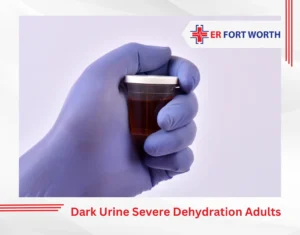
- Very dark urine, almost brown
- Severe weakness, difficulty standing, fainting episodes
- Sunken eyes with darkened circles
- Confusion, slurred speech, or unusual drowsiness
- Cold, clammy, or mottled skin
- Rapid heartbeat (over 100 in adults at rest)
- Rapid breathing
- Inability to keep any fluids down for 8+ hours
- In infants: sunken soft spot on the head (fontanelle), no tears when crying, lethargy
⚠ EMERGENCY: Severe dehydration can become life-threatening within hours, especially in children under 2 and adults over 65. If you’re seeing severe symptoms, don’t “give it one more hour”, come to the ER or call 911.
3. Who Is at Highest Risk for Severe Complications
Healthy adults usually recover from food poisoning at home with rest and fluids. Several groups are dramatically more vulnerable to severe complications and should be brought in much sooner.
Infants and Young Children
Children have smaller body water reserves and lose fluid proportionally faster. A toddler can become severely dehydrated within hours of starting persistent vomiting. Specific concerns:
- Infants under 3 months, any food-poisoning-like illness warrants ER evaluation
- Bloody diarrhea in children, can signal E. coli with kidney failure risk
- Children who can’t keep down even small sips for 4–6 hours
- Reduced wet diapers, fewer than 4 in 24 hours in young children
Adults Over 65
Older adults often have reduced thirst sensation, take medications that affect kidney function (diuretics, blood pressure pills, NSAIDs), and have less physiologic reserve. They get sicker faster and recover slower than younger adults from the same exposure.
Pregnant Women
Pregnancy adds risk on multiple fronts. Some food-poisoning organisms (Listeria, Toxoplasma) cross the placenta and can cause miscarriage, stillbirth, or fetal infection. Dehydration also reduces blood flow to the fetus. Pregnant women with persistent vomiting, fever, or signs of moderate dehydration should come in.
Immunocompromised Patients
Cancer treatment, organ transplant medications, HIV, autoimmune therapy, diabetes, kidney disease, and prolonged steroid use all reduce the immune response. What looks like routine food poisoning in a healthy adult can cause severe complications in immunocompromised patients.
People With Chronic Medical Conditions
- Heart failure, dehydration affects cardiac function quickly
- Kidney disease, fluid balance is already precarious
- Inflammatory bowel disease, food poisoning can trigger major flares
- Liver disease, particularly high risk for Vibrio infections
- Diabetes, sustained vomiting affects blood sugar control and medication dosing
4. Red Flags That Mean ER Care, Not Home Management
Routine food poisoning improves over 24 to 72 hours. Any of the following signs takes the situation out of the home-management category and into the ER:
Dehydration-Related Red Flags
- No urine for 8+ hours in adults, 6+ hours in children, 4+ hours in infants
- Severe weakness, fainting, or near-fainting
- Confusion, slurred speech, or unusual drowsiness
- Sunken fontanelle in infants
- Cold, mottled, or clammy skin
- Inability to keep down any fluids for 8+ hours
GI-Related Red Flags
- Bloody vomit or vomit that looks like coffee grounds
- Bloody diarrhea or black, tarry stools
- Severe, localized abdominal pain, particularly in the right lower abdomen (appendicitis) or right upper abdomen (gallbladder)
- Persistent vomiting beyond 24 hours
- Diarrhea beyond 3 days without improvement
- High fever, over 102°F in adults, over 100.4°F in infants under 3 months
Neurological Red Flags, Possible Botulism or Severe Toxin
- Blurred or double vision
- Drooping eyelids
- Slurred speech, difficulty swallowing
- Descending muscle weakness (face, neck, arms working down)
- Numbness or tingling, especially around the mouth
- Temperature reversal (hot feels cold, cold feels hot, classic ciguatera)
Situation-Specific Red Flags
- Symptoms in a pregnant woman, especially with fever
- Multiple family members or restaurant-meal companions also seriously ill
- Recent travel, especially international
- Ate wild mushrooms, raw shellfish, or home-canned food
- Symptoms in someone with a weakened immune system or chronic illness
5. Home Care Done Right, and How ER of Fort Worth Treats Severe Cases

For mild-to-moderate cases without red flags, careful home management resolves most food poisoning. When home management isn’t working, or when red flags appear, the ER takes over.
What Works at Home
- Frequent small sips of fluid: not large gulps. The goal is keeping fluid down, not topping off. Try 1–2 tablespoons every 5–10 minutes if vomiting is active.
- Oral rehydration solutions: Pedialyte, Enfalyte, or generic ORS for children. For adults, Pedialyte or diluted sports drinks are reasonable. Plain water alone for severe diarrhea isn’t ideal, you need electrolytes.
- Bland foods when ready: the BRAT approach (bananas, rice, applesauce, toast) is still reasonable as appetite returns. Avoid dairy, caffeine, alcohol, fatty foods, and very sweet drinks during recovery.
- Rest: your body is fighting an infection. Don’t try to power through.
- Acetaminophen (Tylenol) for fever and aches: NSAIDs like ibuprofen can irritate an already inflamed gut.
What NOT to Do
- Don’t give anti-diarrheal medications (loperamide / Imodium) for bloody diarrhea, high fever, or in young children, they can worsen severe bacterial infections
- Don’t give pure sports drinks like Gatorade to small children with diarrhea, too much sugar can pull more water into the bowel
- Don’t use “BRAT diet” as a prolonged plan, it’s nutritionally limited for more than a day or two
- Don’t take antibiotics without ER or doctor guidance, most food poisoning is viral or improves on its own, and antibiotics can worsen certain bacterial infections (E. coli O157:H7)
- Don’t ignore neurological symptoms hoping they’ll pass
How ER of Fort Worth Evaluates Severe Food Poisoning

Rapid Triage and Hydration
Within minutes of arrival, a nurse takes vital signs, blood pressure (sitting and standing, orthostatic changes confirm significant fluid loss), and starts an IV line. For severely dehydrated patients, IV fluids begin immediately, often before any test results.
Focused Examination
A board-certified emergency physician examines you for signs of dehydration severity, ongoing fluid losses, abdominal tenderness suggesting complications (appendicitis, perforation, ischemia), neurological signs suggesting toxin involvement, and pregnancy status.
Targeted Lab Work
- Complete metabolic panel, electrolytes, kidney function, hydration status
- Complete blood count and inflammatory markers
- Urinalysis, concentrated urine confirms dehydration, can identify UTI mimicking GI illness
- Stool studies for bacterial cultures or toxin testing in severe cases
- Pregnancy test in women of reproductive age
- Blood glucose, particularly in diabetic patients
- EKG if heart rate is abnormal or there’s significant electrolyte disturbance
Treatment Options
- IV fluids: the central treatment. Normal saline or lactated Ringer’s, often 1–3 liters in adults, dosed by weight in children. Improvement is usually rapid and dramatic.
- Anti-nausea medications: ondansetron (Zofran) is highly effective at stopping vomiting and allowing oral fluids to resume.
- Targeted antibiotics: only when bacterial causes are confirmed or strongly suspected, Shigella, severe Salmonella, traveler’s diarrhea, certain immunocompromised patients.
- Specific antitoxins: for botulism (rare but life-saving). We coordinate access through the CDC if needed.
- Electrolyte correction: potassium, magnesium, or sodium replacement based on lab results.
Disposition and Follow-Up
Most patients respond to IV fluids and anti-nausea medication within 1–3 hours and are discharged the same visit with clear instructions, prescriptions, and follow-up guidance. Severely ill patients (significant electrolyte abnormalities, complications, immunocompromise) may need hospital admission, in which case we coordinate transfer to your preferred hospital.
Frequently Asked Questions
How do I know if my food poisoning needs the ER?
Severe dehydration signs (no urine for 8+ hours, confusion, fainting, cold clammy skin), bloody vomit or stool, persistent vomiting beyond 24 hours, high fever, severe abdominal pain, or neurological symptoms (blurred vision, slurred speech, weakness) are all ER situations. Children, elderly, pregnant women, and immunocompromised patients should come in sooner, at moderate dehydration, not just severe.
Will IV fluids really make me feel that much better?
Almost always, yes. Most severely dehydrated patients feel dramatically better within 1–2 hours of IV fluid and anti-nausea medication. The transformation can be striking, patients often arrive too weak to walk and leave able to drive themselves home.
How long does food poisoning usually last?
Most cases improve substantially within 24–48 hours. Norovirus typically runs 24–72 hours. Bacterial causes vary, some last several days, some need antibiotics. Parasitic illness can persist for weeks if untreated. Any symptoms beyond 3 days without improvement warrant evaluation.
Should I take anti-diarrhea medication?
For adults with watery (non-bloody) diarrhea, no high fever, and otherwise well, typically yes, loperamide (Imodium) is reasonable. For bloody diarrhea, high fever, suspected C. diff, or children under 6, no, these medications can worsen the underlying infection by trapping bacteria and toxins in the gut. When in doubt, don’t take it.
Can I give my sick child Gatorade?
For children with diarrhea, pure sports drinks have too much sugar and can worsen fluid loss. Use Pedialyte or another oral rehydration solution. For older children with mild illness, diluted sports drinks (half-strength) are acceptable. Frequent small sips work better than large amounts.
Is it really food poisoning if only I got sick?
Not necessarily. Norovirus and some bacterial illnesses can come from many sources, water, surfaces, person-to-person, restaurant exposure. Just because no one else in your family is sick doesn’t rule out food poisoning. Multiple people sick after a shared meal, however, is highly suggestive.
How do I report food poisoning from a restaurant?
In Texas, report suspected restaurant-related illness to your local health department. For Fort Worth, this is Tarrant County Public Health. Reports help track outbreaks and prevent further cases. Save a sample of the suspected food if you still have it, and bring documentation of your symptoms and treatment to any complaint.
Will insurance cover an ER visit for food poisoning?
Yes, under federal EMTALA law, emergency visits are covered based on presenting symptoms, not the final diagnosis. Severe dehydration with persistent vomiting is an emergency presentation. We accept most major commercial insurance. We do not currently accept Medicare or Medicaid.
Severely Dehydrated From Food Poisoning? Come In.
Most food poisoning resolves at home, but when it doesn’t, IV fluids and anti-nausea medication can turn around hours of misery quickly. Don’t “give it one more hour” when severe dehydration signs are present, especially in children and elderly family members.
⚠ EMERGENCY: For confusion, fainting, no urine for 12+ hours, bloody vomit/stool, neurological symptoms, or infants under 3 months, call 911.
📍 Address: 4561 Heritage Trace Pkwy, Suite 117, Fort Worth, TX 76244
📞 Call: +1 817-945-4200
🌐 Website: eroffortworthtx.com
🕐 Hours: Open 24/7, every day, every hour, every holiday
Walk into ER of Fort Worth at any hour for IV fluids, anti-nausea medication, and same-visit relief. On-site lab, EKG, and board-certified emergency physicians on every shift.
Medical Disclaimer
This article is for informational purposes only and is not a substitute for professional medical advice, diagnosis, or treatment. Always seek the advice of a qualified emergency physician or other healthcare provider with any questions regarding a medical condition. If you or a family member shows signs of severe dehydration or a medical emergency, go to your nearest emergency room or call 911 immediately.