Fall allergies or COVID, which one is actually behind the sneezing, the foggy head, and the four days you have spent wondering if you should isolate? Here’s the short answer: fever, itchy or watery eyes, and stomach symptoms are the three biggest tells. Allergies don’t typically cause a fever. COVID sometimes does, along with symptoms allergies almost never bring, nausea, diarrhea, body aches that go beyond simple congestion.
If your eyes are itchy and watery and your nose is doing the same thing it does every October, that’s your usual ragweed pattern talking. If something feels different this time, sudden onset, a fever, a stomach that’s not right, that’s worth paying attention to. Testing is still the only way to know for sure, whether you handle it at home or come see us.
COVID-19 vs. Fall Allergies Symptoms: The Side-by-Side Comparison
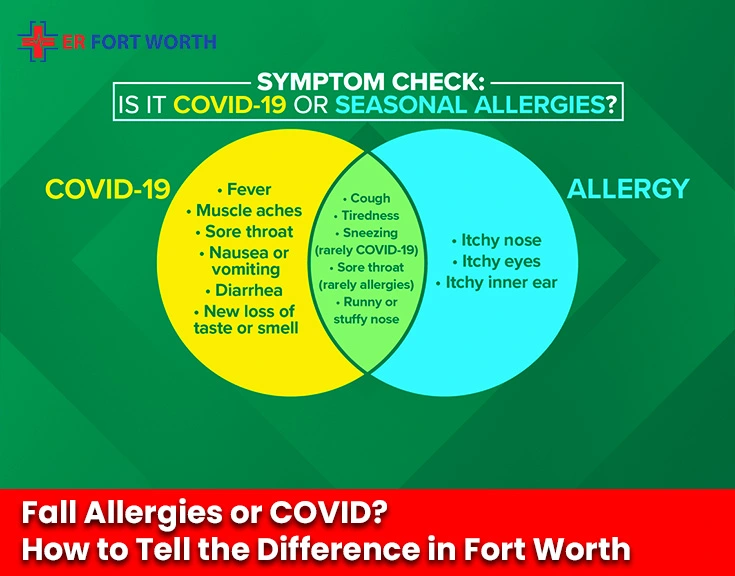
So does an itchy nose always mean allergies? Not quite, and this is where most of the confusion starts. COVID-19 vs. fall allergies symptoms overlap enough in the middle (congestion, fatigue, a scratchy throat) that guessing doesn’t get you very far. The five things that actually separate them are fever, itching, GI symptoms, how fast things came on, and whether you’re contagious. Here’s how they stack up, side by side.
| Symptom | Fall Allergies | COVID-19 |
| Fever | Rare, allergies don’t raise your core body temperature | Common, especially early on |
| Itchy / watery eyes | Very common, often the first clue | Uncommon |
| GI symptoms (nausea, diarrhea) | Essentially never | Sometimes, especially early on |
| Onset pattern | Gradual, same seasonal timing every year | Can hit suddenly, any time of year |
| Contagious? | No | Yes |
Still not sure if it’s allergies or COVID? Our Fort Worth ER team can test you and rule out the more serious stuff today, walk in any time. If anything about your symptoms worries you, come to ER of Fort Worth’s emergency services any hour of the day or night.
What Are the Common Symptoms of Fall Allergies?
A typical fall allergy flare in North Texas is pretty predictable once you know the pattern. Sneezing in clusters, first thing. Itchy, watery eyes that get worse outdoors or right after you mow the yard. A clear runny nose that turns into postnasal drip by afternoon. Mild fatigue, the kind that comes from stuffy sinuses and bad sleep, not from actually being sick.
Common symptoms of fall allergies generally don’t include fever, body aches, nausea, or the sudden hit-a-wall exhaustion that comes with a viral illness. They also tend to ease up indoors and flare again the second you step outside, that’s allergic rhinitis, your immune system overreacting to something harmless like ragweed pollen or mold spores, not your body fighting off a virus.
What Are COVID Symptoms in 2026?
COVID symptoms 2026 still cluster around fever, cough, and fatigue, but the exact mix shifts as new variants circulate, so don’t lock in on last year’s checklist. According to the CDC, current COVID-19 symptoms include fever or chills, cough, shortness of breath, fatigue, muscle aches, headache, new loss of taste or smell, sore throat, congestion, and sometimes nausea, vomiting, or diarrhea.
That’s a longer list than most people expect, and it’s exactly why testing beats guessing. Some people get hit with the classic fever-and-cough combo. Others mostly feel foggy and tired with barely any respiratory symptoms at all. Fever alongside congestion, though, that combination alone is one of the more reliable signs this isn’t your usual seasonal pattern.
Fall Allergies or COVID: How Do You Know Which One You Have?
Here’s the fastest self-check, in order: check for fever first. No fever, plus itchy eyes, plus the same pattern you get every fall? That’s probably allergies. Fever, body aches, or GI symptoms plus something that came on fast? That points toward COVID or another virus, and it’s worth testing rather than guessing.
So how do you know if you are sick or it’s just allergies? Onset pattern matters more than people think. Allergies build up gradually and follow you around every fall like clockwork. A virus tends to announce itself, you felt fine yesterday, and today you don’t. Overlap exists in the middle ground (congestion, fatigue, a scratchy throat show up with both), and that’s exactly when a home test earns its keep. Fifteen minutes settles what a day of symptom-checking can’t.
Fall Allergies or COVID? What the 3-Day Rule Actually Tells You
The 3-day rule isn’t an official clinical guideline, think of it as a practical rule of thumb, not something out of a textbook. Here’s the idea: if your symptoms haven’t started easing up after three to five days, or if they don’t follow your usual seasonal pattern, plain allergies get less likely.
Allergies plateau. They don’t really get progressively worse on their own once you’re past the first day or two, and antihistamines usually take the edge off within hours. A virus tends to move through its own timeline, sometimes better by day three, sometimes worse before it’s better. If day three rolls around and you’re still guessing, or your allergies suddenly feel nothing like every other November, that’s your cue to test instead of wait.
Signs It’s Time to Come In, Not Wait It Out
Most fall-allergy-vs-COVID confusion sorts itself out at home with a test and a few days of symptom tracking, this section isn’t for most readers. But a smaller group of symptoms means don’t wait it out. Come in now if you have any of the following:
- Trouble breathing or shortness of breath at rest
- A fever of 103°F or higher, or any fever that won’t come down with medication
- Chest pain or pressure
- Signs of dehydration, dizziness, very little urination, confusion
- Symptoms that keep getting worse instead of leveling off or easing
- Asthma, COPD, or a weakened immune system with new or worsening breathing trouble
- An infant, an older adult, or someone pregnant with any of the above
If any of the above apply, come to ER of Fort Worth. We can test you, check your oxygen levels, and get you real answers, open 24 hours a day, 7 days a week. No appointment. No referral needed.
This is probably fine to manage at home if your symptoms are mild, you don’t have a fever, things are stable or improving, and you don’t have an underlying condition that raises your risk. Most people fall into that second group, and that’s exactly why we don’t want to send everyone through our doors.
Why Do My Allergies Get Worse in the Cold?
Why am I getting allergies in November? Fair question, and the answer is timing. Ragweed’s tail end in North Texas often runs into the first hard freeze, and mold spores from decaying leaves peak around the same weeks, a collision that makes fall winter allergies especially confusing across Tarrant County.
Cold weather allergies symptoms tend to show up worst in the morning, because overnight is when indoor allergens, dust mites, pet dander, whatever’s circulating through your heating system, have had hours to build up in a closed bedroom. So can cold weather cause allergies on its own? Not exactly. Cold air itself isn’t an allergen, but it drives everyone indoors and turns on the furnace, which kicks dust and stored allergens back into circulation.
That’s also why a dust allergy worse in winter is such a common complaint, it’s less about the season and more about closed windows and running heat. Fort Worth’s mild, humid winters keep some of these indoor triggers active nearly year-round, part of why symptoms here don’t always follow the calendar the way they do up north.
Winter Allergies, Itchy Skin, and Skin Sensitivity, Allergies or COVID?
Winter allergies itchy skin is its own, separate complaint from sneezing and watery eyes, and it’s usually not an airborne allergy at all. Low humidity and indoor heating strip moisture out of your skin, which is why dry, itchy patches show up on hands and shins every winter whether or not you have seasonal allergies.
Skin sensitivity flu or COVID is a different question, and the short answer is: skin symptoms aren’t a typical marker for either one. A new rash or hives is worth treating as its own issue rather than reading it as a clue about what’s going on with your sinuses. If winter allergies itchy skin shows up alongside fever, body aches, or breathing trouble, that combination is what matters, not the itch by itself.
Worth saying plainly: winter allergies itchy skin almost never needs a COVID test on its own. A humidifier, fragrance-free moisturizer, and shorter, cooler showers usually clear it up within a week or two.
How to Get Rid of Fall Allergies: Home Remedies and Treatment
How to get rid of fall allergies, and what are some home remedies for allergies that actually work? Start with cutting off what’s triggering them. Saline rinses clear pollen and mold spores out of your nasal passages before they set off a full reaction, simple, cheap, and it works. A good air filter (or just closing windows during peak pollen hours) keeps ragweed and mold from building up indoors in the first place.
How can I treat a nose allergy specifically? Oral antihistamines and nasal steroid sprays are the two workhorse categories, they target different parts of the reaction, and a lot of people do best combining both rather than picking one. Allergen avoidance still matters more than any pill: shower after you have been outside, wash bedding weekly, and keep pets out of the bedroom during your worst weeks. None of this requires a prescription, and most of it you can start today.
How Long Do Fall Allergy Symptoms Last?
As long as the trigger’s around, honestly. Ragweed season in North Texas typically runs into November, and mold spores from wet, decaying leaves can keep symptoms going even after the first freeze knocks pollen counts down. Once you are indoors full-time and dust, dander, and heating-system allergens take over, symptoms can drag on through winter without ever fully clearing.
Compare that to COVID, which usually runs its course in one to two weeks even without treatment. That difference, weeks to months of allergies versus a defined, roughly two-week viral course, is itself a clue. If you are still sneezing in week six, that’s allergies working exactly the way allergies work, not a sign something’s wrong.
What Happens at Our Fort Worth ER If You Need Testing or Are Struggling to Breathe
If you come in, here’s what actually happens, no mystery, no runaround. We’ll check your oxygen levels, ask about your symptom timeline, and run a COVID test alongside a clinical evaluation so you leave with an actual answer instead of another guess. If allergies turn out to be the culprit, we’ll talk through treatment before you head home.
Whether you are coming from Burleson, Keller, Mansfield, or Crowley, our Fort Worth ER is minutes away and open around the clock, no appointment, no referral, no multi-day wait for lab results. We’re not here to talk you into treatment you don’t need. We are here so you are not stuck guessing on day four of a scratchy throat, wondering if you should be isolating from your kids or just taking your usual allergy pills.
[“I wasn’t sure if I was dealing with fall allergies or COVID because my symptoms felt similar. I decided to visit ER of Fort Worth to get answers instead of guessing. The team evaluated my symptoms, performed the appropriate testing, and explained what was going on. Having a clear answer and treatment plan the same day gave me peace of mind.”]
[“At first, I thought my symptoms might be fall allergies or COVID, but when I started having trouble breathing, I knew I shouldn’t wait it out. I went to ER of Fort Worth and was evaluated promptly. The staff explained what they found and what I needed to do next. I’m glad I came in instead of ignoring a symptom that could have become more serious.” ]
Come In Today, or Check In Online First
Whether you have had the exact same ragweed reaction every November for a decade or this bout feels different, testing beats guessing every time. Our Fort Worth ER is open 24/7 with on-site testing and same-day answers, no long wait for results. Come in today, or check in online before you head over, we are ready when you are.
Frequently Asked Questions
A quick recap of COVID-19 vs. fall allergies symptoms for anyone skimming straight to the FAQ, then the answers to what people search for most.
How do you know if it’s allergies or COVID?
Check for fever first, allergies rarely cause one, COVID often does. Itchy, watery eyes and a pattern that matches your usual fall flare point toward allergies. Fever, GI symptoms, or a sudden onset point toward a virus. When symptoms overlap, a home test settles it faster than guessing.
What are the common symptoms of fall allergies?
Common symptoms of fall allergies are sneezing, itchy and watery eyes, a clear runny nose, postnasal drip, and mild fatigue from poor sleep. Symptoms usually ease up indoors and flare again outside. You generally won’t see fever, body aches, or GI symptoms with straight allergies, if those show up, it’s worth testing.
How can I treat a nose allergy?
Saline rinses, oral antihistamines, and nasal steroid sprays are the main tools, often used together for better relief. Allergen avoidance helps too, shower after being outside, keep windows closed during peak pollen hours, and wash bedding often. Most cases respond well without a prescription.
What is the 3-day rule for allergies?
It’s a practical rule of thumb, not an official medical guideline: if symptoms haven’t started improving after three to five days, or don’t match your usual seasonal pattern, plain allergies become less likely. That’s a good point to consider testing instead of waiting longer.
How long do fall allergy symptoms last?
As long as the trigger is around, often into November for ragweed, and longer once indoor allergens like dust and heating-system dander take over. That’s a much longer stretch than COVID’s typical one-to-two-week course, and it’s one of the clearest differences between the two.
What are some home remedies for allergies?
Saline rinses, air filtration, closed windows during high-pollen hours, and regular bedding washes all reduce exposure. Add an oral antihistamine or nasal steroid spray for symptom control. Most people see real relief within days of staying consistent, though symptoms return if the trigger is still around.
Why do my allergies get worse in the cold?
Ragweed’s tail end overlaps with the first freeze, and mold from decaying leaves peaks around the same time. Closing windows and running the heat also stirs up indoor allergens like dust and pet dander, which is why mornings often feel worse than afternoons, and it’s separate from winter allergies itchy skin, which is a dry-air issue, not a pollen one.