Reviewed by the emergency care team at ER of Fort Worth | 4561 Heritage Trace Pkwy, Suite 117, Fort Worth, TX 76244 | +1 817-945-4200
Call 911 immediately: For severe allergic swelling face throat symptoms with difficulty breathing, throat tightness, tongue or lip swelling, wheezing, fainting, or bluish lips. Every second counts. Do not drive yourself.
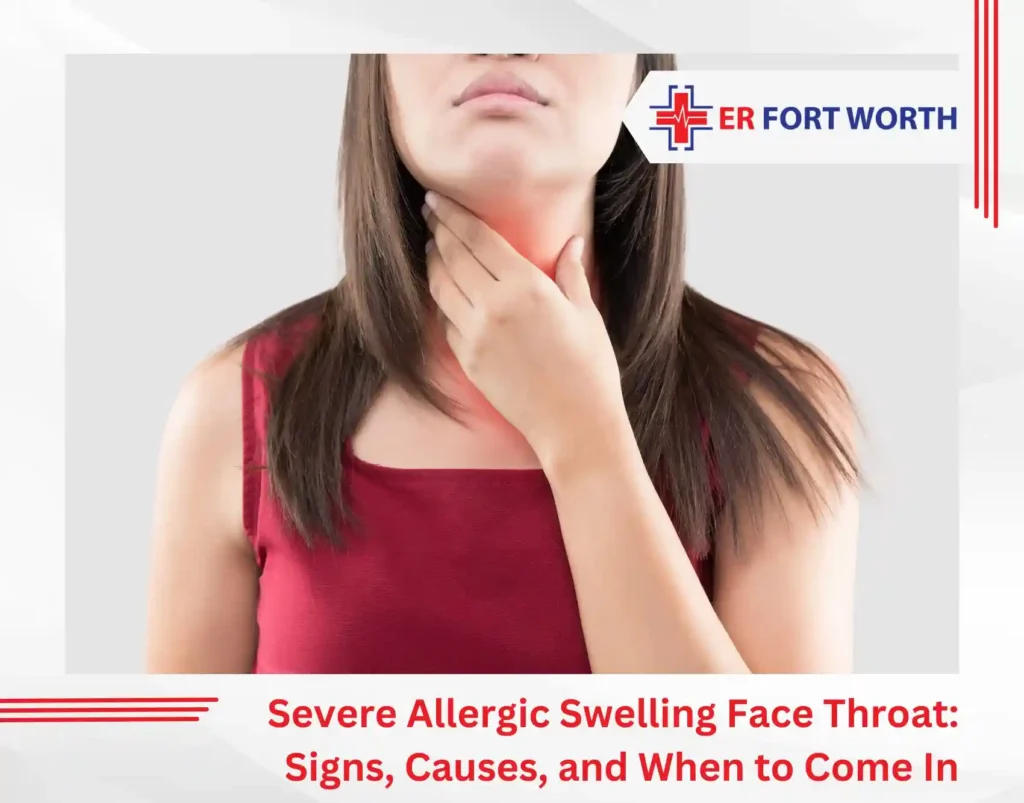
Severe allergic swelling of the face and throat can turn from mild discomfort into a life threatening emergency within minutes. Also called anaphylaxis, this reaction requires immediate medical evaluation, especially when the throat is involved.
This guide answers the most common questions about severe allergic swelling face throat episodes, so you know what to watch for and when to walk into our Fort Worth ER.
What Causes Severe Allergic Swelling of the Face and Throat?
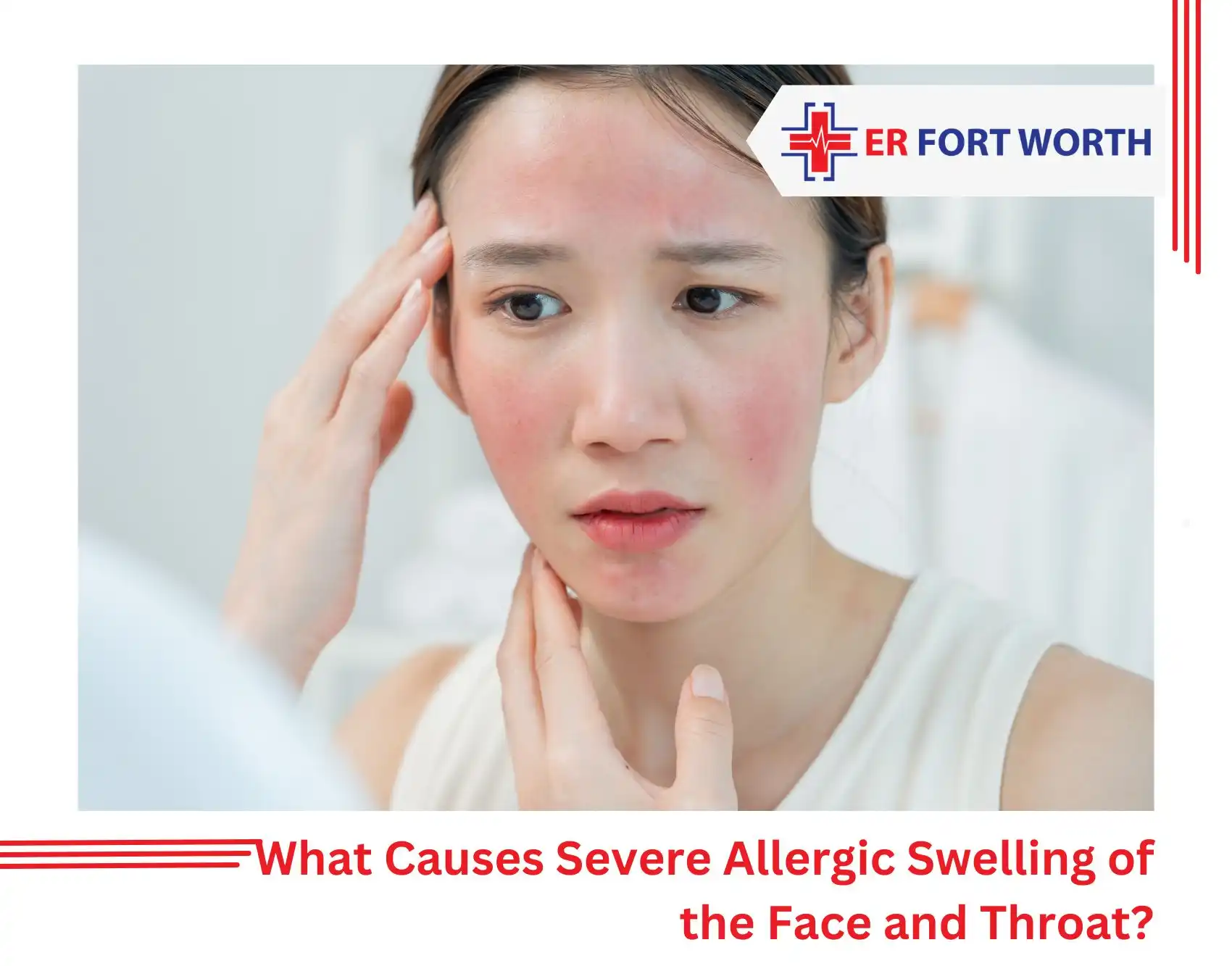
Severe allergic swelling face throat episodes happen when the immune system overreacts to a trigger, releasing chemicals that cause rapid tissue swelling and airway narrowing. The most common triggers are foods, insect stings, medications, and latex.
The medical term for this deep tissue swelling is angioedema. Angioedema emergency signs typically appear around the lips, tongue, throat, and eyelids within minutes of exposure.
The Mayo Clinic notes that anaphylaxis can begin within seconds of exposure and become life threatening within minutes, which is why fast recognition matters more than trying to identify the exact trigger.¹
What Are the Warning Signs to Watch For?
Anaphylaxis symptoms face throat swelling rarely appears alone. Warning signs usually affect multiple body zones at once, including the skin (hives), throat (tightness), lungs (wheezing), gut (nausea), and whole body (dizziness or fainting).
| Body Zone | Warning Signs | Urgency Level |
| Face | Swollen lips, puffy eyes, swollen cheeks, flushing | High. Come in now |
| Throat and Mouth | Tongue swelling, tight throat, hoarse voice, difficulty swallowing | Immediate 911 |
| Lungs and Breathing | Wheezing, shortness of breath, chest tightness, coughing | Immediate 911 |
| Skin | Hives, red rash, itching, flushing all over | Watch closely, evaluate |
| Stomach and GI | Nausea, vomiting, cramping, sudden diarrhea | Watch closely, evaluate |
| Whole Body | Dizziness, fainting, racing pulse, pale or clammy skin | Immediate 911 |
Any signs from two or more zones at the same time, or any single sign in the throat, lungs, or whole body rows, means call 911. Do not wait to see if it worsens.
What Should You Do Right Away?

If severe allergic swelling face throat symptoms appear, call 911 immediately, use any prescribed emergency injection if available, position the person safely, stop exposure to the trigger, and avoid giving anything by mouth.
- Call 911. This is the first call for any severe allergic reaction. Do not try to drive to the ER during an active episode.
- Use prescribed emergency injection. If the person has been prescribed an emergency allergy autoinjector for known severe allergies, use it as directed. Note the time and tell paramedics.
- Position safely. Have them lie flat with legs raised. If breathing is difficult, sit upright. If vomiting, turn onto their side. Do not stand them up.
- Stop the exposure. If the trigger is identifiable (a stinger, food, medication), remove or halt exposure. Do not induce vomiting.
- Nothing by mouth. Water, food, or liquids can be dangerous if the throat is swelling. Wait for paramedics or the ER team.
- Watch for return of symptoms. Even if symptoms improve, get to the ER. Reactions can come back hours later. This is called a biphasic reaction.
When Is Facial Swelling a 911 Emergency?
When facial swelling is emergency level, it usually involves throat tightness, tongue or lip swelling, difficulty breathing, wheezing, fainting, or bluish lips. Isolated puffiness under one eye is different from spreading whole face swelling with breathing changes.
Signs that require immediate 911:
- Tightness in the throat or trouble swallowing
- Tongue, lip, or throat swelling that is worsening
- Shortness of breath, wheezing, or high pitched breathing
- Bluish lips, fingertips, or skin
- Fainting, dizziness, or severe weakness
- Rapid heartbeat with pale, clammy skin
- Any severe allergic reaction in a child
These signs mean the airway or blood flow is compromised. Get help fast.
What Triggers a Severe Allergic Reaction?
The most common triggers for severe allergic reactions are foods (peanuts, tree nuts, shellfish, milk, eggs), insect stings, certain medications, and latex. Some patients experience reactions to exercise or with no identifiable trigger.
- Food allergies. Peanuts, tree nuts, shellfish, fish, milk, eggs, wheat, sesame, and soy account for most food related cases.
- Insect stings. Bees, wasps, hornets, yellow jackets, and fire ants.
- Medications. Certain prescribed drugs, especially in patients with known allergies.
- Latex. Rubber gloves, balloons, and some medical devices.
- Exercise induced. Rare but real, sometimes combined with a food trigger.
- Idiopathic. No identifiable trigger despite full evaluation.
Who Is at Higher Risk?
Some patients face higher risk of severe reactions. If any of these apply and warning signs appear, treat the situation as urgent.
- Known food, drug, or insect sting allergy with previous reactions
- Asthma, especially if not well controlled
- Previous mild allergic reaction to the same trigger (reactions often escalate)
- Family history of severe allergies
- Adults with heart disease
- Children with multiple food allergies
- Teens and young adults are statistically at higher risk for fatal reactions
Clinical literature summarized by the National Center for Biotechnology Information notes that death from anaphylaxis usually results from airway obstruction or cardiovascular collapse, both of which can develop within minutes. This is why any severe reaction, even one that improves, needs same visit ER evaluation.²
What Happens at ER of Fort Worth for Severe Allergic Reactions?
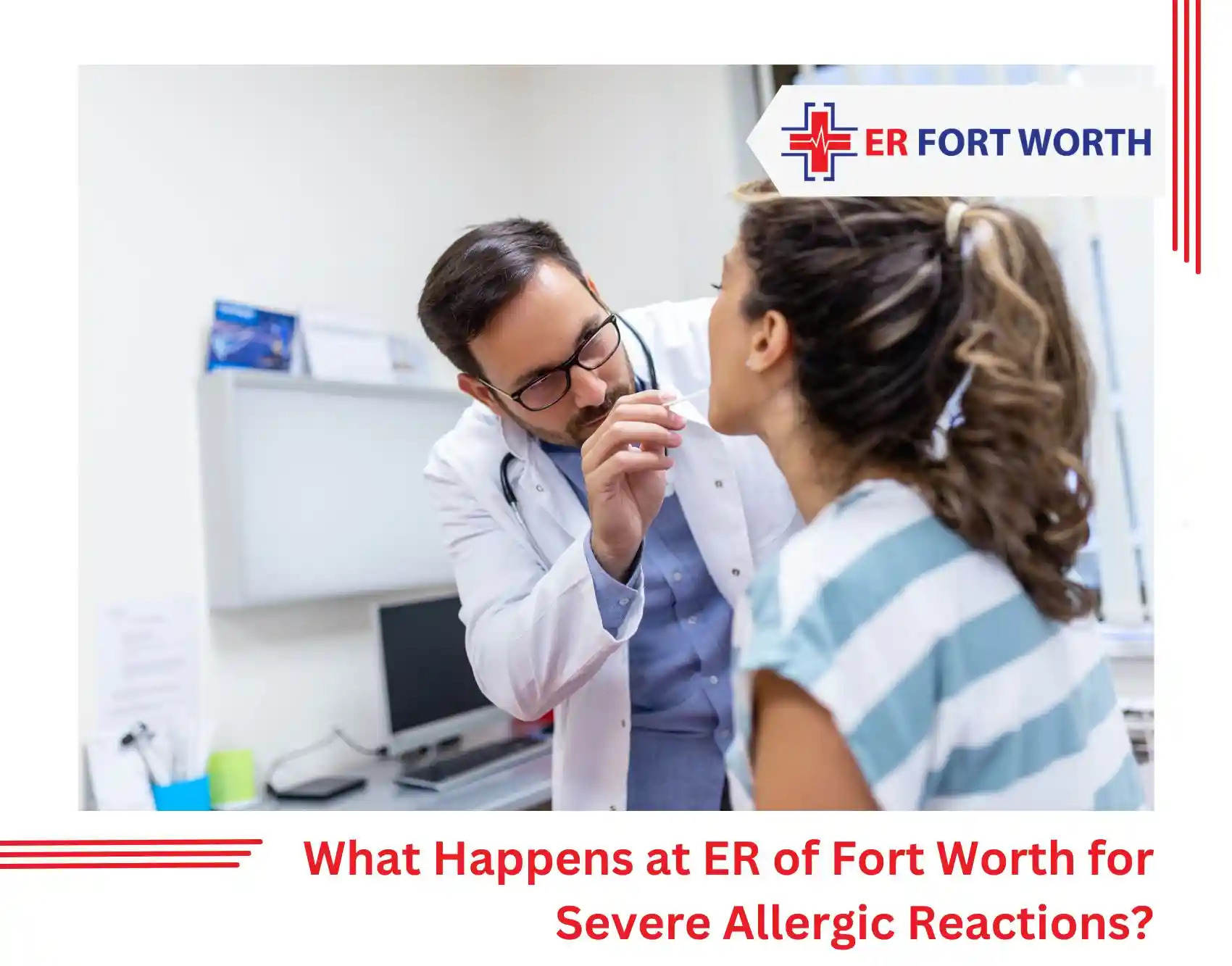
At ER of Fort Worth, evaluation for severe allergic swelling face throat symptoms begins the moment you arrive. Our team focuses on airway protection, IV access, monitoring, and extended observation to catch any biphasic reaction.
Immediate priorities
- Airway assessment and oxygen support if needed
- Vital signs, oxygen saturation, and continuous cardiac monitoring
- IV access for fluids and emergency treatment
- Focused examination of the face, throat, chest, and skin
Ongoing observation
- Extended monitoring window to catch delayed or biphasic reactions
- Blood work when indicated
- Coordination with a hospital for admission if the reaction is severe or repeat episodes occur
Most patients arrive frightened and leave stable within a few hours, with an allergist follow up plan in hand. Board certified emergency physicians are available 24/7 at our Fort Worth ER.
Walk in for evaluation: ER of Fort Worth is open 24/7 for allergic emergencies with immediate airway support, IV access, and same visit lab. Call +1 817-945-4200 or walk in anytime.
Common Questions
Can severe allergic swelling face throat symptoms go away on their own?
Sometimes mild swelling resolves without intervention, but there is no way to predict which reactions will progress. Once throat or lung symptoms appear, waiting is dangerous. Same visit ER evaluation is standard.
How is angioedema different from ordinary allergic swelling?
Angioedema emergency signs involve deeper tissue swelling, usually around the lips, tongue, and throat. Ordinary hives affect only the skin surface. Angioedema is what makes throat closure possible, which is why it is the more dangerous form.
If I used my emergency injection and feel better, do I still need to come in?
Yes. Biphasic reactions can occur hours later. ER observation catches these before they become dangerous. Do not skip the visit.
Can I develop a severe allergy later in life?
Yes. Adults can develop new severe allergies to foods, medications, or insect stings after years of tolerating the same trigger. Any first severe reaction warrants ER evaluation and follow up with an allergist.
Is a swollen lip alone a reason to come in?
It depends. A swollen lip that is stable and painless can usually be watched at home for an hour. When facial swelling is emergency level, it spreads fast, involves the tongue or throat, or comes with breathing changes or hives. Any of those means same day ER evaluation.
Severe Allergic Reaction? Walk Into ER of Fort Worth 24/7
Severe allergic swelling face throat symptoms need immediate evaluation. Even after symptoms calm down, ongoing observation and follow up matter to prevent a second wave. Our Fort Worth freestanding ER provides same visit care with airway support, IV access, and coordination with allergy specialists.
No appointment needed. Walk in anytime, day or night.
- Address: 4561 Heritage Trace Pkwy, Suite 117, Fort Worth, TX 76244
- Phone: +1 817-945-4200
- Hours: Open 24 hours, 7 days a week, 365 days a year
- Insurance: Most major commercial plans accepted
- Wait time: Rapid triage with typical door-to-provider time under 15 minutes
Visit ER of Fort Worth for directions, wait times, and facility details, or learn more about our full range of emergency services in Fort Worth. Proudly serving Heritage Trace, Alliance, Keller, Watauga, Park Glen, Haslet, Saginaw, North Richland Hills, and surrounding North Fort Worth communities.
Call 911 now: For throat tightness, difficulty breathing, wheezing, fainting, or bluish lips. Every second counts.