
Reviewed by the emergency care team at ER of Fort Worth | 4561 Heritage Trace Pkwy, Suite 117, Fort Worth, TX 76244 | +1 817-945-4200
Call 911 immediately: For jaundice with confusion, severe abdominal pain, high fever, vomiting blood, black tarry stools, severe weakness, or signs of shock. Yellow skin with any of these points to advanced liver failure, severe infection, or major bleeding.
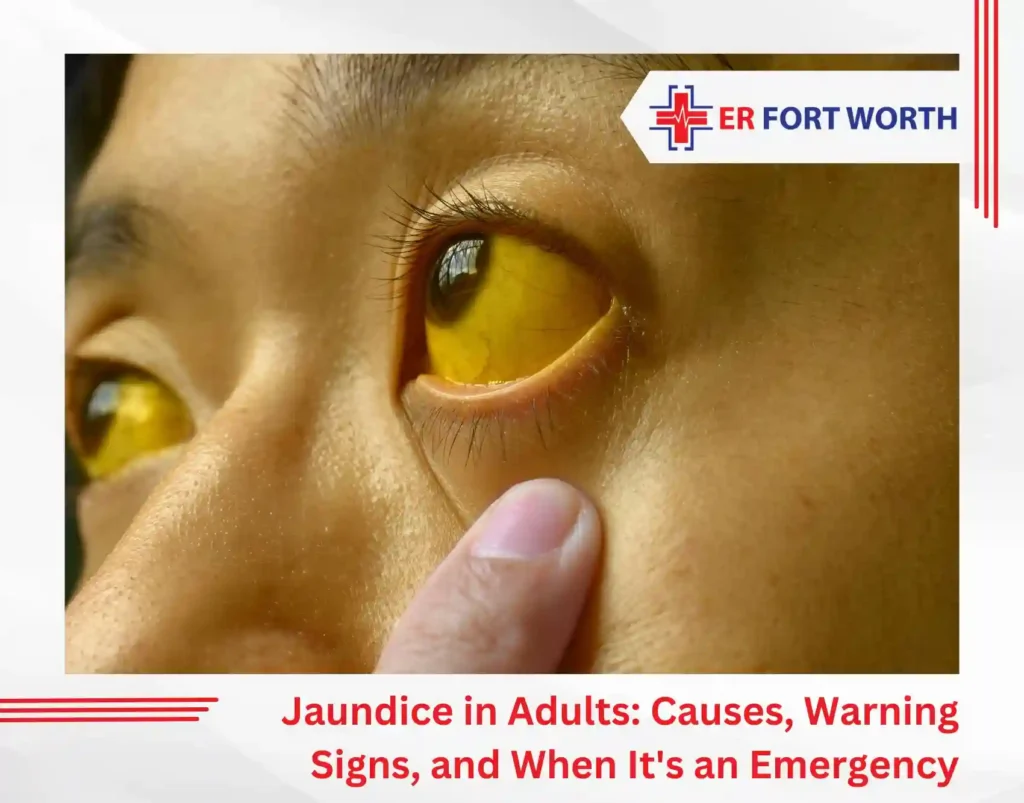
Jaundice is never a minor finding. When the skin or whites of the eyes turn yellow, it means bilirubin is building up in the body, and the liver, bile ducts, or red blood cells are not working the way they should.
Most causes of jaundice need medical evaluation within days. Some need the ER today. Below is a complete adult-focused guide to recognizing jaundice, understanding what is behind it, and knowing exactly when to come in.
What Is Jaundice and Why Does It Happen?
Jaundice is the yellow color that appears in the skin, eyes, or mucous membranes when a pigment called bilirubin rises above its normal range. Bilirubin is a waste product from the breakdown of old red blood cells. The liver normally processes it and sends it out through bile. When any step in that chain fails, bilirubin builds up and turns tissues yellow.
According to the American Academy of Family Physicians, jaundice becomes visible when bilirubin levels reach about 2 to 3 mg/dL, which is roughly twice the normal upper limit. The eyes often yellow before the skin, which is why our ER team always checks the sclera first.¹
The 3 Pathways: Where Jaundice Comes From
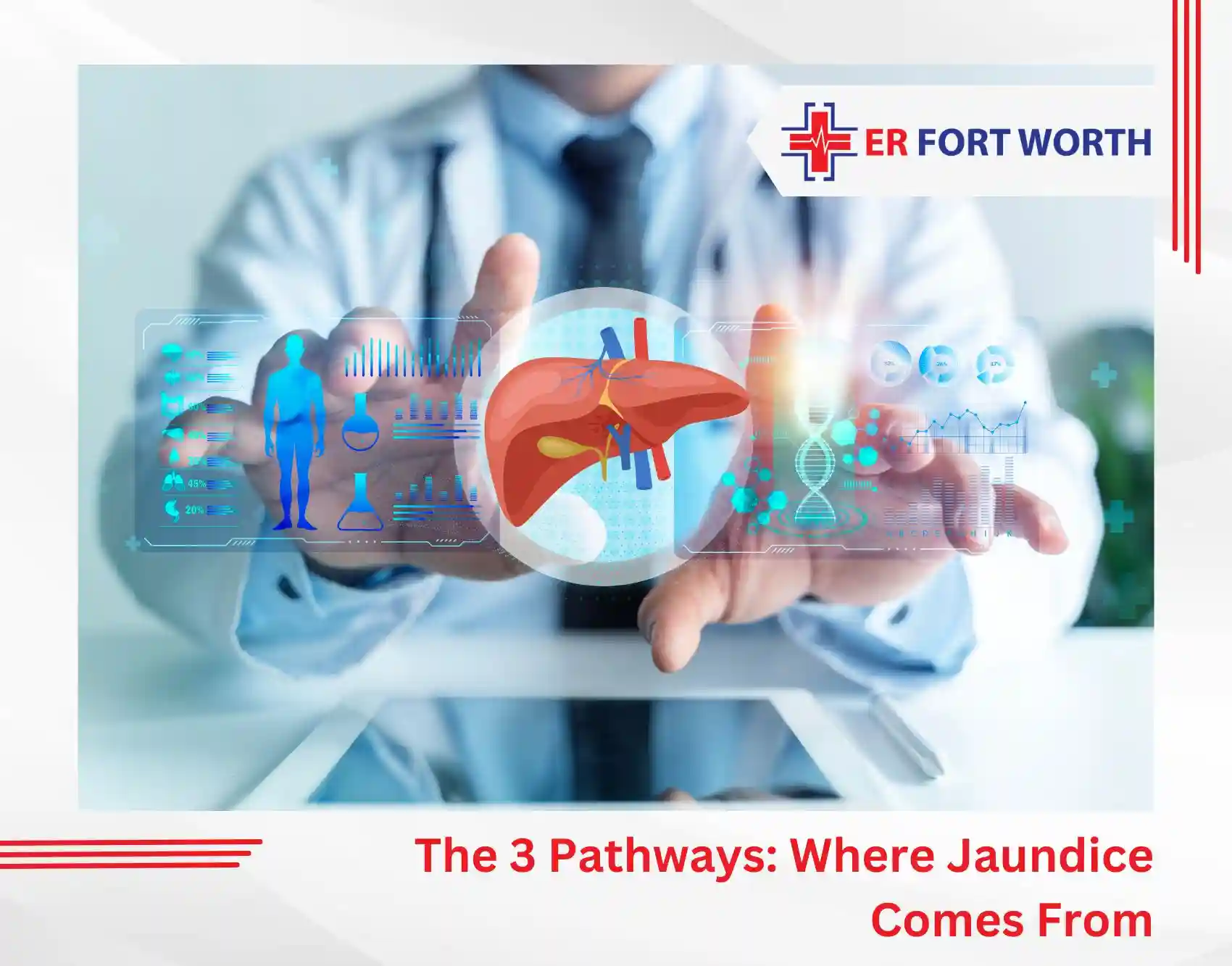
Jaundice causes adults experience sort into three categories based on where the breakdown happens: before the liver, inside the liver, or after the liver. This map shows the type, the common causes, and the specific red flag signs for each.
| Pre-Hepatic (Before Liver) | Hepatic (Inside Liver) | Post-Hepatic (After Liver) |
| What It Is: Red blood cells breaking down too fast, flooding the liver with bilirubin it cannot keep up with | What It Is: Liver cells damaged or inflamed, cannot process bilirubin normally | What It Is: Bile duct blocked after the liver, bile backs up into the blood |
| Causes: Hemolytic anemia, sickle cell, transfusion reaction, certain infections | Causes: Hepatitis (viral, alcohol, drug), cirrhosis, autoimmune liver disease, fatty liver | Causes: Gallstones, pancreatic tumor, bile duct cancer, strictures, pancreatitis |
| Signs: Pale skin plus yellow eyes, dark urine, normal-colored stools, fatigue | Signs: Yellow skin and eyes, belly tenderness, fatigue, nausea, dark urine, pale stools | Signs: Yellow skin and eyes, very pale clay-colored stools, dark urine, itching, belly pain |
| Urgency: Same day ER if severe anemia signs | Urgency: Same day ER, especially with pain or fever | Urgency: Same day ER, blocked bile duct needs intervention |
Stool and urine color are two of the strongest clues. Pale stools with dark urine point to bile duct problems. Dark urine with normal stools points to red blood cell breakdown.
How to Recognize Yellow Skin and Eyes Early
Yellow skin and eyes do not appear all at once. The progression follows a predictable pattern, and recognizing the earliest stage leads to earlier treatment.
Normal Skin and eyes have their usual color. Whites of the eyes are clean white. Bilirubin under 1 mg/dL.
Early Whites of the eyes (sclera) look slightly ivory or faintly yellow. Often first seen in bright natural light. Skin still looks normal. Bilirubin 2 to 3 mg/dL.
Moderate Clearly yellow sclera, yellow tint beginning on face, chest, and inner palms. Dark urine starts. Fatigue is common. Bilirubin 3 to 10 mg/dL.
Advanced Deep yellow sclera, yellow-orange skin, very dark urine, pale or clay-colored stools, intense itching. Bilirubin above 10 mg/dL.
Severe Yellow-greenish tint, scratching marks from itching, belly swelling, confusion, bruising easily. Bilirubin above 20 mg/dL. Call 911.
The MD Anderson Cancer Center emphasizes that painless jaundice in adults over 40 should prompt urgent evaluation, since it can be an early sign of bile duct or pancreatic cancer. Painful jaundice often points to gallstones or infection. ²
When Is Jaundice an Emergency?
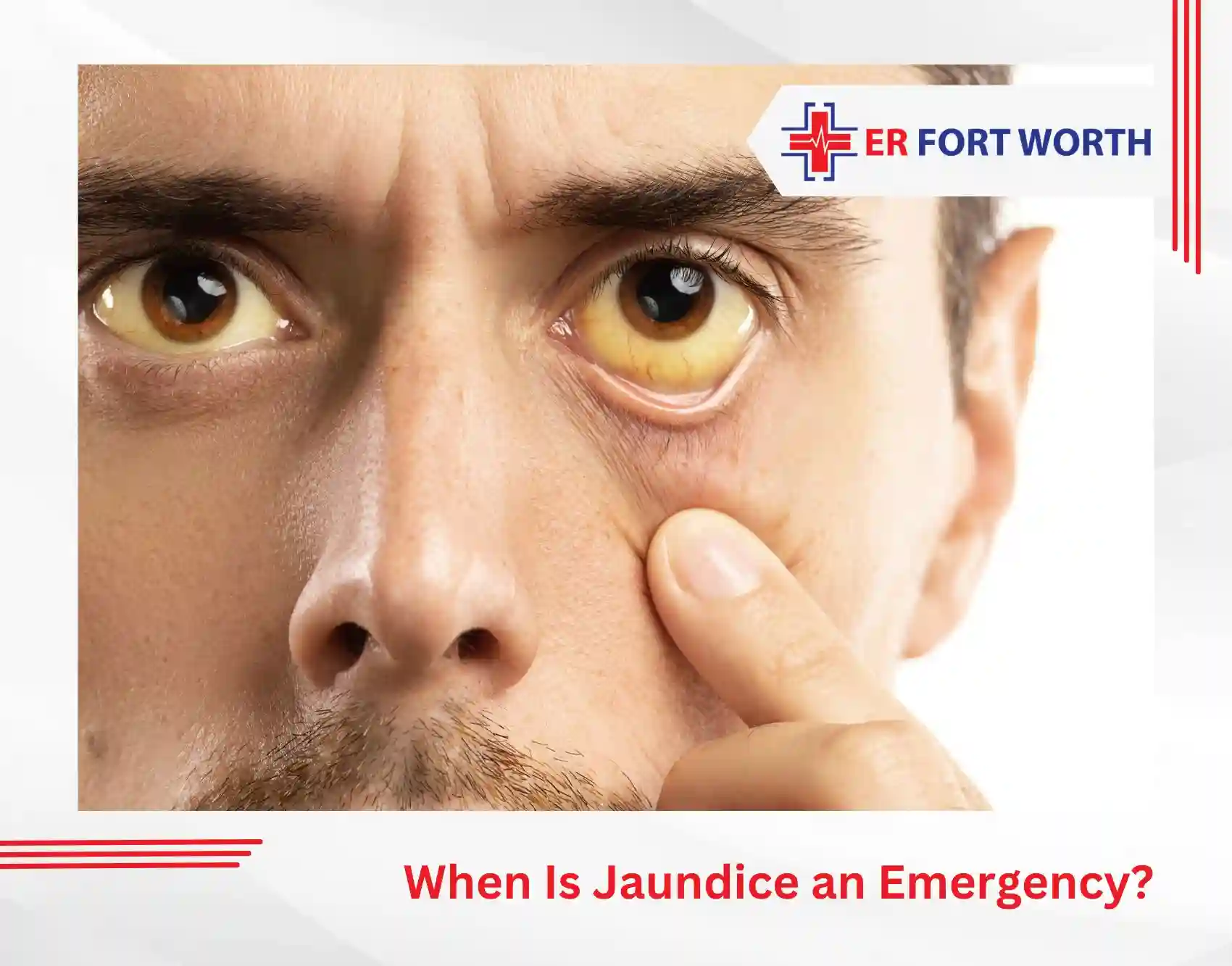
When jaundice is emergency level depends on what else is happening. Some jaundice patterns can wait for a same-week appointment. Others need the ER within hours. Here is the clear split on when jaundice is emergency level versus when it is urgent but stable.
Come to the ER today for any of these
- Yellow skin or eyes plus severe abdominal pain
- Jaundice with fever and chills (possible bile duct infection, cholangitis)
- Jaundice with vomiting or inability to keep fluids down
- Pale clay-colored stools with dark urine
- Jaundice that appeared within 24 to 48 hours
- Any jaundice during pregnancy
- Jaundice plus known liver disease or hepatitis
Call 911 for these
- Jaundice with confusion, drowsiness, or personality change
- Jaundice with vomiting blood or black tarry stools
- Jaundice with severe weakness, fainting, or rapid heartbeat
- Jaundice with a rigid or severely tender abdomen
- Jaundice in someone who has become unresponsive
These signs point to liver failure, major GI bleeding, severe infection, or sepsis. Do not drive yourself.
For related GI bleeding presentations, our guide on black stool emergency warning signs and vomiting blood emergency causes walk through those specific red flags.
Who Is at Higher Risk for Adult Jaundice?
Some adults face substantially higher risk of jaundice from serious underlying causes. Knowing your risk profile shapes how quickly to come in.
- Heavy alcohol users: Alcoholic hepatitis and cirrhosis are among the leading causes of adult jaundice
- Patients with known hepatitis B or C: Chronic viral hepatitis is a top cause worldwide
- Adults with gallstones or prior gallbladder disease: Stones blocking the bile duct cause painful jaundice
- People with autoimmune disease: Autoimmune hepatitis and primary biliary cholangitis
- Patients on multiple prescribed medications: Drug induced liver injury is an increasingly common cause
- Adults over 60 with weight loss: Painless jaundice raises concern for pancreatic or bile duct cancer
- People with inherited blood disorders: Sickle cell, thalassemia, G6PD deficiency
- Pregnant patients: Pregnancy-related liver conditions can cause rapid jaundice
Our companion guide on 7 signs your liver is dying covers the full picture of late-stage liver disease, of which jaundice is one of the most visible signs.
What Happens at ER of Fort Worth for Jaundice?

At ER of Fort Worth, evaluation starts with a focused exam of the eyes, skin, and abdomen, followed by same visit blood work to identify which pathway the jaundice is coming from. Lab results come back in minutes, not days.
Immediate workup
- Vital signs and focused physical exam
- Scleral and skin color assessment
- Abdominal exam for liver or gallbladder tenderness
- Mental status check for signs of liver encephalopathy
- IV access if needed
Same visit labs and imaging
- Total and direct bilirubin
- Liver function tests (ALT, AST, alkaline phosphatase, GGT)
- Complete blood count
- Coagulation studies (PT/INR)
- Viral hepatitis panel when indicated
- Lipase for pancreatitis
- Ultrasound or CT for bile duct dilation, stones, or masses
Our 24/7 blood tests in emergency room process these panels within one visit. Our laboratory services page covers the full lineup of tests we run on site, which is unusual for any emergency facility.
For patients whose jaundice points to acute liver failure, biliary obstruction requiring urgent intervention, or cancer workup, our board certified emergency physicians coordinate direct hospital transfer with imaging and lab results sent ahead of the patient.
For chronic liver disease prevention, our guide on top 9 lifestyle changes to prevent chest and abdominal pain covers daily habits that protect liver health.
Walk in for evaluation: ER of Fort Worth is open 24/7 for jaundice with same visit liver labs, imaging, and coordinated hospital transfer. Call +1 817-945-4200 or walk in anytime.
Common Questions
Can jaundice go away on its own?
Mild jaundice from minor viral illness sometimes resolves. But most jaundice causes adults deal with reflect real organ disease (liver, bile ducts, blood) that needs identification. Knowing when jaundice is emergency level prevents missing a reversible cause by waiting it out.
What is the first sign of jaundice?
The first sign is usually faint yellowing of the whites of the eyes, best seen in bright natural light. Yellow skin, dark urine, pale stools, and intense itching follow as bilirubin levels rise further.
Is painless jaundice more serious than painful?
Painless jaundice in adults over 40 is often more serious because it can indicate slow-growing bile duct or pancreatic cancer. Painful jaundice usually points to gallstones or infection, which also need same day evaluation.
Does jaundice always mean liver disease?
No. Jaundice causes adults experience sort into three pathways: red blood cells breaking down too fast (pre-hepatic), liver damage (hepatic), or bile duct blockage (post-hepatic). Lab work and imaging identify which pathway applies.
Will yellow skin and eyes disappear after treatment?
Yes, usually. Once the underlying cause is addressed, bilirubin levels drop and color returns to normal within days to weeks. Deep or long-standing jaundice can take longer to resolve.
Yellow Skin or Eyes in Fort Worth? Walk Into Our ER 24/7
Jaundice is never a wait-and-see symptom. Same visit liver labs, bilirubin testing, and imaging at ER of Fort Worth identify the cause within one visit, so treatment can begin without a weeks-long specialist wait. Walk in anytime, no appointment needed.
- Address: 4561 Heritage Trace Pkwy, Suite 117, Fort Worth, TX 76244
- Phone: +1 817-945-4200
- Hours: Open 24 hours, 7 days a week, 365 days a year
- Insurance: Most major commercial plans accepted
- Wait time: Rapid triage with typical door to provider time under 15 minutes
Visit ER of Fort Worth for directions and facility details. Proudly serving Heritage Trace, Alliance, Keller, Watauga, Park Glen, Haslet, Saginaw, North Richland Hills, and surrounding North Fort Worth communities.
Call 911 now: For jaundice with confusion, severe abdominal pain, high fever, vomiting blood, or black stools. Do not drive yourself.