
Reviewed by the emergency care team at ER of Fort Worth | 4561 Heritage Trace Pkwy, Suite 117, Fort Worth, TX 76244 | +1 817-945-4200
Call 911 immediately: For high fever with confusion, rapid heartbeat, difficulty breathing, low blood pressure, severe abdominal or back pain, uncontrolled vomiting, or signs of shock. These may indicate the infection has spread to the bloodstream.
The combination of kidney infection fever back pain is one of the most reliable warning signs in emergency medicine. When both appear together, they usually point to a bacterial infection that has traveled from the bladder up into one or both kidneys.
This guide breaks down what a kidney infection actually is, how it differs from a simple bladder infection, the red flags that make it a true emergency, exactly what to do right now, and how our board certified team at ER of Fort Worth evaluates every case with same visit lab results.
Quick Answer: Is a Kidney Infection Always an Emergency?
Yes for most cases. Kidney infection fever back pain together means the infection is already active in the kidney tissue and can spread to the bloodstream within hours. Same day emergency evaluation is standard, especially when combined with vomiting, chills, or confusion.
1. What Is a Kidney Infection?
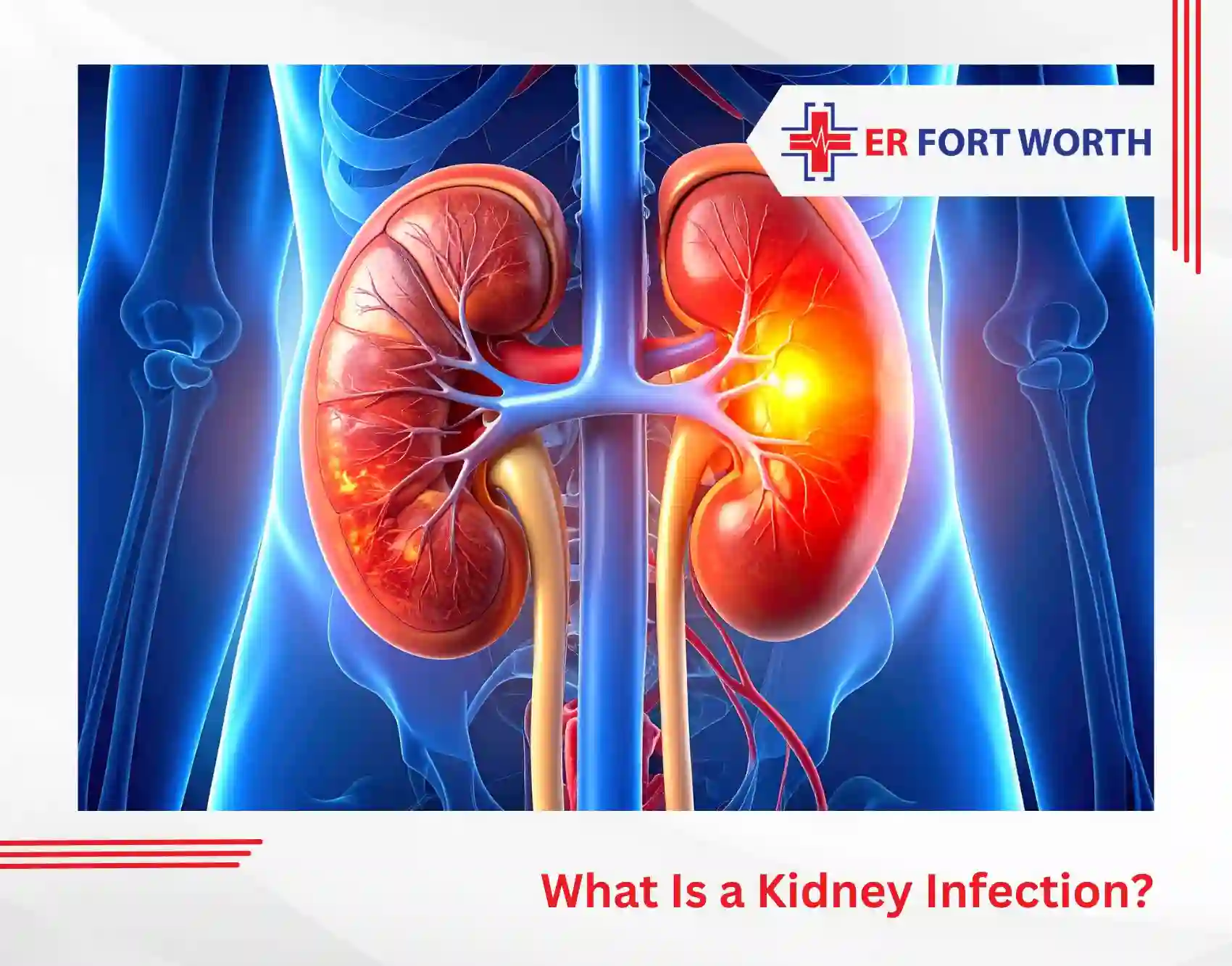
A kidney infection, medically called pyelonephritis, is a bacterial infection of one or both kidneys. It usually starts as a bladder infection that travels up the urinary tract. Untreated, it can spread to the bloodstream and cause sepsis, a life threatening condition.
Most kidney infections start in the bladder. Bacteria travel upward through the ureters into one of the kidneys, where the infection then multiplies.
Because the kidneys filter blood directly, an infection there can enter the bloodstream faster than infections in other parts of the body.
Common pyelonephritis symptoms
- Fever, often 101 F or higher
- Chills and shaking
- Pain in the back, side, or flank, usually on one side
- Nausea and vomiting
- Cloudy, foul smelling, or bloody urine
- Painful urination or burning
- Frequent urgent trips to the bathroom
- Extreme fatigue
- General feeling of being very unwell
Age matters: Older adults may not develop the classic fever or back pain. Instead, they may show up with new confusion, weakness, or falls. Any sudden change in an older adult, especially with a known history of urinary infections, warrants same day evaluation.
2. Kidney Infection vs UTI: What Is the Difference?
A UTI usually stays in the bladder and causes urinary symptoms only. A kidney infection has moved higher into the kidneys and adds systemic symptoms like fever, back pain, chills, nausea, and vomiting. The presence of any systemic symptom shifts the situation from UTI to kidney infection.
The distinction matters because treatment intensity and urgency differ significantly.
Bladder infection (uncomplicated UTI)
- Burning during urination
- Urgent frequent trips to the bathroom
- Lower belly pressure or cramping
- No fever
- No back pain
- Feels crummy but not sick all over
Kidney infection (pyelonephritis)
- All of the above symptoms plus
- Fever, often over 101 F
- Chills and shaking
- Flank or back pain, usually on one side
- Nausea or vomiting
- Fast heart rate
- Feeling very sick all over
Systemic red flag: Any fever, back pain, chills, or vomiting alongside urinary symptoms means the infection has likely reached the kidneys. Do not wait to see if it improves. Come in for same day evaluation.
3. When Kidney Infection Is an Emergency
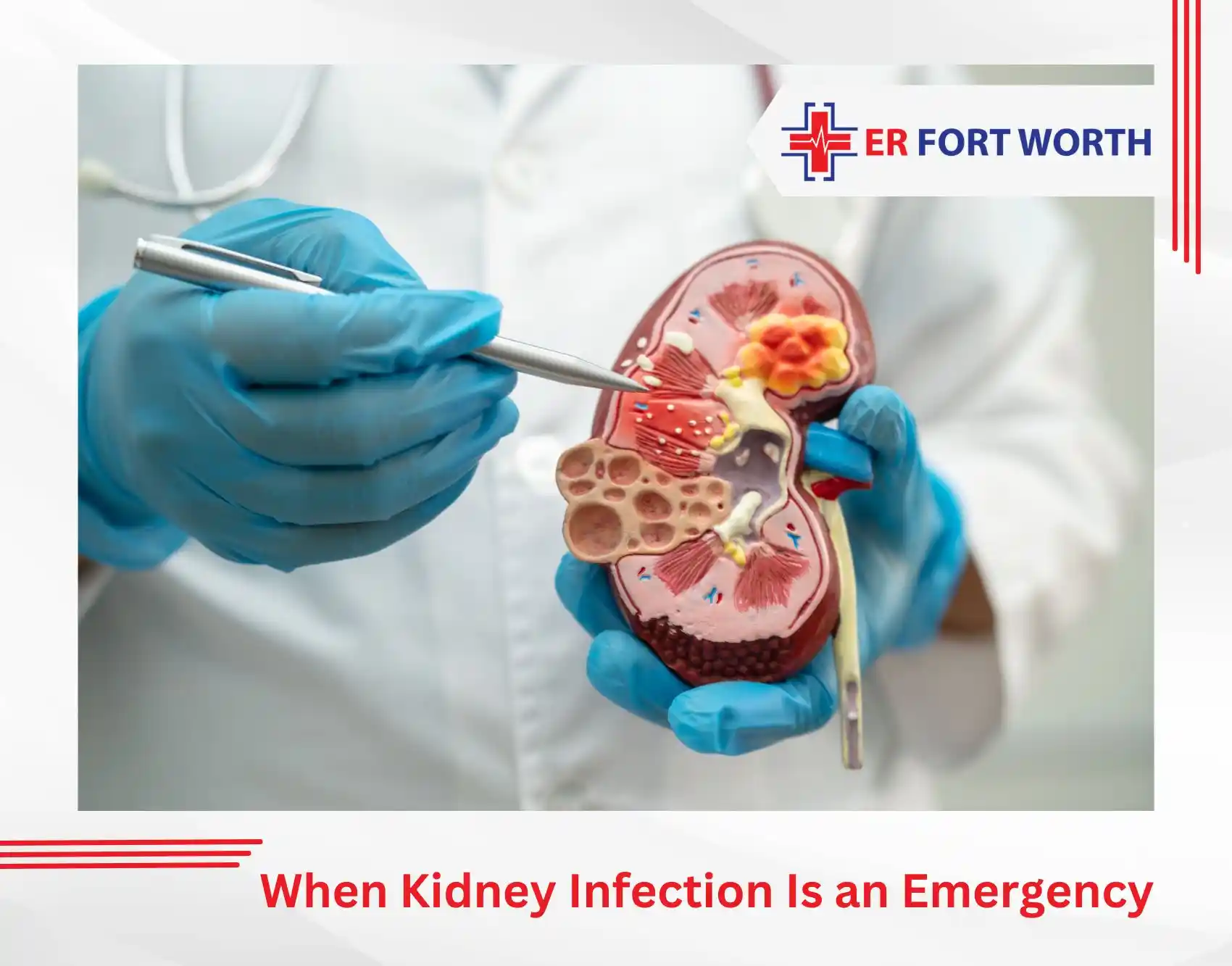
When kidney infection is an emergency includes high fever with confusion, rapid heartbeat, low blood pressure, severe pain, uncontrolled vomiting, blood in urine with fever, symptoms during pregnancy, or symptoms in patients with diabetes, kidney stones, or a weakened immune system.
Certain features make the situation urgent enough for immediate 911, not just same day evaluation.
Call 911 for any of these
- Confusion or unusual drowsiness
- Very high fever, especially over 103 F
- Rapid heartbeat or racing pulse
- Difficulty breathing or shortness of breath
- Low blood pressure or dizziness on standing
- Severe back or abdominal pain
- Cold, clammy, or mottled skin
- Uncontrolled vomiting
- Symptoms in a pregnant patient
- Signs of shock
Come to the ER same day for these
- Fever with back or flank pain
- Chills, nausea, or vomiting with urinary symptoms
- Symptoms lasting more than 24 hours without improvement
- Blood in urine with fever
- Known kidney stones or urinary tract issues
- Diabetes, kidney disease, or a weakened immune system
- Age over 65 with new confusion, weakness, or falls
- Recent catheter use or urinary procedure
Sepsis warning: A kidney infection that has spread to the bloodstream causes sepsis. Signs include high fever, confusion, rapid pulse, fast breathing, low blood pressure, and cold or clammy skin. Sepsis is life threatening and needs immediate 911 response.
4. What Should You Do Right Now?
Stop trying to manage at home once fever and back pain appear together. Do not delay hoping the symptoms will pass. Come to the ER for same day evaluation, IV fluids, and appropriate testing. Bring a list of your medications and any known urinary or kidney history.
The first few hours after fever and back pain appear together are critical. Bacteria can spread from the kidney to the bloodstream quickly.
Step 1. Recognize the pattern.
Fever plus back pain plus urinary symptoms is a distinctive pattern. Do not chalk it up to a strained back or a simple stomach bug. Take the combination seriously.
Step 2. Check for red flag symptoms.
Confusion, rapid heartbeat, difficulty breathing, low blood pressure, or severe pain means call 911. Anything less severe still means same day ER, not next week clinic.
Step 3. Stay hydrated but do not overload.
Small frequent sips of water are appropriate while preparing to leave. Do not drink large volumes if vomiting has started.
Step 4. Do not skip meals if you can eat.
Skipping meals worsens dehydration. If you can tolerate small bites, eat something bland to maintain blood sugar.
Step 5. Get to the ER.
Have someone drive you, or call 911 if you are weak, faint, or confused. Do not drive yourself if you feel unwell.
Step 6. Bring the right information.
- List of current medications
- Known allergies
- Prior kidney or urinary tract issues
- Recent urinary symptoms or bladder infections
- Pregnancy status if applicable
- Any recent hospital stays, catheter use, or urinary procedures
5. How Does ER of Fort Worth Evaluate Kidney Infection?

For any suspected kidney infection ER of Fort Worth begins with rapid triage, vital signs, IV access, urine testing, blood work, blood cultures, imaging when appropriate, and coordinated hospital transfer for patients who need admission. Board certified emergency physicians are available 24/7.
When a patient arrives with fever and back pain, our team follows a structured workup focused on confirming the diagnosis, ruling out complications, and starting supportive care right away.
What happens when you arrive
- Rapid triage and IV access. Vital signs, blood pressure, oxygen saturation, and IV access within minutes of arrival. Fluid replacement starts quickly for patients with signs of dehydration.
- Focused examination. A board certified emergency physician examines the abdomen and back, checks for signs of sepsis, and assesses urinary symptoms.
- Urine testing. Urinalysis and urine culture confirm infection and identify the specific bacteria involved.
- Blood work. Complete blood count, kidney function tests, electrolytes, inflammation markers, and blood cultures when sepsis is suspected.
- Imaging when needed. On site CT or ultrasound looks for kidney stones, abscesses, or blockages that could complicate the infection.
- Cardiac monitoring. Continuous cardiac monitoring for patients with high fever or signs of systemic infection.
- Coordinated hospital transfer. For patients who need inpatient care, we arrange direct transfer to a hospital partner where the infection can be managed under specialist care.
Get evaluated fast: Kidney infection ER care at ER of Fort Worth includes 24/7 walk in access, on site lab, urine testing with results in minutes, imaging, and IV support. Call +1 817-945-4200 or walk in anytime.
Learn more about our full range of emergency services in Fort Worth. We serve Heritage Trace, Alliance, Keller, Watauga, Park Glen, Haslet, Saginaw, and North Richland Hills.
6. Frequently Asked Questions
How fast can a kidney infection become dangerous?
Very fast. Bacteria in the kidney can enter the bloodstream within hours once the infection is established. This is why kidney infection fever back pain together is treated as a same day emergency in most cases.
What are the most common pyelonephritis symptoms?
Common pyelonephritis symptoms include fever above 101 F, chills, one sided back or flank pain, nausea, vomiting, painful urination, urgent frequent bathroom trips, and general feeling of being very ill. The systemic symptoms are what separate it from a bladder infection.
Can I have a kidney infection without a UTI first?
Yes, though uncommon. Most kidney infections start as a bladder infection that traveled upward. Some develop directly through the bloodstream, from a kidney stone blockage, or after a urinary procedure. Any pathway warrants ER evaluation.
Is a kidney infection during pregnancy an emergency?
Yes. Kidney infections during pregnancy carry higher risk for both mother and baby, including preterm labor. Same day ER evaluation is standard for pregnant patients with fever, back pain, or urinary symptoms.
What does kidney infection back pain feel like?
Usually a dull deep ache in the back or flank, on one side, roughly at the level of the lower ribs. Some patients describe it as tenderness that worsens with pressure or when lying on that side. Muscle strain typically feels sharper and moves with position changes.
Will my insurance cover the visit?
ER of Fort Worth accepts most major commercial insurance plans for kidney infection ER visits. We do not currently accept Medicare, Medicaid, or Tricare. Under federal law, insurance covers emergency visits based on symptoms, not the final diagnosis. Fever with back pain is unambiguously an emergency presentation.
People Also Ask About Kidney Infection
These are related questions Google’s People Also Ask feature and AI search engines commonly surface. Direct answers below.
Can a kidney infection go away on its own?
No. Kidney infections do not resolve without appropriate medical care. Waiting increases the risk of the infection spreading to the bloodstream. When kidney infection is an emergency, delay makes the situation worse, not better.
What is urosepsis and how serious is it?
Urosepsis is the medical term for sepsis caused by a urinary tract infection that has spread to the bloodstream. It is life threatening. Warning signs include high fever, confusion, rapid pulse, fast breathing, and low blood pressure. Immediate ER care is required.
Why do women get kidney infections more often than men?
Women have a shorter urethra, which makes it easier for bacteria to travel from outside the body into the bladder and then upward into the kidney. Pregnancy, hormonal changes, and anatomical differences also raise the risk in women.
Can back pain alone mean a kidney infection?
Back pain alone, without fever, chills, urinary symptoms, or feeling systemically unwell, is usually not from a kidney infection. Muscle strain, disc issues, and other causes are far more common. The combination of kidney infection fever back pain is what raises suspicion.
Fever and Back Pain? Get Same Day Answers in Fort Worth
Kidney infection fever back pain is a combination that should never be waited out at home. Same day evaluation with urine testing, blood work, and IV support can catch a spreading infection before it becomes life threatening. At ER of Fort Worth, our board certified physicians are available 24/7 with on site lab and imaging.
- Address: 4561 Heritage Trace Pkwy, Suite 117, Fort Worth, TX 76244
- Phone: +1 817-945-4200
- Hours: Open 24 hours, every day of the year
- Insurance: Most commercial plans accepted. Medicare, Medicaid, and Tricare not accepted at this time.
Visit ER of Fort Worth for facility details, directions, and a full list of the conditions we treat.
Call 911 now if life threatening: For confusion, very high fever, rapid heartbeat, low blood pressure, severe pain, difficulty breathing, or any sign of sepsis. Do not attempt to drive yourself.