Reviewed by the emergency care team at ER of Fort Worth | 4561 Heritage Trace Pkwy, Suite 117, Fort Worth, TX 76244 | +1 817-945-4200
Call 911 immediately: For fainting with chest pain, shortness of breath, seizures, prolonged loss of consciousness, head injury from the fall, weakness on one side, or slurred speech. These signs point to serious causes that need immediate emergency care.
A sudden fainting spell is startling for everyone involved. Sudden dizziness fainting causes range from harmless triggers like standing up too fast to serious heart or brain conditions. Knowing the difference helps you decide when to head to the ER.
This guide answers the most common questions about dizziness and fainting, so you can recognize warning signs and know when to walk into our Fort Worth ER.
What Causes Sudden Dizziness and Fainting?
Sudden dizziness fainting causes happen when blood flow to the brain briefly drops. Common causes include vasovagal reactions (from fear, pain, or sight of blood), orthostatic hypotension (standing up too fast), dehydration, low blood sugar, heart rhythm problems, and inner ear disorders.
The medical term for fainting is syncope. It happens when blood flow to the brain drops for a few seconds. Some causes are harmless. Others are serious enough to require immediate ER evaluation.
The Cleveland Clinic notes that syncope is common, especially in adults over 70, but any first fainting episode needs medical evaluation to rule out heart or neurological causes.¹
What Are the Common Causes by Category?
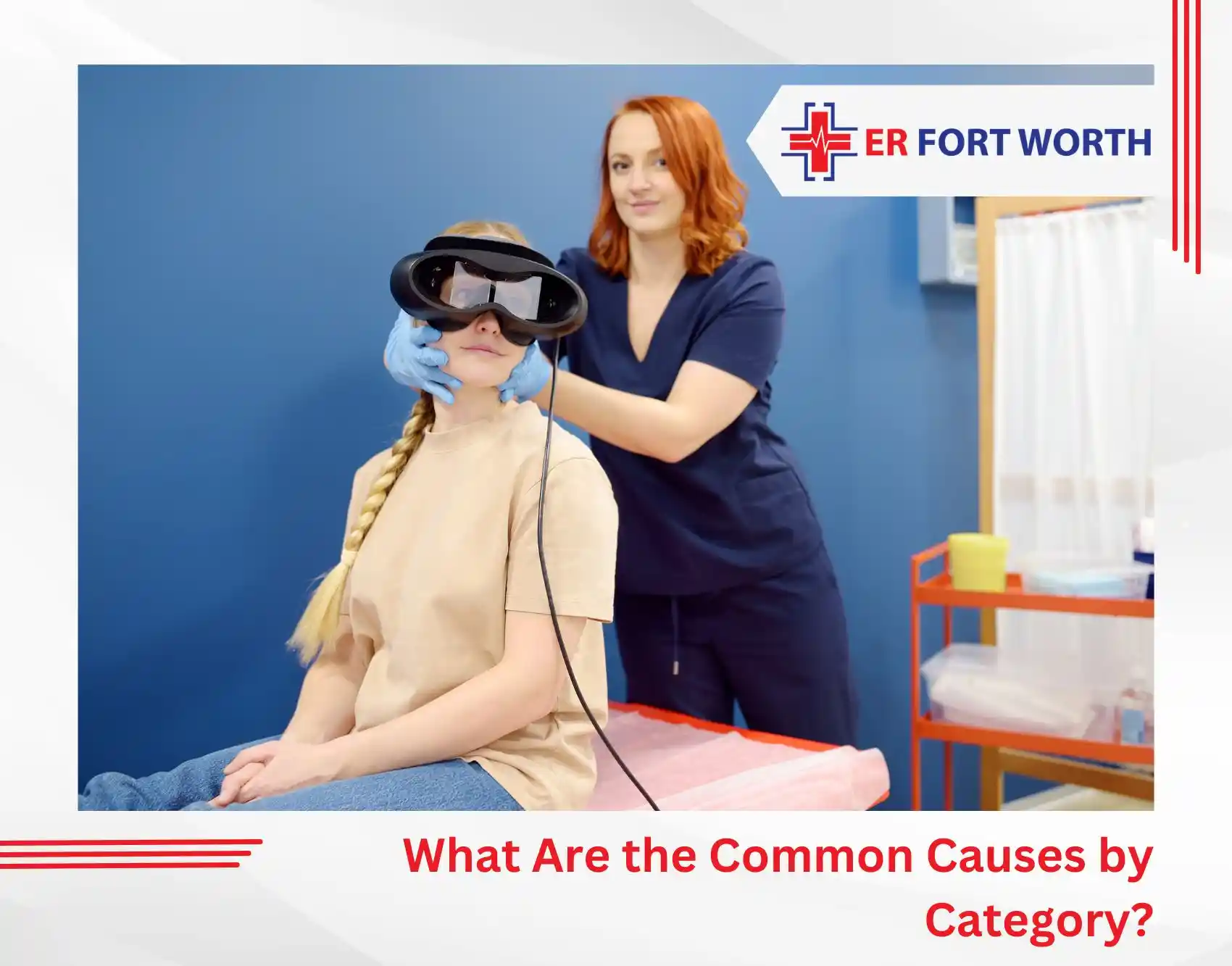
What causes fainting spells depends on the underlying trigger. The main categories are cardiac (heart rhythm or valve problems), reflex (vasovagal or situational), orthostatic (blood pressure drop on standing), metabolic (low blood sugar, dehydration), and neurological (seizure or stroke).
The table below groups the most frequent causes by body system, along with typical triggers and urgency levels.
| Category | Typical Triggers | Urgency Level |
| Cardiac | Irregular heart rhythm, structural heart problems, low blood pressure from heart failure | Immediate 911 |
| Reflex (Vasovagal) | Sight of blood, pain, emotional stress, prolonged standing, warm crowded rooms | Same day evaluation |
| Orthostatic | Standing up too fast, dehydration, blood loss, certain medications | Same day evaluation |
| Metabolic | Low blood sugar, severe dehydration, electrolyte imbalance | Same day evaluation |
| Neurologic | Stroke, seizure, transient ischemic attack, migraine | Immediate 911 |
| Vestibular | Inner ear infections, benign positional vertigo, Meniere’s disease | Evaluate soon |
Cardiac and neurologic causes carry the highest risk. When fainting comes with chest pain, weakness, slurred speech, or vision changes, these systems are the first to check.
What Should You Do If Someone Faints?
If someone faints, lay them flat on their back, raise their legs about 12 inches, loosen tight clothing, and check for breathing. Do not give them anything to eat or drink. If they do not wake within one minute, call 911 immediately.
- Lay them flat. Position them on their back. This restores blood flow to the brain faster than sitting.
- Raise the legs. Lift their feet about 12 inches off the ground. This helps blood return to the head.
- Loosen tight clothing. Belts, collars, and tight waistbands can restrict breathing and blood flow.
- Check breathing and pulse. If either stops, start CPR and have someone call 911.
- Do not give food or drink. The person may still be groggy, and choking is a risk.
- Stay with them after they wake. Fainting can happen again shortly after. Have them rest before standing.
- Note what happened. How long they were out, what they were doing before, any injury from the fall. This helps ER staff evaluate faster.
When Is Dizziness or Fainting a 911 Emergency?
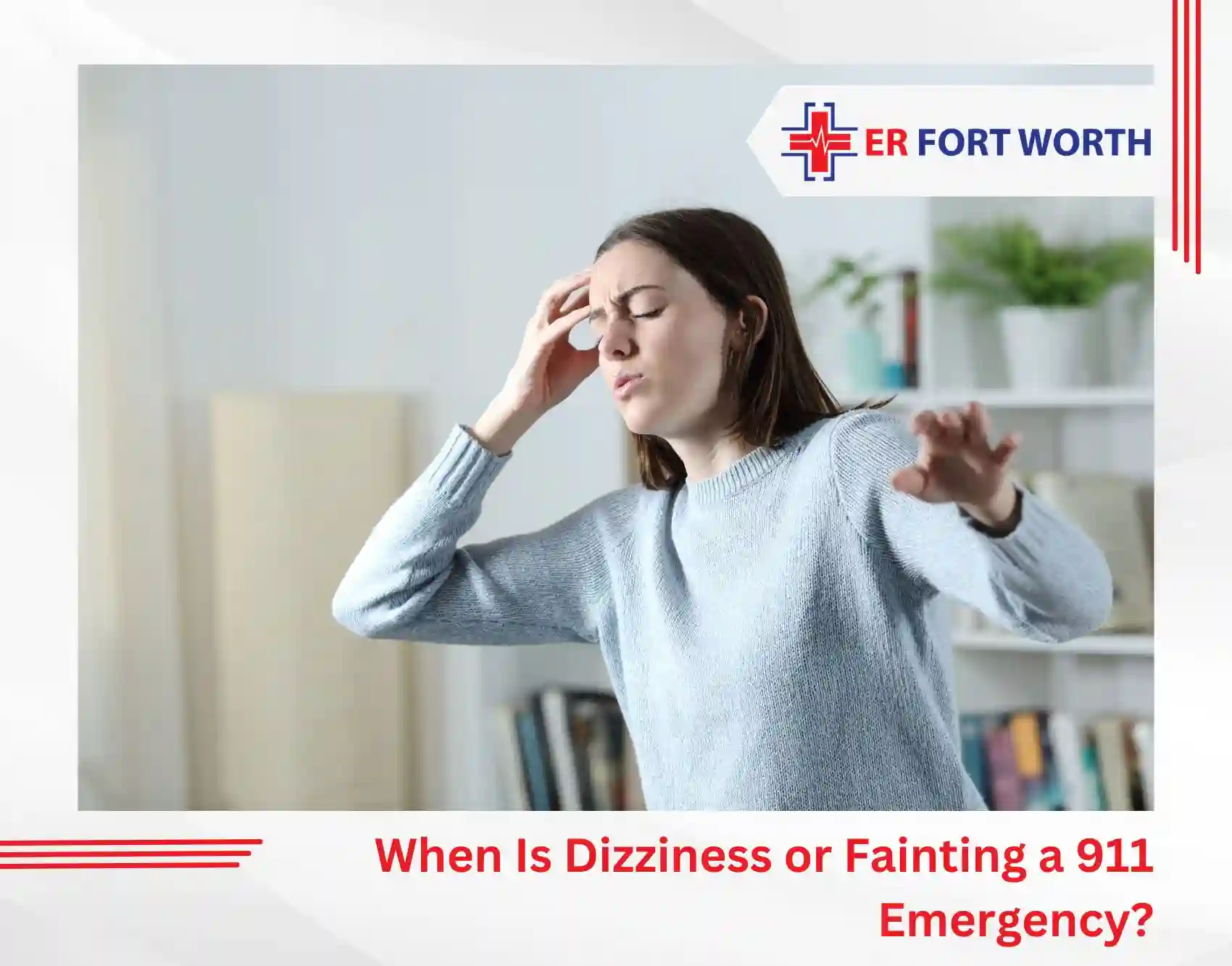
Knowing when dizziness is emergency level saves lives. Call 911 for fainting with chest pain, shortness of breath, seizures, prolonged unconsciousness, head injury from the fall, weakness on one side, slurred speech, or a first fainting episode in someone over 60.
These features move a fainting episode from ordinary to urgent:
- Fainting with chest pain, palpitations, or shortness of breath
- Loss of consciousness lasting more than one minute
- Seizure activity during or after fainting
- Head injury from the fall
- One-sided weakness, slurred speech, or facial droop
- Sudden severe headache with dizziness
- Fainting during exercise or exertion
- Vision changes, double vision, or blackout that lingers
- Any first fainting episode in someone over 60
- Repeated fainting spells within a short period
- Fainting during pregnancy
These signs point to serious cardiac or neurologic causes. Do not wait to see if it happens again.
Who Is at Higher Risk for Fainting?
Some adults face higher risk of the serious syncope symptoms adults should not ignore. Knowing your risk profile changes how quickly you should come in. What causes fainting spells in one age group can differ significantly from another, so risk factors matter.
- Adults over 60 (higher risk of cardiac causes)
- People with known heart disease, arrhythmia, or heart failure
- Diabetes patients (risk of low blood sugar or blood pressure changes)
- Pregnant patients (blood volume shifts and low blood sugar)
- People with a family history of sudden cardiac death or fainting
- Anyone taking multiple prescribed medications affecting blood pressure
- Athletes with unexplained fainting during exercise
- People with dehydration from illness, heat, or reduced fluid intake
The Mayo Clinic emphasizes that sudden fainting without warning signs, especially during exercise, may be the first sign of an underlying heart condition and warrants prompt evaluation.²
What Happens at ER of Fort Worth for Fainting Episodes?
At ER of Fort Worth, evaluation for sudden dizziness fainting causes starts with vital signs, EKG, and blood work to check for cardiac and metabolic causes. Our team also examines for stroke signs and orthostatic blood pressure changes.
Immediate workup
- Vital signs and orthostatic blood pressure check
- EKG to check heart rhythm
- Cardiac monitoring for at least the initial evaluation
- Neurologic exam for stroke signs
- Blood glucose check
Same visit lab and imaging
- Complete blood count and metabolic panel
- Electrolyte panel
- Cardiac enzymes when a heart cause is suspected
- CT imaging if head injury or stroke is possible
- Pregnancy test in women of reproductive age
Our on-site laboratory services process cardiac enzymes, metabolic panels, and electrolyte studies during the same visit. For patients whose fainting followed a period of high fever or illness, our companion guide on fever treatment in Fort Worth covers the different evaluation path.
For patients whose fainting points to a serious cardiac or neurologic cause, our board certified emergency physicians coordinate direct transfer to a hospital partner for admission and specialist care.
Walk in for evaluation: ER of Fort Worth is open 24/7 for fainting episodes with EKG, same visit lab, imaging, and cardiac monitoring. Call +1 817-945-4200 or walk in anytime.
Common Questions
Is fainting once a reason to see a doctor?
Yes. Even a first fainting episode without a clear trigger warrants evaluation. Knowing when dizziness is emergency level, versus when it can wait, is what a same visit ER workup answers. The goal is to rule out cardiac or neurologic causes that could cause repeat episodes with worse outcomes.
What is the difference between dizziness and vertigo?
Dizziness is a general feeling of unsteadiness or lightheadedness. Vertigo is a specific sensation that you or the room is spinning. Vertigo usually points to inner ear causes, while dizziness has broader possibilities including heart, brain, and blood pressure causes.
Can dehydration alone cause fainting?
Yes. Significant dehydration reduces blood volume, which can drop blood pressure enough to cause fainting when standing. Combining dehydration with heat, alcohol, or exertion increases the risk.
How long does a typical fainting spell last?
Most vasovagal faints last only seconds to a minute. Longer unconsciousness or slow recovery may indicate seizure, stroke, or a serious cardiac cause and needs immediate ER evaluation.
Should I go to the ER if I feel like I might faint but do not actually pass out?
Yes if repeated. Near fainting, called presyncope, has the same possible causes as full syncope. Recurrent episodes need the same workup even without full loss of consciousness.
Sudden Dizziness or Fainting in Fort Worth? Walk Into Our ER 24/7
Sudden dizziness fainting causes deserve prompt evaluation, especially when the episode included warning signs like chest pain, weakness, or head injury from the fall. Same visit EKG, lab work, and cardiac monitoring can identify serious causes quickly.
- Address: 4561 Heritage Trace Pkwy, Suite 117, Fort Worth, TX 76244
- Phone: +1 817-945-4200
- Hours: Open 24 hours, 7 days a week, 365 days a year
- Insurance: Most major commercial plans accepted
- Wait time: Rapid triage with typical door to provider time under 15 minutes
Visit ER of Fort Worth for directions and facility details, or learn more about our full range of emergency services in Fort Worth. Proudly serving Heritage Trace, Alliance, Keller, Watauga, Park Glen, Haslet, Saginaw, North Richland Hills, and surrounding North Fort Worth communities.
Call 911 now: For fainting with chest pain, seizures, prolonged unconsciousness, head injury, weakness, or slurred speech. Do not drive yourself.