
If you are feeling sick and wondering if it is COVID-19 or the Flu can be mentally exhausting , especially when symptoms hit fast. In Fort Worth and across Tarrant County, both COVID-19 and Flu are spreading seasonally, but timely care can prevent severe health conditions .
Many patients tell us, “I thought it would pass.” Sometimes it does. Other times, the body needs emergency-level care to prevent complications.
COVID-19 or the Flu: Why It’s So Hard to Tell the Difference

Firstly, both viruses affect your respiratory system, which is why comparing COVID-19 vs Flu often leads to great confusion. According to CDC and Mayo Clinic guidance, symptoms overlap heavily, and testing is often the only way to know for sure.
That’s why focusing on how you feel, not just what you have, is so important.
COVID-19 or the Flu: What It Often Feels Like Day by Day
Patients often understand COVID-19 vs Flu this way, though experiences vary:
- Day 1–2: Sudden fatigue, headache, sore throat, body aches
- Day 3–4: Fever spikes, worsening cough, chest tightness
- Day 5+: Shortness of breath, weakness, dehydration, or confusion
Common symptoms of Covid-19 include loss of taste or smell and lingering fatigue.
While the symptoms of Flu often bring sudden high fever, chills, and severe body aches.
Still, no symptom pattern is definitive without testing.
Can You Tell Without a Test? (Short Answer: Not Reliably)

Commonly patients search online comparing COVID-19 vs Flu, hoping for clarity. Unfortunately, even doctors rely on diagonostic testing because symptoms overlap so much.
If you are high-risk, symptoms are escalating, or you are unsure whether it’s COVID-19 or the Flu, seek evaluation as soon as possible, especially within the first 48 hours.
When to Go to the ER Now vs Monitor at Home
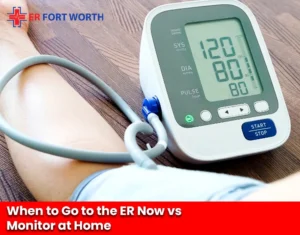
Go to the ER NOW if you notice:
- Breathing issue or shortness of breath
- Chest pain or pressure
- Bluish lips or face
- Confusion or trouble staying awake
- Severe dehydration (not urinating, dizziness)
- Fever that won’t come down
These warning signs require attention, whether it’s COVID-19 or the Flu.
You may monitor at home if it’s COVID-19 or the Flu and:
- Symptoms are mild and stable
- You can stay hydrated and breathe comfortably
- Fever responds to medication
If symptoms worsen or change, trust your instincts and seek care.
Why Early Treatment Timing Matters

Early treatment can make a significant difference when dealing with COVID-19 or the Flu. Antiviral treatments for both illnesses work best when started early, often within 48 hours of symptom onset. Delaying can increase the risk of complications, especially for children, older adults, and those with chronic conditions.
At ER of Fort Worth, we offer rapid evaluations,run labs, and provide supportive care like IV fluids and oxygen if needed.
Local Emergency Care for Fort Worth & North Texas

During peak respiratory virus season in Fort Worth, we see firsthand how quickly symptoms of Covid-19 and symptoms of Flu can escalate.
Our freestanding ER serves patients across Tarrant County with:
- 24/7 walk-in emergency care
- On-site lab testing
- IV fluids for dehydration
- Respiratory support when needed