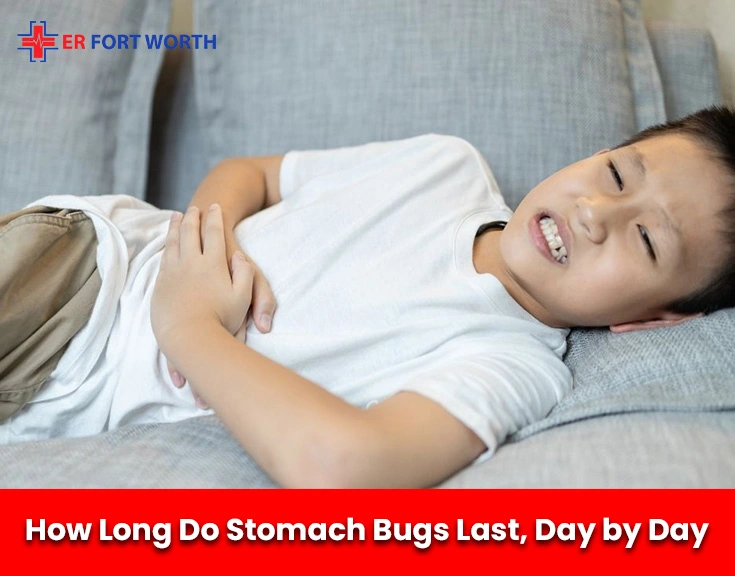
How long do stomach bugs last? For most people, the answer is 24 to 72 hours, miserable, but short. You are reading this from bed, maybe with your phone in one hand and a trash can in the other, trying to figure out if this is normal or if something’s wrong.
Here’s the short answer: most stomach bugs run their course in a day or two, sometimes three. The nausea, the cramping, the trips to the bathroom, they burn out fast once your body clears the virus. But “usually” is not “always.”
If you are dizzy, can not keep water down, or you are watching a toddler go quiet and glassy-eyed, this is not the moment for guesswork. We treat dehydration from stomach bugs every week at ER of Fort Worth, and we can tell you exactly what’s normal, what’s not, and when it’s time to come in for IV fluid and dehydration treatment in Fort Worth.
What Is a Stomach Bug, Really?

Here’s the thing, “stomach bug” is not a medical diagnosis. What you are dealing with is almost always viral gastroenteritis: inflammation of the stomach and intestines, most often caused by norovirus or rotavirus. It’s not related to influenza at all, even though people call it the “stomach flu.”
According to MedlinePlus, a service of the National Institutes of Health, gastroenteritis is inflammation of the lining of the stomach and intestines that typically causes diarrhea, cramping, nausea, and vomiting. Wikipedia’s overview of gastroenteritis classifies most cases as viral, bacterial, or parasitic, with viral infections responsible for the majority of short-term cases in otherwise healthy adults.
Across Tarrant County, we see stomach bugs cluster in predictable waves, daycare and school outbreaks each fall, holiday-gathering spread in December, and norovirus surges through the coldest months of a DFW winter. What we see constantly at our Fort Worth ER is people who assume every stomach bug is the same. It’s not, and that distinction matters for how long you will feel this way.
How Long Do Stomach Bugs Last, Day by Day
So does that mean every stomach bug lasts exactly the same amount of time? Not quite. Most viral stomach bugs run 24 to 72 hours from the first wave of nausea to the last trip to the bathroom.
Norovirus, the most common culprit, tends to hit hard and fast, vomiting and diarrhea for a day or two, then a slow climb back to feeling human. Rotavirus, more common in kids but not exclusive to them, can drag on longer, sometimes 3 to 7 days.
The CDC notes that norovirus symptoms usually develop 12 to 48 hours after exposure and that most people recover within 1 to 3 days, a timeline consistent with what we see walk through our doors across Tarrant County every week.
Here’s the part competitors gloss over: duration is not the same as recovery. Your gut stops actively fighting the virus in a day or two, but your energy, appetite, and normal bowel habits can take another few days to fully bounce back. That’s not a red flag. That’s just your body recalibrating after being run through the wringer.
Is a Stomach Bug Contagious, And for How Long?

Yes, and longer than most people assume. You are contagious from the moment symptoms start, and according to NHS Inform, a person with gastroenteritis is most infectious from when symptoms begin until 48 hours after all symptoms have cleared.
Some viruses, like norovirus, can still be shed in stool for a week or two after you feel fine, which is why handwashing matters even after you think you are in the clear. If your kid’s daycare class in North Fort Worth has a stomach bug going around, plan on keeping them home for a full two days after the last episode of vomiting or diarrhea, not just until they stop complaining.
Food Poisoning vs. Stomach Bug, What’s the Difference?
This is the comparison question we get asked constantly, usually by someone convinced the shrimp at dinner is to blame. Here’s the honest answer: it depends on timing.
Food poisoning usually hits fast, symptoms within 2 to 6 hours of eating contaminated food, driven by bacteria or toxins rather than a virus. A stomach bug, on the other hand, has an incubation period of 12 to 48 hours, because your body needs time to let the virus take hold before symptoms show up.
There’s a source difference too. Food poisoning traces back to something you ate, undercooked chicken, food left out too long at a Fort Worth summer barbecue, cross-contaminated produce. A stomach bug spreads person-to-person, surface-to-hand-to-mouth, which is why it moves through households, schools, and daycares in North Texas so predictably every fall and winter. Fever is more common with a stomach bug, food poisoning often skips it entirely. If everyone who ate the same dish gets sick within hours, that’s food poisoning. If it spreads through your
house one person at a time over several days, that’s a stomach bug, and that’s food poisoning and stomach illness care in Tarrant County we handle daily.
Stop and Read This If You Can’t Keep Anything Down
Most stomach bugs are miserable but not dangerous. Some are not. Here’s when this stops being a wait-it-out situation:
- You have not kept any fluids down for more than 24 hours, dehydration risk climbs fast after that point
- Signs of real dehydration: dizziness, a dry mouth, little or no urination, sunken eyes, or extreme fatigue
- Blood in vomit or stool, or stool that looks black and tarry
- A fever over 102°F in an adult that will not come down, or any fever at all in a very young infant
- Abdominal pain that’s sharp, constant, and in one spot, rather than crampy and generalized
- Symptoms that have lasted more than 3 to 4 days without any improvement
- An infant, young child, or older adult who seems unusually lethargic, confused, or “just not themselves”
- Signs of shock, a racing heartbeat, rapid breathing, cold or clammy skin, confusion
If any of the above apply right now, come to ER of Fort Worth. We can rehydrate you with IV fluids and run labs if needed, open 24 hours a day, 7 days a week. No appointment. No referral needed.
You can probably wait it out, but still keep an eye on things, if you are managing to sip fluids, your urine is a normal color, and you are weak but not dizzy standing up. Most people fall into this category. Trust your gut here, if something feels off beyond “I feel like garbage,” it usually is.
What to Eat (and Avoid) When You Have a Stomach Bug

Hydration comes first, always. Water in small sips, electrolyte drinks, or an oral rehydration solution, the goal is replacing what you are losing, not chugging a full glass and triggering another round of vomiting. Pedialyte and similar electrolyte drinks work well for this, for exact amounts for a child or an elderly family member, that’s a conversation for a pharmacist or one of our clinicians, not a blog post. For more on staying ahead of dehydration beyond just this illness, see our guide on how to stay hydrated when you are sick.
Once vomiting has settled, bland foods are your friend: bananas, plain rice, toast, crackers, and applesauce. Broths work too. Skip dairy, caffeine, alcohol, anything fried, and anything spicy, they are harder to digest and tend to reignite symptoms right when you thought you were past them. This is basically the gastric flu diet people search for, and it hasn’t changed much in decades because it works.
When Can You Start Eating Regular Food Again?
Here’s the honest answer: when your appetite comes back and your stomach is not punishing you for eating. There’s no exact hour-by-hour formula. Most people can start reintroducing regular food within a day or two of symptoms easing, going slowly, a little solid food, see how it sits, then a bit more. If a food triggers cramping or nausea again, back off and try again in a few hours. Rushing this part is usually what causes the second-day setback people get frustrated by.
24-Hour Stomach Bug, How Long Are You Contagious With the Fast Version?
Some stomach bugs really do hit and clear in about a day, the version people call the “24-hour bug.” It’s usually still norovirus, just a shorter, sharper course. Don’t let the fast recovery fool you into thinking you are not contagious anymore.
Even with a 24-hour stomach bug, you are shedding virus for at least 48 hours after your last symptom, sometimes longer. If you are feeling fine by dinner but were vomiting that morning, you are still contagious enough to get a coworker or classmate sick tomorrow. In Tarrant County, we see this exact pattern move through offices and school classrooms, someone feels “recovered” and goes back too soon, and two days later three more people are down with it.
There’s a Fort Worth-specific wrinkle here too. A stomach bug that would leave you tired but stable in a mild climate can dehydrate you much faster during a Texas summer. When it’s 100 degrees outside and you are already losing fluids to vomiting or diarrhea, your body is fighting a two-front battle, heat and illness both pulling water out of you. We see this every summer: patients who’d have been fine sipping water and resting in cooler weather end up needing IV fluids simply because North Texas heat sped up their dehydration timeline. If you are sick during a DFW heatwave, treat hydration as more urgent, not less.
What Happens at Our Fort Worth ER for Stomach Bugs & Dehydration

Walking into an ER for a stomach bug might sound like overkill, until you are the one who can not stand up without the room spinning. Here’s what an actual visit looks like.
You walk in, no appointment needed, any hour of the day or night. A member of our team gets you into a treatment bay quickly and starts assessing how dehydrated you actually are, checking your heart rate, blood pressure, and how your skin and mouth look, while we coordinate nausea and vomiting care at our Fort Worth ER for anyone who needs medication to break the cycle.
If you need fluids, we start an IV right there. It’s often the fastest way to feel human again, because it bypasses a gut that’s currently refusing to cooperate with anything you drink. If we are concerned about something other than a straightforward stomach bug, appendicitis, a bacterial infection needing antibiotics, or another cause of your symptoms, we run labs and imaging on-site, same visit, no separate referral to another facility.
Whether you are coming from Burleson, Keller, Mansfield, or Crowley, our ER is minutes away and open around the clock, which matters at 3 a.m. when urgent care is closed and you are not waiting until Monday to feel better. If you’re still weighing urgent care versus the ER, our guide on when to go to the ER vs urgent care for a stomach bug breaks down exactly where that line sits.
Not sure if it’s a stomach bug or something more serious? Our Fort Worth ER team can assess you and get fluids started today, walk in any time.
What Fort Worth Families Are Saying
| “I couldn’t keep water down for almost two days and started feeling dizzy every time I stood up. My husband drove me to ER of Fort Worth and they had an IV going within twenty minutes. I felt like a different person by the time I left.” — Danielle S., 37, Mansfield, TX | “My son had a stomach bug going around his daycare class and stopped wanting to drink anything. The ER team checked him over, got him rehydrated, and walked us through exactly what to watch for at home. I’m glad we didn’t wait it out another night.” — Marcus T., 29, Keller, TX |
We are Ready When You Are
Whether you have been running to the bathroom since last night or you are watching your kid go pale and quiet on the couch, you do not have to guess whether this is “just a bug.” Our ER of Fort Worth is open 24/7 with IV fluids, labs, and a team that sees this exact thing every single day. Come in today, we are ready when you are.
Frequently Asked Questions
How long do stomach bugs last?
Most stomach bugs last 24 to 72 hours, though some cases, especially rotavirus, can stretch to a week. Vomiting typically clears faster than diarrhea. Full energy and appetite can take a few extra days to return even after the main symptoms stop.
Is a stomach bug contagious?
Yes. You are contagious from the moment symptoms start until at least 48 hours after they have fully cleared. Some viruses can still be shed in stool for a week or two afterward, so handwashing matters even once you are feeling better.
What’s the difference between food poisoning and a stomach bug?
Food poisoning usually causes symptoms within 2 to 6 hours of eating contaminated food and comes from bacteria or toxins. A stomach bug is viral, takes 12 to 48 hours to show up, and spreads person-to-person rather than from a single meal.
What should I eat when I have a stomach bug?
Start with clear fluids and electrolyte drinks, then move to bland foods like bananas, rice, toast, and crackers once vomiting settles. Skip dairy, caffeine, alcohol, and anything fried or spicy until your gut has fully calmed down.
Does Pedialyte help with a stomach bug?
Electrolyte drinks like Pedialyte can help replace what you’re losing through vomiting and diarrhea. For exact amounts, especially for children or older adults, check with a pharmacist or clinician rather than guessing.
When can I start eating regular food again?
Once your appetite returns and bland foods are sitting fine, gradually reintroduce regular meals, usually within a day or two of symptoms easing. Go slowly and back off if a food triggers cramping or nausea again.
When should I go to the ER instead of waiting it out?
Go in if you can’t keep fluids down for over 24 hours, notice signs of dehydration, see blood in vomit or stool, or have a fever that won’t break. Our Fort Worth ER offers IV fluids and labs 24/7, no appointment needed.