Reviewed by the emergency care team at ER of Fort Worth | 4561 Heritage Trace Pkwy, Suite 117, Fort Worth, TX 76244 | +1 817-945-4200
Call 911 immediately: For sudden leg swelling with chest pain, shortness of breath, coughing up blood, fainting, or a racing heart. These can signal a pulmonary embolism, which is life threatening. Do not drive yourself.
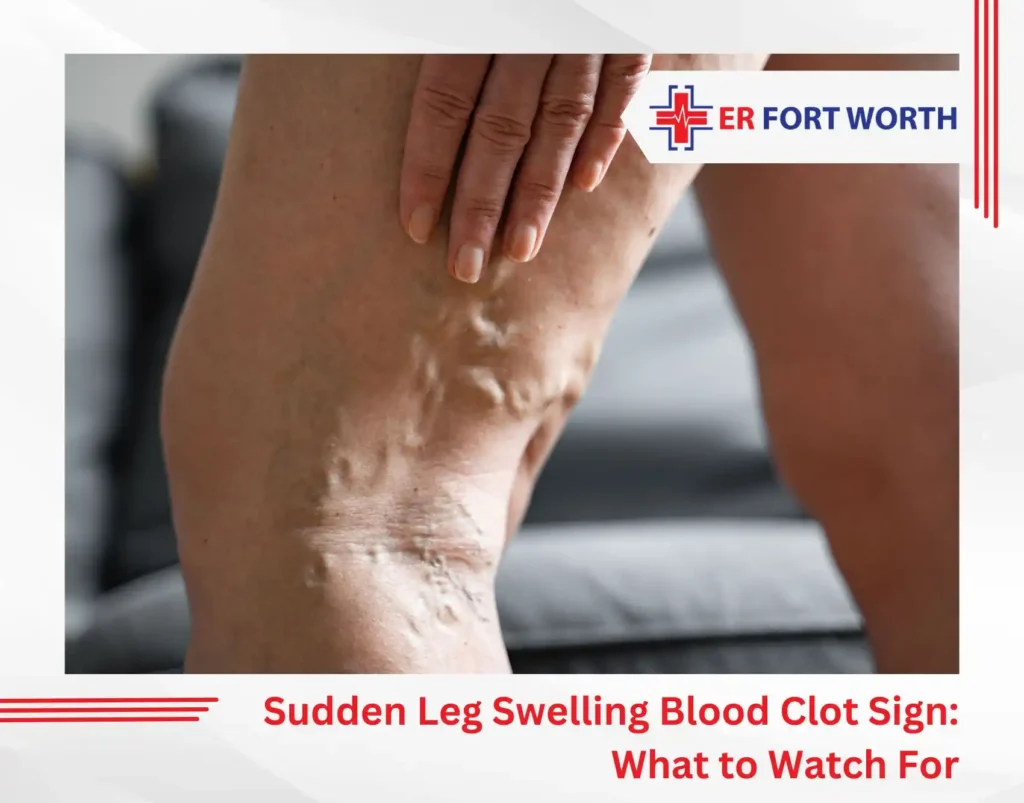
Sudden leg swelling that comes on without an obvious injury can be a warning sign of a deep vein thrombosis, or DVT. A blood clot forming in the deep veins of the leg can break loose and travel to the lungs, causing a pulmonary embolism.
Recognizing sudden leg swelling blood clot sign patterns early can make a real difference. This guide covers what to watch for, how DVT differs from other causes of leg swelling, and when to head into our Fort Worth ER.
What Is a DVT and Why Is It Dangerous?
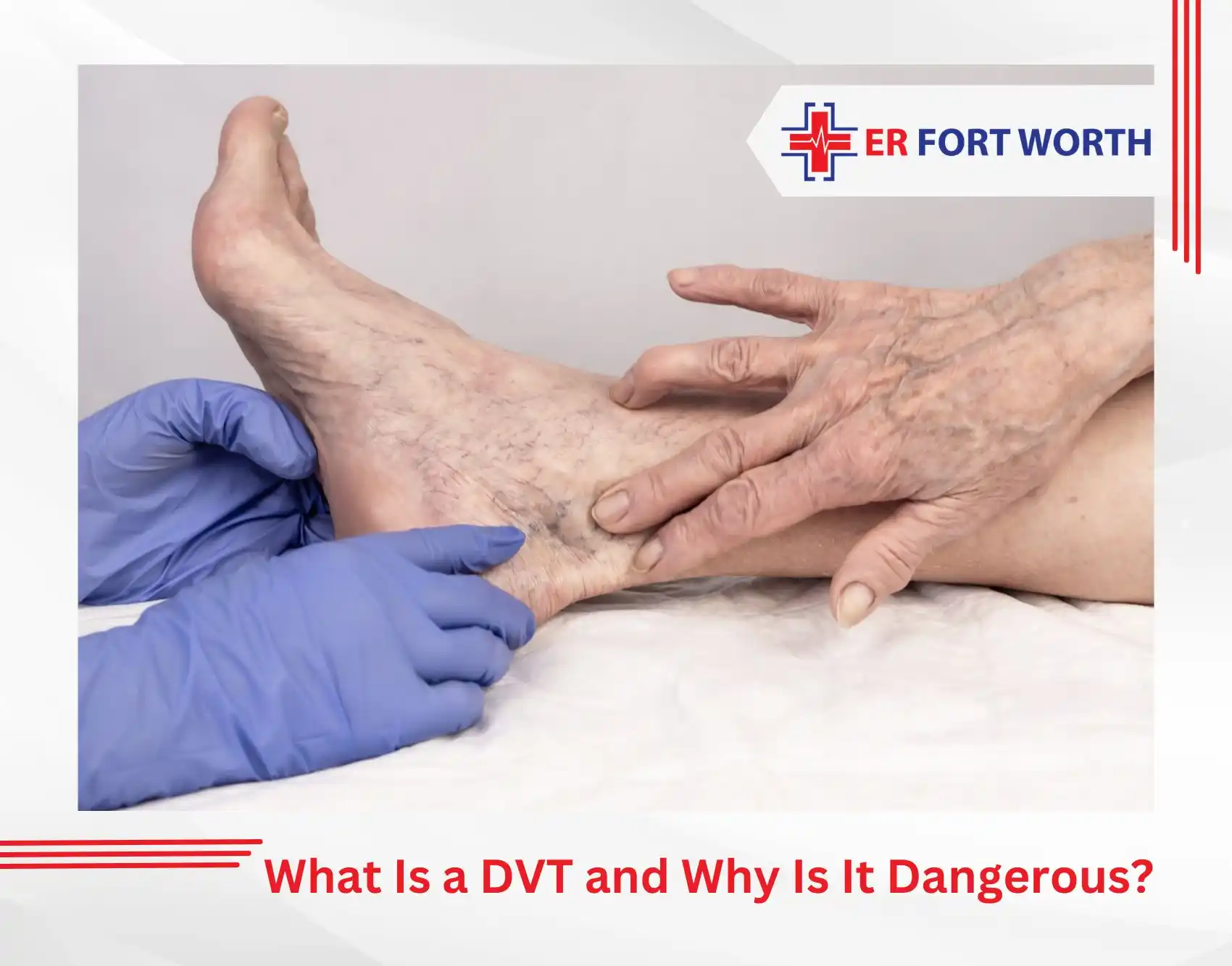
Deep vein thrombosis (DVT) is a blood clot that forms in one of the large veins deep inside the leg, thigh, or pelvis. Less commonly, it happens in the arm.
The danger is not just the clot itself. If part of the clot breaks off, it can travel through the bloodstream to the lungs. This is called a pulmonary embolism, or PE, and it can be fatal. Every sudden leg swelling blood clot sign therefore carries potential lung risk, not just leg risk.
According to the Centers for Disease Control and Prevention, venous thromboembolism affects up to 900,000 Americans each year, and sudden death is the first sign in about one in four PE cases. This is why any suspected DVT warrants immediate evaluation.¹
Sudden Leg Swelling Blood Clot Sign vs Other Causes
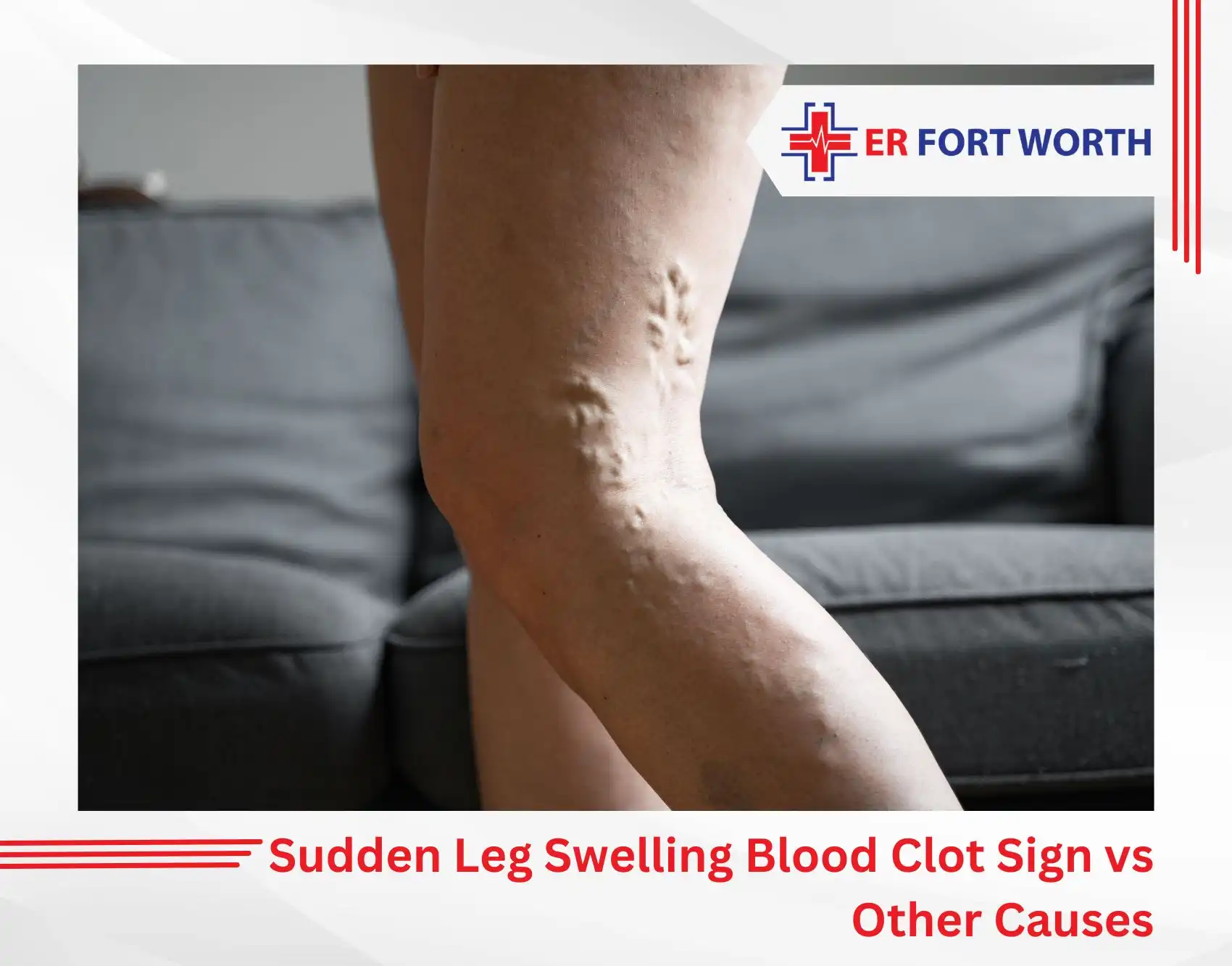
Not all leg swelling means DVT. The pattern of the swelling tells us a lot. Here is a side by side of what points to blood clots versus other common causes.
| Feature | DVT (Blood Clot) | Heart or Kidney Cause | Injury or Cellulitis |
| Legs affected | Usually one leg only | Both legs equally | One leg, matches injury area |
| Onset | Sudden, over hours to a day | Gradual, over days to weeks | Sudden after specific event |
| Skin color | Reddish or purplish | Pale or slightly bluish | Red with clear border |
| Warmth | Warm to touch | Cool or normal | Warm at injury site |
| Pain | Deep calf ache, worse standing | Heaviness, not painful | Sharp at injury site |
| Trigger | Recent surgery, travel, or immobility | Chronic heart or kidney condition | Recent injury or skin break |
The one leg pattern with warmth, redness, and calf pain is the classic combination that raises DVT suspicion the most.
The Classic Deep Vein Thrombosis Symptoms
Deep vein thrombosis symptoms are not always dramatic. About half of DVT cases have no symptoms at all. When symptoms do appear, they usually affect just one leg.
Common signs of DVT in leg
- Sudden swelling of one leg, usually the calf, ankle, or foot
- A deep aching, throbbing, or cramping in the calf
- Skin that feels warm to the touch
- Skin that looks red, discolored, or bluish purple
- Pain that worsens when standing or walking
- A visible surface vein that looks more prominent than usual
- A feeling of tightness or fullness in the calf
Signs of DVT in leg that need same day evaluation
- Rapidly progressing swelling over hours
- Severe leg pain that is out of proportion to any activity
- Calf swelling with a warm reddish streak
- New leg symptoms after long travel, surgery, or hospitalization
The American Society of Hematology emphasizes that DVT can develop without warning, especially in patients who have recently had surgery, given birth, or spent long periods of time sitting or lying down.²
When Leg Swelling Is a 911 Emergency
When leg swelling is emergency level, the cause is usually a pulmonary embolism developing on top of the DVT. Even without leg symptoms, the following signs are 911 calls.
Signs of pulmonary embolism (call 911 now)
- Sudden shortness of breath, especially with any activity
- Sharp chest pain, worse with a deep breath
- Rapid heart rate or a racing pulse
- Coughing up blood or pink foamy sputum
- Fainting, near fainting, or sudden weakness
- Cold, clammy, or bluish skin
- Anxiety or a strong sense that something is wrong
Signs the DVT itself is critical
- Entire leg is swollen and pale or blue
- Severe pain that prevents standing or walking
- Loss of feeling in the foot or toes
- Loss of pulses in the foot
These signs mean the clot is large or blood flow is compromised. Do not drive yourself.
Who Is at Higher Risk for a DVT?
Some people face significantly higher risk. If any of the following apply and you have new leg symptoms, treat it as urgent.
- Recent surgery, especially hip, knee, or abdominal surgery
- Long distance travel of more than 4 hours in the past week
- Recent hospital stay or prolonged bed rest
- Cancer treatment or active cancer
- Pregnancy or recent childbirth
- Hormonal birth control or hormone replacement
- Family or personal history of blood clots
- Obesity, especially with limited mobility
- Smoking
- Age over 60
- Inherited clotting disorders
What Happens at ER of Fort Worth for Suspected DVT
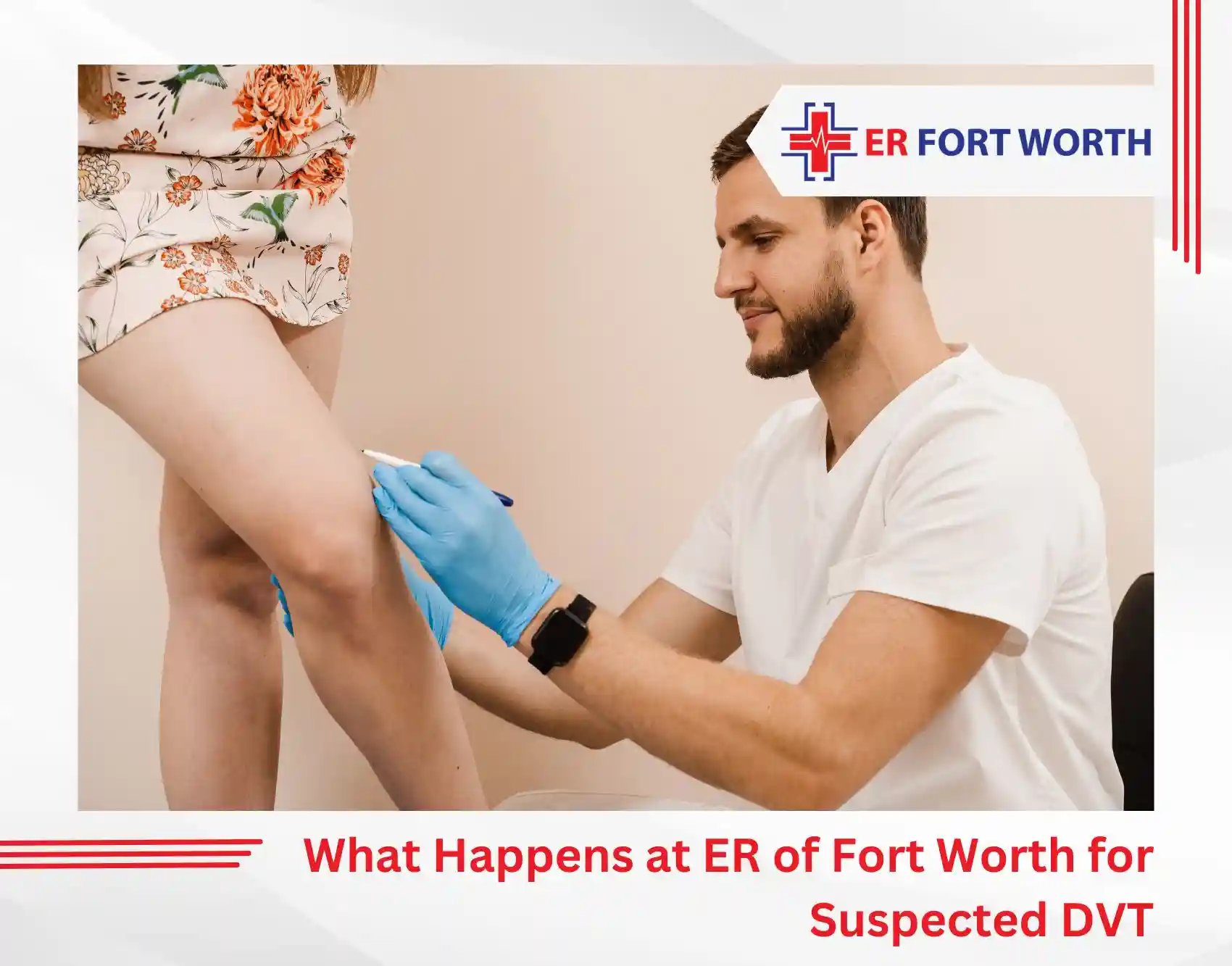
Evaluation starts with vital signs, a focused examination of the leg, and immediate assessment of breathing status to rule out a pulmonary embolism.
A D-dimer blood test is a common first step and can help estimate the likelihood of a clot. Imaging confirms the diagnosis and identifies clot location.
Our typical workup includes
- Vital signs and oxygen saturation check
- Focused leg examination with measurements
- D-dimer blood test and complete blood count
- Ultrasound imaging of the affected leg when available
- CT imaging of the chest if PE is suspected
- Cardiac monitoring if pulmonary embolism is a concern
- IV access and stabilization
Our on-site laboratory services process D-dimer, complete blood count, and coagulation studies during the same visit, so evaluation moves quickly.
For patients with confirmed or highly suspected DVT or PE, our board certified emergency physicians coordinate direct transfer to a hospital partner for admission, extended imaging, and ongoing management under specialty care.
Get evaluated fast: ER of Fort Worth is open 24/7 for suspected DVT with same visit lab, imaging where available, and coordinated hospital transfer for definitive care. Walk in anytime or call +1 817-945-4200.
Common Questions
Can a DVT go away on its own?
Sometimes small clots dissolve without treatment, but there is no way to predict which ones will. Untreated DVT carries a significant risk of PE. Any suspected DVT needs medical evaluation, not waiting it out.
How fast does a DVT become dangerous?
A clot can break off and travel to the lungs within hours to days of forming. There is no reliable way to know when this may happen, which is why knowing when leg swelling is emergency level matters so much. Same day evaluation is standard for a suspected clot.
Does DVT always cause pain?
No. About half of DVT cases have no symptoms at all. Some patients notice only mild swelling or warmth. This is why known risk factors matter so much when deciding to come in.
Can I fly or drive long distance safely after a suspected DVT?
Not until you have been evaluated. Long travel with an untreated clot raises PE risk. Get evaluated first, then discuss travel with a physician.
Is DVT the same as a superficial blood clot?
No. Superficial clots (in veins near the skin surface) are less dangerous, though still worth checking. Deep vein clots are the ones that can travel to the lungs. Only imaging can tell the two apart with certainty.
Sudden Leg Swelling? Get Evaluated in Fort Worth Today
Sudden leg swelling blood clot sign patterns should not be waited out. Same day evaluation with a D-dimer test, ultrasound, and physical examination can rule out or confirm DVT quickly. If a pulmonary embolism is developing, minutes matter.
- Address: 4561 Heritage Trace Pkwy, Suite 117, Fort Worth, TX 76244
- Phone: +1 817-945-4200
- Hours: Open 24 hours, every day of the year
- Insurance: Most major commercial plans accepted.
Visit ER of Fort Worth for directions and facility details, or learn more about our full range of emergency services in Fort Worth. We serve Heritage Trace, Alliance, Keller, Watauga, Park Glen, Haslet, Saginaw, and North Richland Hills.
Call 911 now if life threatening: For chest pain, shortness of breath, fainting, coughing up blood, or racing heart. These are signs of a pulmonary embolism. Do not drive yourself.