Reviewed by the emergency care team at ER of Fort Worth | 4561 Heritage Trace Pkwy, Suite 117, Fort Worth, TX 76244 | +1 817-945-4200
Call 911 immediately: For any adult showing confusion, slurred speech, seizures, or loss of consciousness in the heat. Heat stroke is a medical emergency. Begin cooling with cool water or ice packs while waiting for paramedics. Do not delay.
Texas summers push the body to its limits, and heat stroke confusion symptoms adults notice can appear within minutes when the body’s cooling systems fail. Confusion is the single most important warning sign that separates heat exhaustion from heat stroke.
This guide answers the most common questions about heat stroke confusion symptoms adults face during Texas heat, so you know what to watch for, what to do right away, and when to walk into our Fort Worth ER.
What Is Heat Stroke and Why Is Confusion Serious?
Heat stroke is a life threatening emergency where the body cannot cool itself and core temperature climbs above 104 degrees F. Confusion, altered thinking, and loss of coordination are hallmark signs that the heat is affecting the brain, and immediate cooling and ER care are needed.
When body temperature rises this high, the brain is one of the first organs affected. Adults may seem confused, disoriented, agitated, or unusually sleepy. Some become combative or slur their words like they had been drinking.
Without rapid cooling, heat stroke can cause seizures, organ damage, and death. This is why any confusion during heat exposure is treated as an emergency, not something to sleep off.
According to the Centers for Disease Control and Prevention, heat stroke can drive body temperature to 106 degrees F or higher within 10 to 15 minutes, and it can cause permanent disability or death without emergency treatment.¹
What Are the Signs of Heat Stroke in Adults?
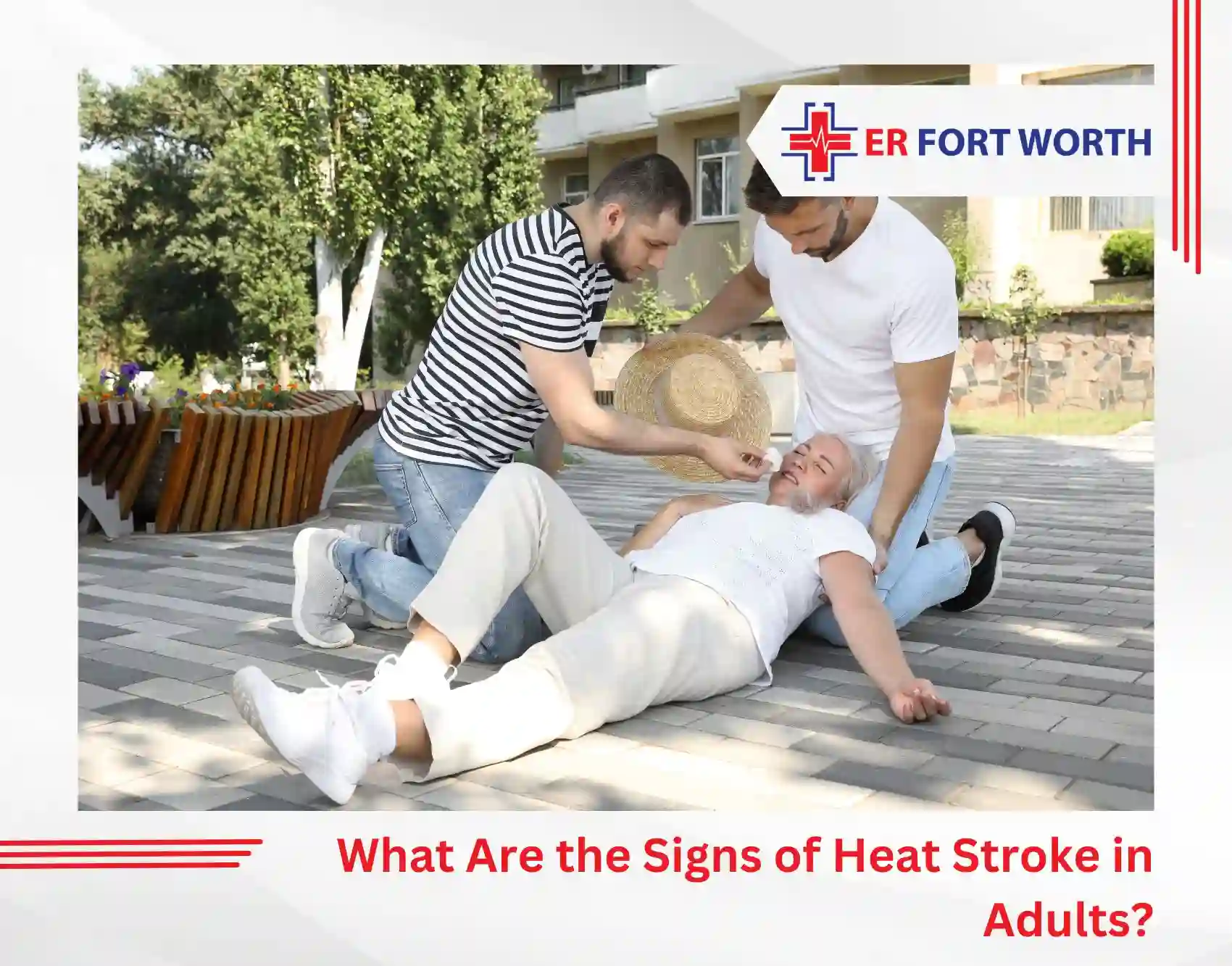
Signs of heat stroke in adults include confusion, high body temperature above 104 F, hot dry or heavily sweating skin, rapid pulse, throbbing headache, nausea, and loss of consciousness. Heat exhaustion, by contrast, causes heavy sweating, weakness, and dizziness, but the person is still alert and thinking clearly.
The clearest way to tell the two apart is a side by side comparison of what each looks like.
| Sign | Heat Exhaustion | Heat Stroke |
| Mental state | Alert, tired, but thinking clearly | Confused, disoriented, agitated |
| Body temperature | Normal to slightly high | Above 104 F |
| Skin | Cool, moist, heavy sweating | Hot, dry OR heavily sweating |
| Pulse | Fast, weak | Rapid, strong, pounding |
| Headache | Mild | Throbbing |
| Nausea and vomiting | Sometimes | Common |
| Seizures or fainting | Uncommon | Possible |
| Action needed | Cool down, rest, hydrate | Call 911 and cool immediately |
The bright line is mental status. If an adult is confused, slurring words, or acting out of character in the heat, treat it as heat stroke until proven otherwise.
What Should You Do If Someone Shows Signs of Heat Stroke?
Call 911 immediately, move the person to a cool place, remove excess clothing, and begin active cooling with cool water, ice packs to the neck, armpits, and groin, or a cool bath. Do not give food or drink if they are confused or unconscious.
- Call 911 first. Do not drive the person yourself. Paramedics can start cooling and IV fluids on the way.
- Move to a cool space. Get them out of direct sun into shade or air conditioning.
- Remove excess clothing. Loosen anything tight. Skin needs to breathe to cool down.
- Cool the body fast. Spray with cool water, apply cold wet towels, or place ice packs on the neck, armpits, and groin. A cool bath works when possible.
- Fan the person. Air movement speeds evaporation and cooling.
- Do not give fluids by mouth. If the person is confused or unable to swallow properly, fluids can enter the airway.
- Monitor and stay with them. Heat stroke can worsen quickly. Do not leave them alone.
When Does Heat Exhaustion Become an Emergency?
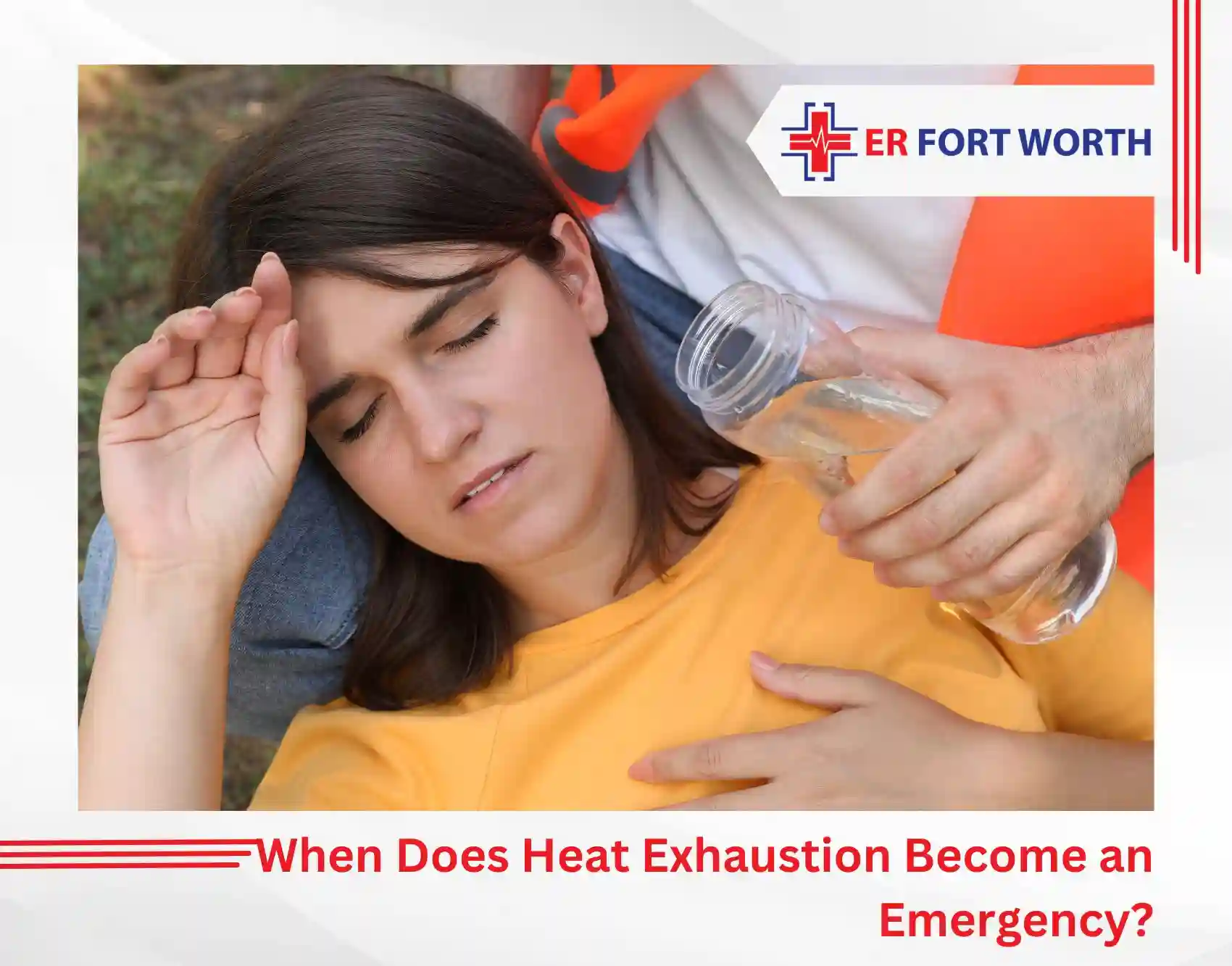
When heat exhaustion becomes emergency level, confusion appears, body temperature rises above 103 F, symptoms do not improve after 30 minutes of rest and cooling, or the person cannot keep fluids down. Any progression to heat stroke signs means call 911.
Watch for these signs that heat exhaustion is turning into heat stroke:
- Confusion, agitation, or slurred speech
- Body temperature above 103 F
- Loss of consciousness or fainting
- Seizures
- Skin that stops sweating and turns hot and dry
- Rapid, strong, pounding pulse
- Repeated vomiting or inability to keep fluids down
- No improvement after 30 minutes of rest and cooling
These signs mean the body’s cooling systems have failed. Do not wait to see if it gets better.
Who Is at Higher Risk for Heat Stroke?
Some adults face higher risk of heat stroke, especially during Fort Worth summers. Knowing your risk profile changes how careful you should be in the heat.
- Adults over 65 (weaker temperature regulation and thirst signals)
- Outdoor workers in construction, roofing, landscaping, and agriculture
- Athletes and people exercising in hot humid weather
- People with heart disease, diabetes, or kidney disease
- Adults taking certain prescribed medications that affect cooling
- People without air conditioning during heat waves
- Anyone dehydrated from illness or alcohol
- Adults with obesity or limited mobility
The CDC’s guide on heat signs and symptoms emphasizes that risk is highest during the first days of a heat wave, before the body has adjusted, and that older adults are less likely to sense rising temperatures.²
What Happens at ER of Fort Worth for Heat Stroke?
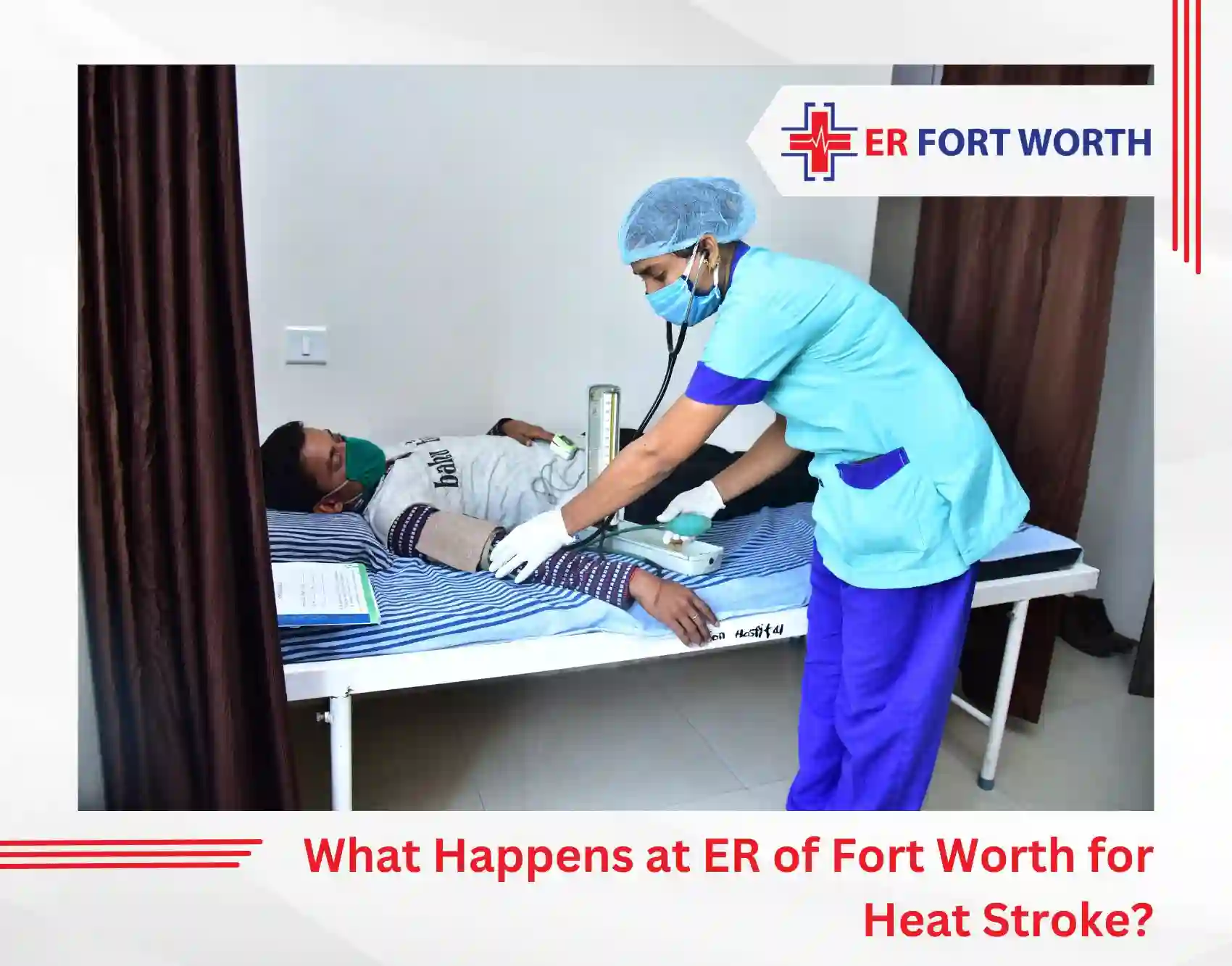
At ER of Fort Worth, evaluation for heat stroke confusion symptoms adults arrive with begins the moment you walk in. Our team focuses on rapid cooling, IV fluids, cardiac monitoring, and blood work to check for organ stress.
Immediate priorities
- Rapid cooling with ice packs, cool water, or specialized cooling techniques
- IV access and immediate fluid replacement
- Vital signs, core temperature, and cardiac monitoring
- Airway support if the patient is unconscious
Same visit workup
- Complete blood count and metabolic panel
- Kidney and liver function tests
- Electrolyte panel to check for imbalances
- Muscle enzyme tests to check for rhabdomyolysis
- Urinalysis to assess hydration and kidney impact
Our on-site laboratory services process electrolyte, kidney function, and muscle enzyme tests during the same visit. For patients whose heat stroke overlaps with high fever from illness or infection, our companion guide on fever treatment in Fort Worth covers the different evaluation path.
For patients whose heat stroke has caused organ damage or requires extended intensive care, our board certified emergency physicians coordinate direct transfer to a hospital partner for admission.
Walk in for evaluation: ER of Fort Worth is open 24/7 for heat stroke and heat illness with rapid cooling, IV fluids, and same visit lab. Call +1 817-945-4200 or walk in anytime.
Common Questions
What is the difference between heat exhaustion vs heat stroke?
The clearest difference in heat exhaustion vs heat stroke is mental status. Heat exhaustion causes tiredness, weakness, and heavy sweating, but the person is alert and thinking clearly. Heat stroke adds confusion, disorientation, or unconsciousness plus a body temperature above 104 F.
How fast can heat stroke happen?
Within 10 to 15 minutes when conditions are extreme. In Texas summers, heat and humidity can drive body temperature up quickly, especially during outdoor work or exercise. This is why fast recognition of heat stroke confusion symptoms adults show in the sun matters so much, and why knowing when heat exhaustion becomes emergency level saves lives.
Can heat stroke happen without heavy sweating?
Yes. Classic heat stroke often causes the skin to stop sweating and become hot and dry. Exertional heat stroke, from exercise, may still involve sweating. Either presentation is an emergency.
How long does recovery from heat stroke take?
Mild cases with rapid cooling and IV fluids often improve within hours. Severe cases with organ involvement may require days in a hospital, plus weeks of recovery. Any suspected heat stroke needs same visit ER evaluation regardless of how the person seems to be responding.
Can I just drink water and rest at home?
For heat exhaustion, yes. Rest in a cool space, drink cool fluids, and monitor. For any confusion, altered thinking, or high body temperature, no. Home management cannot cool the body fast enough once heat stroke has started.
Heat Illness in Fort Worth? Walk Into Our ER 24/7
Heat stroke confusion symptoms adults show in the Texas heat are a medical emergency. Same visit rapid cooling, IV fluids, and blood work can prevent organ damage and lasting complications. Our Fort Worth freestanding ER provides emergency care around the clock, no appointment needed.
- Address: 4561 Heritage Trace Pkwy, Suite 117, Fort Worth, TX 76244
- Phone: +1 817-945-4200
- Hours: Open 24 hours, 7 days a week, 365 days a year
- Insurance: Most major commercial plans accepted
- Wait time: Rapid triage with typical door to provider time under 15 minutes
Visit ER of Fort Worth for directions and facility details, or learn more about our full range of emergency services in Fort Worth. Proudly serving Heritage Trace, Alliance, Keller, Watauga, Park Glen, Haslet, Saginaw, North Richland Hills, and surrounding North Fort Worth communities.
Call 911 now: For confusion, seizures, loss of consciousness, or extremely high body temperature. Begin cooling immediately with cool water or ice packs while waiting for paramedics.