Reviewed by the emergency care team at ER of Fort Worth | 4561 Heritage Trace Pkwy, Suite 117, Fort Worth, TX 76244 | +1 817-945-4200
Call 911 immediately: For persistent vomiting with severe headache, stiff neck, confusion, projectile vomiting, chest pain, bloody vomit, inability to keep any fluids down for 12 hours, or signs of bowel obstruction. These may indicate neurological, cardiac, or surgical emergencies.
Persistent vomiting no diarrhea causes a specific clinical puzzle. Stomach bugs almost always bring both symptoms together. When vomiting shows up without diarrhea, something else is driving it, and some of those causes need same day emergency care.
Below is a decision guide that walks you through what the pattern likely means and when to come in. The absence of diarrhea actually narrows the differential diagnosis, which helps our team move faster when you arrive.
Decision Guide: What’s Driving the Vomiting?

Answer these questions in order. The first YES points you to the most likely category and the action you need to take. This flowchart covers the most common persistent vomiting no diarrhea causes we see at the ER, from benign to life threatening.
Step 1: Is there a severe headache, stiff neck, confusion, or vision change?
→ YES: Call 911. This may be meningitis, stroke, or increased pressure inside the skull.
→ NO: Go to Step 2.
Step 2: Is the vomiting projectile, forceful, or bringing up blood?
→ YES: Go to the ER now. Projectile vomiting in adults is a neurologic red flag. Blood points to upper GI bleeding.
→ NO: Go to Step 3.
Step 3: Is there severe abdominal pain, belly swelling, or inability to pass gas?
→ YES: Go to the ER now. This pattern suggests bowel obstruction, pancreatitis, or appendicitis.
→ NO: Go to Step 4.
Step 4: Have you been unable to keep fluids down for 12 or more hours?
→ YES: Go to the ER for IV fluids. Dehydration from pure vomiting progresses faster than most people expect.
→ NO: Go to Step 5.
Step 5: Is the vomiting cyclic (comes and goes for days or weeks)?
→ YES: Schedule same week evaluation. Cyclic vomiting syndrome, migraines, or gastroparesis may be the cause.
→ NO: The pattern may be from a benign cause like pregnancy or an inner ear issue. Still worth evaluation if it persists.
What Are the Main Causes of Vomiting Without Diarrhea?
Vomiting without diarrhea in adults points to a different list of causes than stomach bugs. The four categories below cover almost every presentation we see at the ER. Each category reflects a distinct set of persistent vomiting no diarrhea causes we work through quickly.
- Neurological Causes (Highest Urgency)
Includes migraine, concussion or head injury, increased pressure inside the skull, stroke, and meningitis. Clues: severe headache, light sensitivity, confusion, one-sided weakness, stiff neck, or vomiting that comes without nausea first. Any of these needs 911 or immediate ER evaluation.
- Bowel Obstruction and Surgical Causes
Includes small bowel obstruction, appendicitis, pancreatitis, gallbladder attack, and kidney stones. Clues: severe or crampy abdominal pain, belly swelling, inability to pass gas or stool, vomit that smells feculent, or right-sided pain. These are same day ER situations.
- Metabolic and Hormonal Causes
Includes pregnancy, diabetic ketoacidosis, adrenal problems, and electrolyte imbalances. Clues: morning sickness pattern, fruity breath, high blood sugar, extreme thirst, or vomiting in someone with diabetes. Pregnancy with vomiting that prevents fluid intake also needs ER evaluation.
- Inner Ear and Benign Causes
Includes vertigo, motion sickness, vestibular neuritis, Meniere disease, and certain medication side effects. Clues: room spinning sensation, worse with head movement, hearing changes, or started after a new prescribed medication. Often improves with rest and does not usually need the ER.
Red Flag Dashboard: When Vomiting Needs ER
When vomiting needs ER is a decision based on red flag signs, not just how miserable the person feels. Each badge below is paired with a flag that moves the situation from home care to immediate professional evaluation. Vomiting without diarrhea in adults is especially important to track against these signals.
911 Severe headache, stiff neck, or confusion with vomiting
911 Projectile vomiting in an adult or infant
911 Vomiting blood or coffee-ground material
911 Vomiting plus chest pain, shortness of breath, or sweating
911 Fainting, seizures, or sudden loss of consciousness
ER Vomiting for more than 24 hours without improvement
ER Unable to keep any fluids down for 12+ hours
ER Severe belly pain or swelling with vomiting
ER Vomiting during pregnancy with no fluid intake
ER Signs of severe dehydration (no urine 8+ hours, dizziness)
ER Vomiting in a diabetic patient with high blood sugar
ER Vomiting after a head injury, even if mild
If vomiting includes blood or coffee-ground material, our dedicated guide on vomiting blood emergency causes covers that specific scenario in depth.
How Fast Can Dehydration Develop?

Vomiting without diarrhea still causes dehydration faster than most patients realize. Each episode of vomiting loses fluid and electrolytes. When the stomach cannot hold anything down to replace them, the body enters a progressive timeline:
Hour 0 to 4: Mild dehydration. Dry mouth, mild thirst, slightly darker urine. Oral rehydration with small sips may still work.
Hour 4 to 12: Moderate dehydration. Dizziness on standing, decreased urine output, fatigue, headache. Oral fluids becoming harder to tolerate. Prepare to come in.
Hour 12 to 24: Severe dehydration. Very dark urine or none, confusion, rapid heartbeat, low blood pressure, cold clammy skin. IV fluids needed. Do not delay the ER visit.
Beyond 24 hours: Risk of kidney injury, electrolyte emergencies, and shock. Hospital admission may be required.
The Cleveland Clinic emphasizes that vomiting lasting more than one day in adults or 12 hours in children warrants medical evaluation, even without dehydration signs.
Who Faces the Highest Risk From Vomiting Without Diarrhea?
Nausea without diarrhea causes different concerns depending on who is affected. Some groups progress faster from manageable to dangerous.
- Older adults over 65: Weaker thirst signals, less reserve, higher stroke and bowel obstruction risk
- Pregnant patients: Hyperemesis gravidarum can require IV support; risk to fetus from dehydration
- Diabetic patients: Vomiting disrupts medication timing and can trigger diabetic ketoacidosis
- Patients with recent head injury: Vomiting may indicate concussion or bleeding inside the skull
- Patients with prior abdominal surgery: Scar tissue raises bowel obstruction risk
- Cancer patients during treatment: Treatment induced nausea can lead to dangerous dehydration
- Children under 2: Rapid dehydration risk even with limited vomiting
For patients whose vomiting followed a meal, our guide on what is foodborne illness covers the specific food poisoning scenario in detail.
What Happens at ER of Fort Worth for Persistent Vomiting?
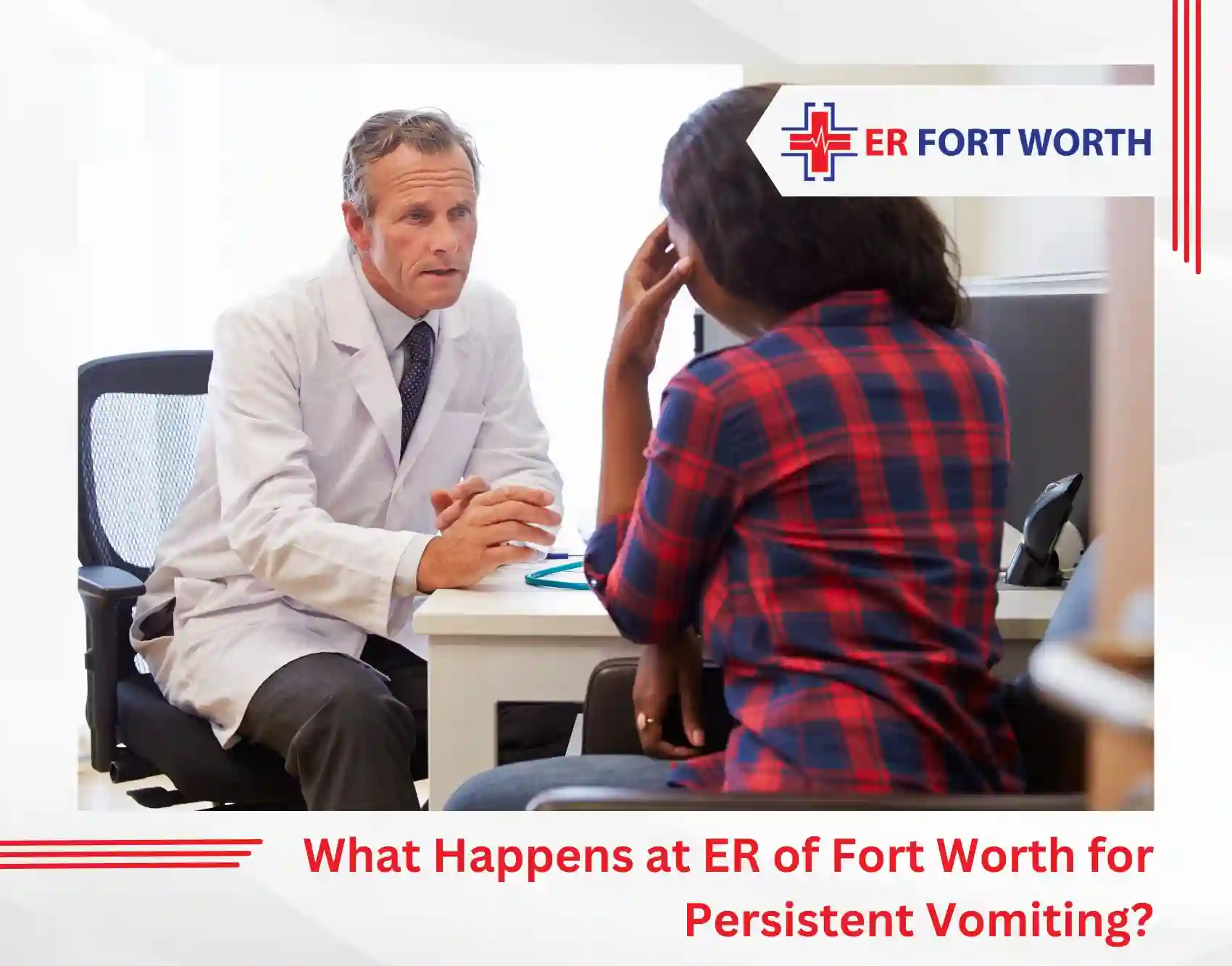
At ER of Fort Worth, evaluation for persistent vomiting no diarrhea causes starts the moment you arrive. Our team focuses on stopping the vomiting, replacing lost fluids, and identifying the underlying cause. Nausea without diarrhea causes a specific workup pattern different from gastroenteritis evaluation.
Immediate priorities
- Vital signs and orthostatic blood pressure check
- IV access and fluid replacement
- Anti nausea support to stop the vomiting cycle
- Focused physical exam, including abdominal and neurological checks
- Blood glucose check, especially in diabetic patients
Same visit workup
- Complete blood count and metabolic panel
- Electrolyte panel (potassium, sodium, bicarbonate)
- Lipase to check for pancreatitis
- Pregnancy test in women of reproductive age
- Urinalysis for ketones and dehydration markers
- CT or ultrasound if obstruction, appendicitis, or stroke is suspected
Most patients feel significantly better within 60 to 90 minutes of IV fluids and anti nausea support. For patients whose vomiting points to a serious underlying cause requiring admission or specialty care, our board certified emergency physicians coordinate direct hospital transfer.
For patients whose symptoms match viral gastroenteritis despite the lack of diarrhea early on, our overview on what is gastroenteritis covers the full timeline. Patients recovering from a recent ER visit also benefit from our tips on post-ER infection prevention.
Walk in for evaluation: ER of Fort Worth is open 24/7 for persistent vomiting with same visit IV fluids, anti nausea support, and lab. Call +1 817-945-4200 or walk in anytime.
Common Questions
How long is too long to vomit without seeing a doctor?
For vomiting without diarrhea in adults, more than 24 hours without improvement warrants ER evaluation. For children, 12 hours. If any red flag sign appears, come in sooner regardless of how long it has been.
Why am I vomiting without diarrhea?
Persistent vomiting no diarrhea causes include migraines, inner ear problems, bowel obstruction, pregnancy, head injury, pancreatitis, and medication side effects. The absence of diarrhea actually rules out most stomach bugs and narrows the differential.
The Mayo Clinic lists severe headache, chest pain, confusion, and inability to keep fluids down as the key signals that vomiting has crossed into emergency territory.
Can anxiety or stress cause persistent vomiting?
Yes. Severe anxiety, panic attacks, and chronic stress can trigger vomiting. Cyclic vomiting syndrome is also linked to stress. However, these are diagnoses of exclusion. Serious nausea without diarrhea causes must be ruled out first before stress gets the label.
Is it safe to keep eating if I keep vomiting?
No. The stomach needs rest. Try small sips of clear fluids every 15 minutes. If sips come back up or you cannot tolerate fluids for 12 hours, it is time to come in for IV support.
What anti-nausea options are available at the ER?
Our team uses IV anti nausea support appropriate to the suspected cause. We also treat underlying triggers such as migraines, electrolyte imbalances, or infections. Many patients feel significantly better within one hour.
Persistent Vomiting in Fort Worth? Walk Into Our ER 24/7
Persistent vomiting no diarrhea causes often need faster evaluation than people realize. Dehydration progresses quickly when the stomach cannot hold fluids, and some underlying causes (bowel obstruction, head injury, pancreatitis) require same visit imaging and lab. Walk in anytime, no appointment needed.
- Address: 4561 Heritage Trace Pkwy, Suite 117, Fort Worth, TX 76244
- Phone: +1 817-945-4200
- Hours: Open 24 hours, 7 days a week, 365 days a year
- Insurance: Most major commercial plans accepted
- Wait time: Rapid triage with typical door to provider time under 15 minutes
Visit ER of Fort Worth for directions and facility details. Proudly serving Heritage Trace, Alliance, Keller, Watauga, Park Glen, Haslet, Saginaw, North Richland Hills, and surrounding North Fort Worth communities.
Call 911 now: For severe headache, confusion, projectile vomiting, vomiting blood, chest pain, or fainting. Do not drive yourself.