Call 911 immediately: For unconsciousness, seizures, severe breathing difficulty, heavy drooling with pinpoint pupils, large skin or eye contact with a concentrated product, or suspected intentional exposure. Remove contaminated clothing while waiting.
Call Poison Control first: For all other pesticide exposures, dial 1-800-222-1222. Free, 24/7. They can identify the exact product and tell you whether to come to the ER or manage the exposure at home.
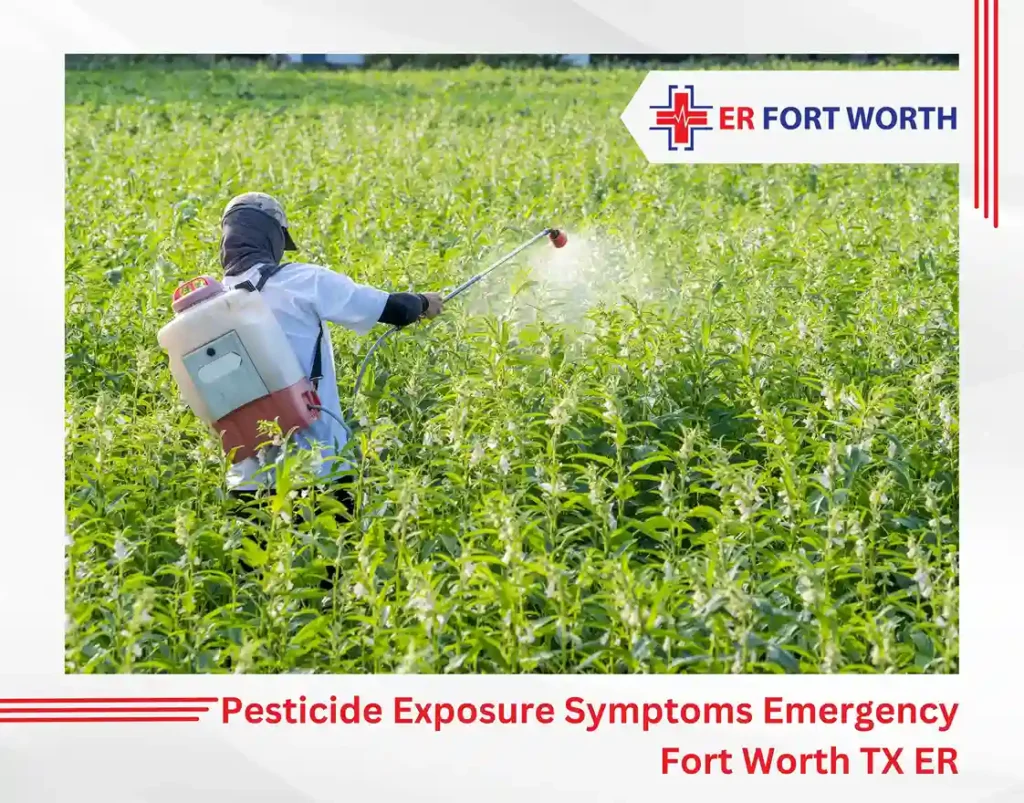
Pesticide exposure symptoms emergency response is not one-size-fits-all. Pesticides can enter the body through skin, inhalation, swallowing, or eye contact, and each route requires a different first-aid sequence. What helps for one route can cause additional harm on another. Recognizing which type of pesticide is involved and which routes were affected shapes every decision that follows.
This guide breaks down the four routes of exposure, the major pesticide categories and the symptoms each one causes, who is at highest risk, exactly how to decontaminate safely, and how our board-certified emergency team at ER of Fort Worth evaluates and treats pesticide exposures with on-site lab work and same-visit results.
What Should You Do for a Pesticide Exposure?
For pesticide exposure symptoms emergency response: move to fresh air, remove contaminated clothing, wash skin with soap and water for at least 15 minutes, rinse eyes with clean water if splashed, and call Poison Control at 1-800-222-1222. Call 911 for severe symptoms and bring the product container to the ER.
1. What Are the Four Routes of Pesticide Exposure?
Pesticides enter the body through four routes: skin contact (dermal absorption), inhalation of fumes or spray, swallowing (ingestion), and eye contact. Many exposures involve more than one route at the same time, which is common in agricultural work, lawn care, and household spraying incidents.
Unlike a pill or a household cleaner, pesticides enter through multiple paths. Each path changes the symptoms, the urgency, and the first-aid response. Real cases in North Texas often involve more than one route at once, especially when spraying on a windy day or applying products indoors.
Route 1. Skin contact (dermal absorption)
Many pesticides absorb directly through intact skin, even when there is no obvious irritation. This is the most common route in agricultural and lawn care workers, and a major route in children who play on freshly treated lawns. Symptoms from pesticide skin exposure can be delayed by 30 minutes to several hours. “I feel fine” right after exposure does not mean the exposure was harmless.
Route 2. Inhalation
Spraying outdoors on a windy day, applying products in poorly ventilated spaces, or being near a recently treated area can all cause inhalation exposure. The lungs deliver pesticides into the bloodstream extremely quickly, sometimes faster than swallowing.
Route 3. Ingestion (swallowing)
Most often accidental and pediatric. A small child drinks from a sprayer bottle, eats ant bait, or licks a treated surface. Also occurs when food is contaminated, when pesticides are stored in food containers, and in intentional exposures.
Route 4. Eye contact
Splashes during application or wind-blown spray can deliver concentrated pesticide directly to the eye. Eye absorption is fast, and unrinsed exposure can cause permanent vision damage. Prolonged eye irrigation for at least 15 to 20 minutes is the correct first-aid response.
2. What Are the Signs of Pesticide Poisoning by Type?
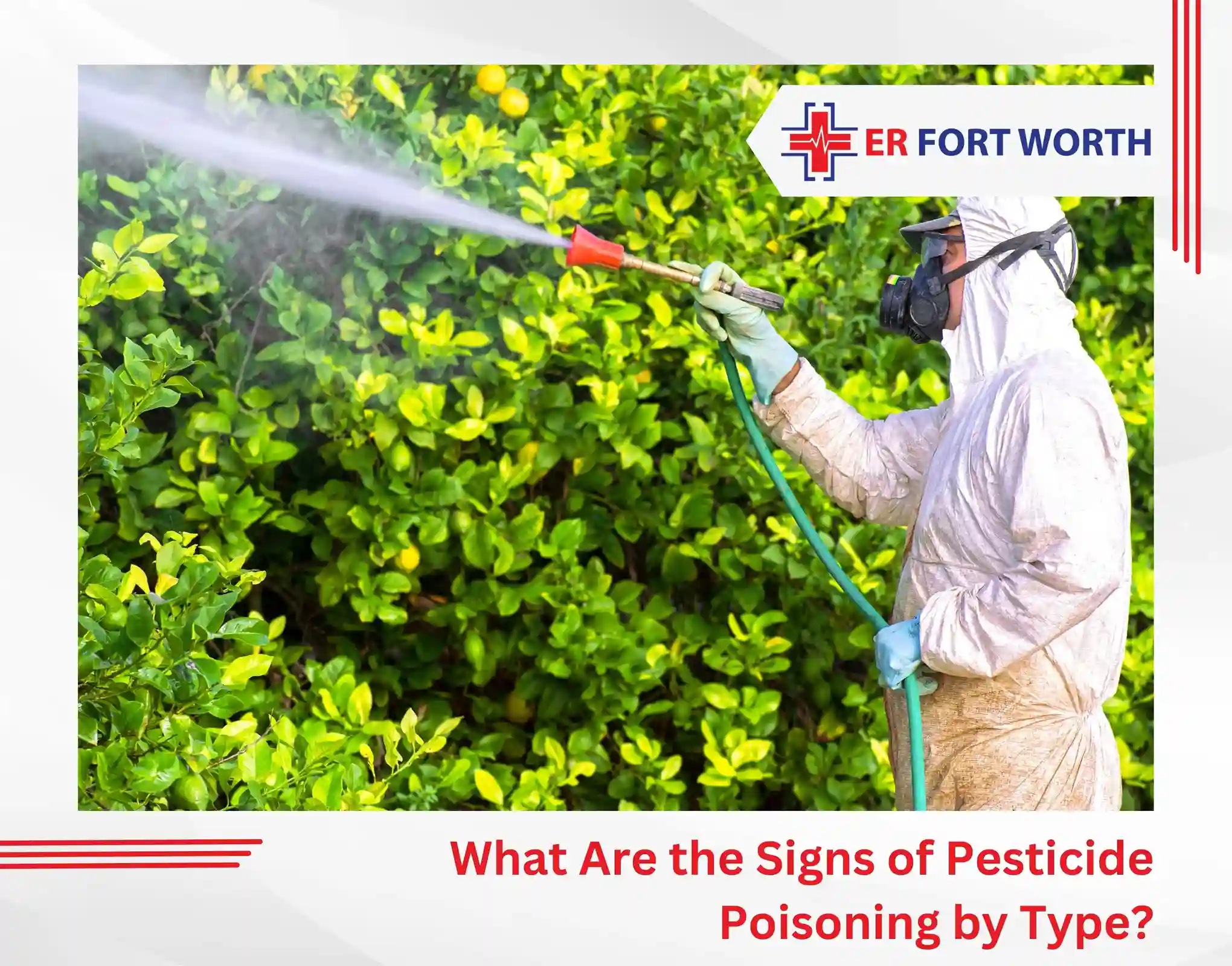
Signs of pesticide poisoning vary by chemical class. Organophosphates cause drooling, pinpoint pupils, and vomiting (called SLUDGE symptoms). Pyrethroids cause tingling and mild breathing changes. Rodenticides cause delayed bleeding days later. Recognizing the category from the container label shapes the correct response.
Pesticides are not one category. They are a wide range of chemical classes that act on the body in different ways. Reading the container label, when it is safely available, is the fastest way to narrow the diagnosis.
Organophosphates and carbamates (the most dangerous common class)
Used in some agricultural insecticides and a few household products. Examples include malathion and carbaryl. These chemicals interfere with a key enzyme in the nervous system, causing a flood of nerve activity. Organophosphate poisoning symptoms follow the classic pattern taught as SLUDGE:
- Salivation: uncontrollable drooling
- Lacrimation: excessive tearing from the eyes
- Urination: loss of bladder control
- Defecation: loss of bowel control
- GI distress: cramping, nausea, vomiting, diarrhea
- Emesis: persistent vomiting
Other classic findings include pinpoint pupils, muscle twitching, sweating, weakness, slow heart rate, wet-sounding breathing from fluid in the lungs, seizures, and loss of consciousness. Organophosphate poisoning symptoms are a true emergency and need immediate ER care.
Pyrethroids and pyrethrins (most common household insecticides)
- Skin tingling, numbness, or burning sensation
- Nausea, vomiting, abdominal pain
- Coughing, wheezing, shortness of breath
- Headache, dizziness, fatigue
- In rare high-dose cases, seizures
Anticoagulant rodenticides (rat and mouse poisons)
The dangerous feature of these products is that symptoms appear days after exposure, not hours. Warning signs include easy bruising, unusual bleeding, bleeding from gums or nose that will not stop, blood in urine or stool, and severe weakness from internal bleeding. Even small ingestions in children warrant evaluation.
Herbicides
Weed killers vary widely in toxicity. Glyphosate exposures are generally lower risk, though skin and GI irritation are possible. Paraquat is extremely dangerous, causing irreversible lung damage even from small ingestions. Any suspected paraquat exposure is a same-day ER visit.
Fumigants and DEET-class repellents
Fumigants like phosphine or methyl bromide are severely toxic through inhalation and are immediate 911 calls. Insect repellents containing DEET or picaridin are generally safe when used as directed, though heavy skin application in small children or ingestion can trigger reactions.
Delayed rodenticide bleeding: Anticoagulant rodenticide symptoms can appear 24 to 72 hours after exposure. A child who ate rat bait yesterday and “seems fine” is not safe. Any suspected rodenticide ingestion needs prompt ER evaluation even without symptoms.
3. Who Is at Highest Risk for Pesticide Poisoning?
The highest-risk groups for pesticide exposure symptoms emergency are agricultural and lawn care workers, children under 6, pregnant women, pets, and people with asthma or respiratory disease. These groups get sicker at lower doses and have less ability to protect themselves during accidental exposure.
If anyone in these groups is exposed, treat it as urgent immediately. Symptoms may develop faster and reach dangerous levels at exposure amounts a healthy adult would tolerate.
Agricultural and landscape workers
The highest-exposure group in Texas. Risk factors include working in fields recently sprayed, mixing concentrated products, equipment failures during application, and inadequate personal protective equipment. Cumulative low-level exposure can also cause chronic symptoms that get dismissed as fatigue or brain fog.
Lawn care, pest control, and public health workers
Residential pest control, fire ant treatment, mosquito spraying for West Nile prevention, and lawn fertilization with pesticide blends all create occupational exposure. Risks rise sharply when applying in windy conditions, in confined spaces, or without proper protective gear.
Children under 6
- Higher surface-area-to-body-mass ratio means more pesticide absorbed per pound
- Play behaviors include crawling, hand-to-mouth contact, and time on freshly treated lawns
- Developing nervous systems are more sensitive to neurotoxic pesticides
- Colorful ant baits and rodent pellets are designed to attract pests, and unfortunately attract toddlers
Pregnant women and pets
The developing fetus is highly sensitive to many pesticides. Pregnant women should avoid spraying pesticides directly and stay out of recently treated areas. Pets are exposed through skin contact with treated grass, licking paws after walking on treated surfaces, and eating dropped baits. Sick pets in a household with recent pesticide use often signal that humans were exposed too.
4. What Should You Do Right Now After a Pesticide Exposure?
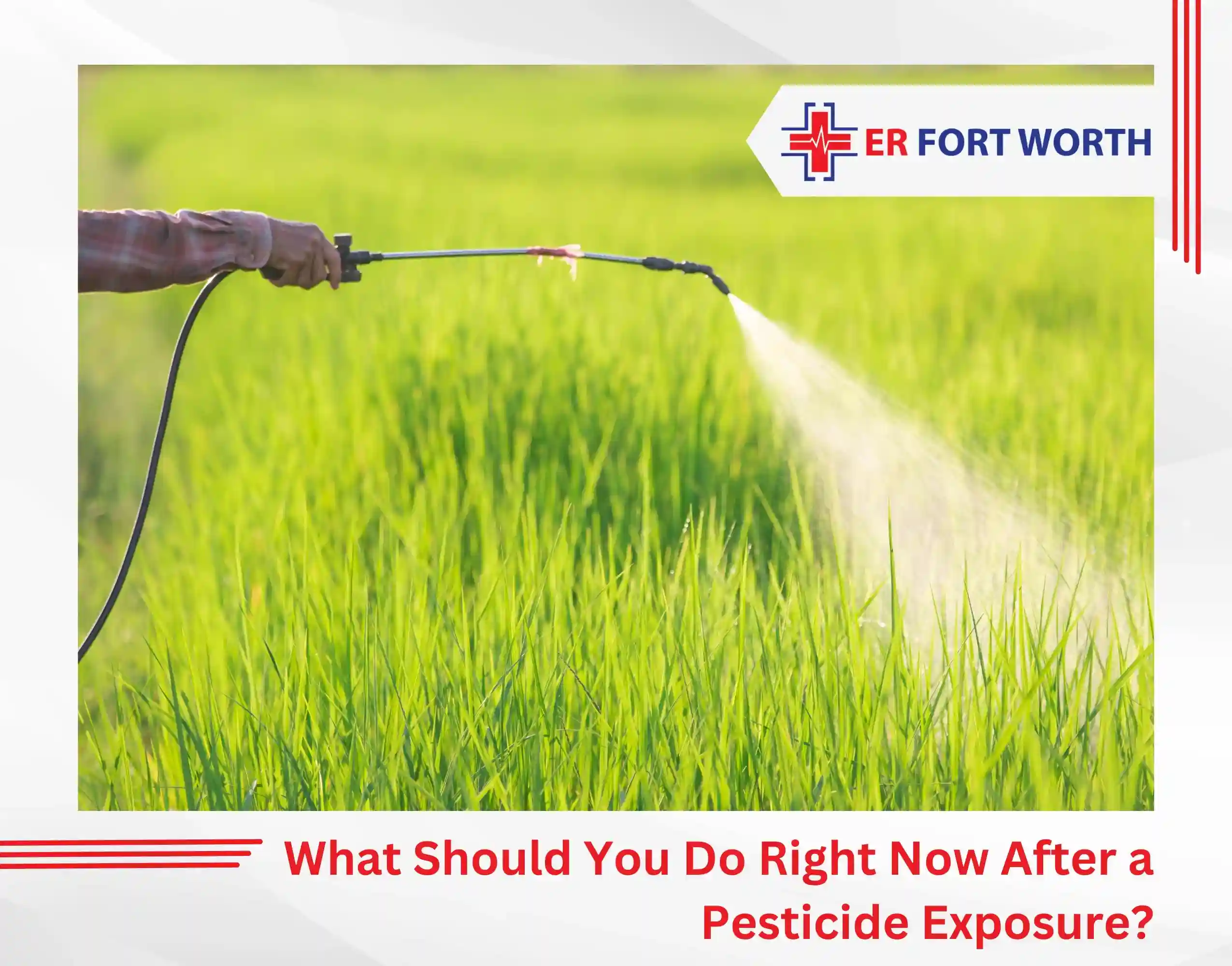
Reduce further absorption immediately. Move away from the source, remove contaminated clothing, wash exposed skin for at least 15 minutes with soap and water, irrigate eyes for 15 to 20 minutes if splashed, and call Poison Control at 1-800-222-1222. Bring the product container with you to the ER.
With pesticide exposure, the first few minutes shape the trajectory. Reducing further absorption matters as much as getting to the ER. The right sequence depends on which routes were involved.
Step 1. Get away from the source.
For sprayed areas, move to fresh air immediately, outdoors and upwind. Do not stay to clean up. Get out, then call.
Step 2. Check for severe symptoms and call 911 if.
- Unconscious or barely responsive
- Difficulty breathing, wheezing, or noisy breathing
- Seizures
- Heavy drooling with pinpoint pupils (classic organophosphate signs)
- Large skin contact with concentrated pesticide
- Eye splash with a concentrated product
- Suspected intentional exposure
Step 3. For pesticide skin exposure, decontaminate.
- Remove all contaminated clothing including underwear and shoes, and seal in a bag
- Wash exposed skin thoroughly with soap and large amounts of water
- Wash for at least 15 minutes, especially for concentrated products
- Pay attention to skin folds, behind ears, fingernails, and hairline
- If jewelry or contact lenses were in contact, remove and dispose of them
Caregiver warning: If you are helping someone with skin or clothing contamination, wear gloves. Pesticide on their clothing can absorb through your skin too. Family members and bystanders can become secondary victims of the same exposure event.
Step 4. For eye exposure, irrigate.
Rinse the affected eye with clean, lukewarm water continuously for at least 15 to 20 minutes. Hold the eyelids open. Tilt the head so rinsing water flows away from the unaffected eye. Remove contact lenses if present. After irrigation, transport to the ER for evaluation.
Step 5. For inhalation, fresh air first.
Once in fresh air, sit or lie down. Do not exert yourself. If breathing difficulty develops, call 911. People with known asthma can use their rescue inhaler as prescribed. Do not return to the area until it has been ventilated.
Step 6. For ingestion, do NOT induce vomiting.
Same rule as other chemical poisonings. Inducing vomiting can cause additional damage, especially with hydrocarbon-based pesticide carriers, and aspiration into the lungs is a serious risk. Call Poison Control immediately at 1-800-222-1222.
Step 7. Bring the container to the ER.
The pesticide label tells the ER team exactly which active ingredient is involved, the concentration, and the manufacturer’s emergency contact. Verbal descriptions are unreliable. If multiple products were used, bring them all.
5. How Does ER of Fort Worth Evaluate Pesticide Exposure?
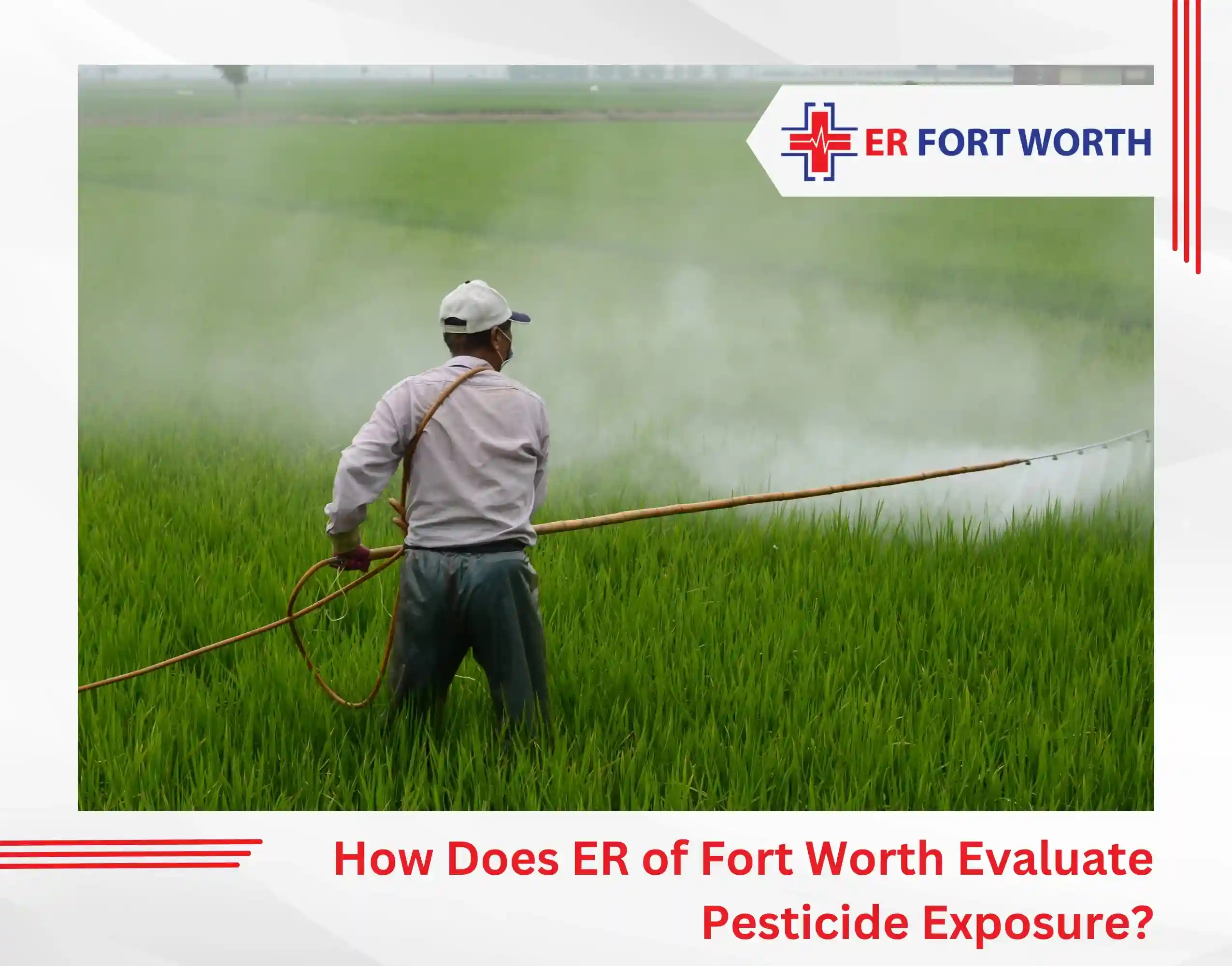
ER of Fort Worth evaluates pesticide exposure symptoms emergency cases with rapid triage, additional decontamination when needed, substance identification, targeted lab work including cholinesterase testing, cardiac monitoring, and pesticide-class-specific supportive care. Board-certified emergency physicians work with Poison Control from arrival.
When a patient arrives with suspected pesticide exposure, our team combines rapid stabilization, route-specific decontamination, and chemical-class-specific evaluation. The container you bring guides much of the workup.
What happens when you arrive
- Rapid triage and stabilization. Vital signs, oxygen saturation, blood sugar, and a focused neurological exam within minutes. Continuous cardiac monitoring is standard.
- Additional ER decontamination. Even if home decontamination was done, more washing may be performed, especially for organophosphate exposures where skin absorption continues for hours.
- Substance identification. The container you bring is the most reliable source. Our team consults with Poison Control and product databases in parallel.
- Cholinesterase testing. Red blood cell and plasma cholinesterase levels confirm organophosphate or carbamate exposure.
- Coagulation studies. Critical for anticoagulant rodenticide exposure where bleeding can appear days later.
- Chest X-ray and EKG. For inhalation exposures or ingestions where cardiac effects are possible.
- Coordinated hospital transfer. For patients who need admission or advanced toxicology care, we arrange direct handoffs.
Get evaluated fast: ER of Fort Worth provides 24/7 emergency evaluation for pesticide exposures with on-site lab, EKG, cholinesterase testing, and toxicology consultation. Walk in anytime or call +1 817-945-4200. Bring the pesticide container if safe to do so.
Learn more about our full range of emergency services in Fort Worth. For a pesticide that was swallowed as the primary exposure, our companion guide on chemical ingestion poisoning emergency covers the do-not-induce-vomiting rule and Poison Control triage in more detail. For inhaled toxic exposures at home like heater or generator fumes, see our guide on carbon monoxide poisoning symptoms.
Frequently Asked Questions
How quickly do pesticide symptoms appear?
It depends on the pesticide and the route. Inhaled organophosphates can cause symptoms within minutes. Skin-absorbed pesticides may take 30 minutes to several hours. Anticoagulant rodenticide symptoms often appear days after exposure. Absence of immediate symptoms does not mean safety.
My child played on a treated lawn. Should I worry?
It depends on the product and how recently the lawn was treated. Call Poison Control at 1-800-222-1222 to assess. General rule: keep children and pets off treated lawns until they have dried completely, often 24 hours. Watch for signs of pesticide poisoning like drooling, vomiting, or unsteady walking.
What are the warning signs of organophosphate poisoning?
Organophosphate poisoning symptoms include drooling, tearing, sweating, pinpoint pupils, vomiting, diarrhea, muscle twitching, weakness, slow heart rate, and wet-sounding breathing. This combination is called SLUDGE and is a true emergency. Call 911 immediately.
Should I wash pesticide off skin at home before coming to the ER?
Yes. Pesticide skin exposure requires immediate decontamination before or during transport. Remove contaminated clothing, wash with soap and water for at least 15 minutes, and then come to the ER. Do not delay washing to wait for EMS.
Can pesticide exposure cause long-term problems?
Yes. Repeated low-level exposure, especially to organophosphates, can cause chronic neurological symptoms including memory changes, mood changes, fatigue, and movement problems. Severe single exposures can cause lasting brain or lung damage. Ongoing occupational monitoring is recommended for workers with regular contact.
Will insurance cover an ER visit for pesticide exposure?
ER of Fort Worth accepts most major commercial insurance plans and works directly with your insurer. We do not currently accept Medicare, Medicaid, or Tricare. Under federal law, insurance covers emergency visits based on symptoms, not the final diagnosis.
People Also Ask About Pesticide Exposure
These are related questions Google’s People Also Ask feature and AI search engines commonly surface for pesticide exposure queries. Direct answers below.
Can pesticides absorb through the skin?
Yes. Many pesticides absorb readily through intact skin, even without irritation. Pesticide skin exposure is one of the most common routes for agricultural workers, lawn care professionals, and children playing on treated grass. Prolonged contact increases absorption.
How do I know if pesticide drift from a neighboring property caused my symptoms?
Sudden onset of dizziness, headache, breathing changes, or eye and skin irritation after outdoor pesticide application nearby suggests drift exposure. Document the incident, report it to the Texas Department of Agriculture, and come to the ER if symptoms are significant.
Is DEET dangerous if I use it every day?
DEET at consumer concentrations is generally safe when used as directed. Overuse in small children or heavy application on broken skin can rarely cause reactions. Wash off DEET at the end of the day and avoid applying to hands or near the mouth in young children.
What are the early warning signs of pesticide poisoning in workers?
Early signs of pesticide poisoning in agricultural or landscape workers include headache, dizziness, blurred vision, unusual sweating, nausea, muscle weakness, and difficulty concentrating. These can be dismissed as heat or fatigue. Any pattern following pesticide handling should trigger evaluation.
Suspected Pesticide Exposure? Get Same-Day Answers in Fort Worth
Pesticide exposure symptoms emergency care is time-sensitive, route-specific, and chemical-class-specific. The wrong response, such as staying in contaminated clothing, inducing vomiting, or not knowing which product was involved, can cost lives. At ER of Fort Worth, we combine 24/7 emergency care with on-site lab, cholinesterase testing, EKG, and board-certified emergency physicians available immediately. Walk in anytime or call ahead so our team can prepare.
- Address: 4561 Heritage Trace Pkwy, Suite 117, Fort Worth, TX 76244
- Phone: +1 817-945-4200
- Poison Control: 1-800-222-1222 (free, 24/7)
- Hours: Open 24 hours, every day of the year
- Insurance: Most commercial plans accepted. Medicare, Medicaid, and Tricare not accepted at this time.
Visit ER of Fort Worth for facility details, directions, and information for the whole family.
Call 911 now if life-threatening: For severe symptoms including breathing difficulty, seizures, unconsciousness, drooling with pinpoint pupils, or large skin or eye contact. Decontaminate skin while waiting for EMS whenever possible.