
Reviewed by the emergency care team at ER of Fort Worth | 4561 Heritage Trace Pkwy, Suite 117, Fort Worth, TX 76244 | +1 817-945-4200
Call 911 immediately: For severe dehydration with confusion, fainting, rapid heartbeat, low blood pressure, no urine for 8 or more hours, cold clammy skin, or difficulty staying awake. Do not attempt to drive yourself.
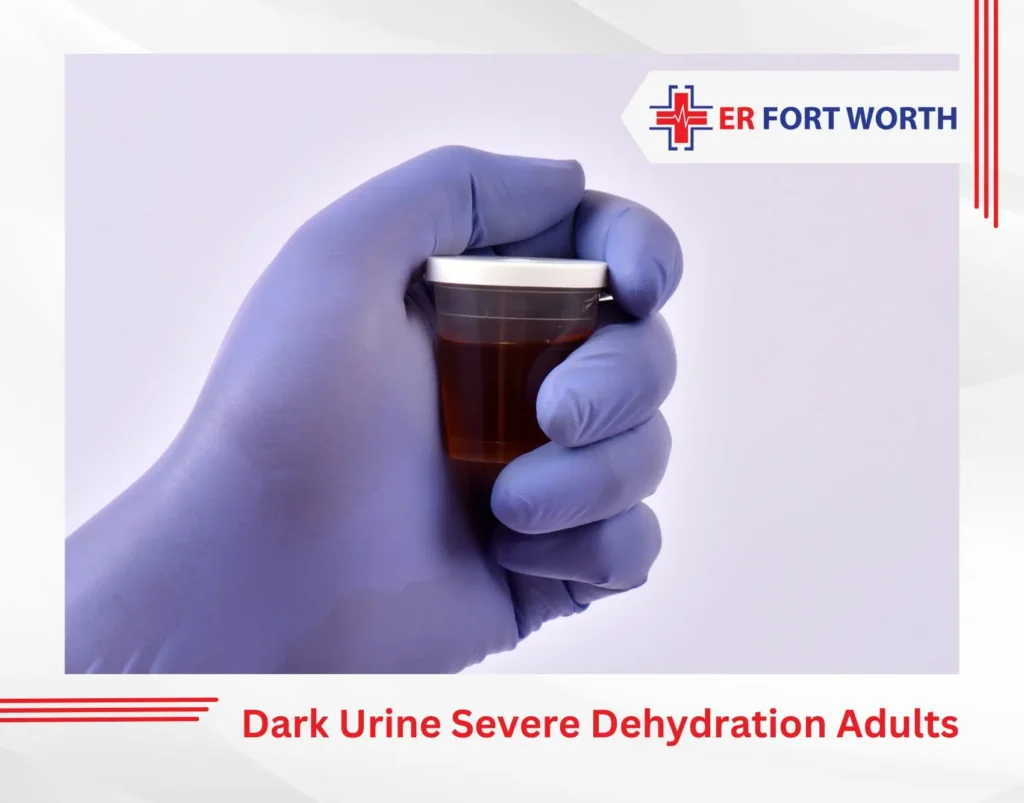
Urine color is one of the fastest ways to check hydration. When dark urine severe dehydration adults notice appears with other warning signs, the situation has usually moved past what water at home can fix.
This guide covers what different urine colors mean, when dehydration becomes an emergency, and how our Fort Worth ER handles dark urine severe dehydration adults present with using same visit IV rehydration.
What Dark Urine Actually Tells You
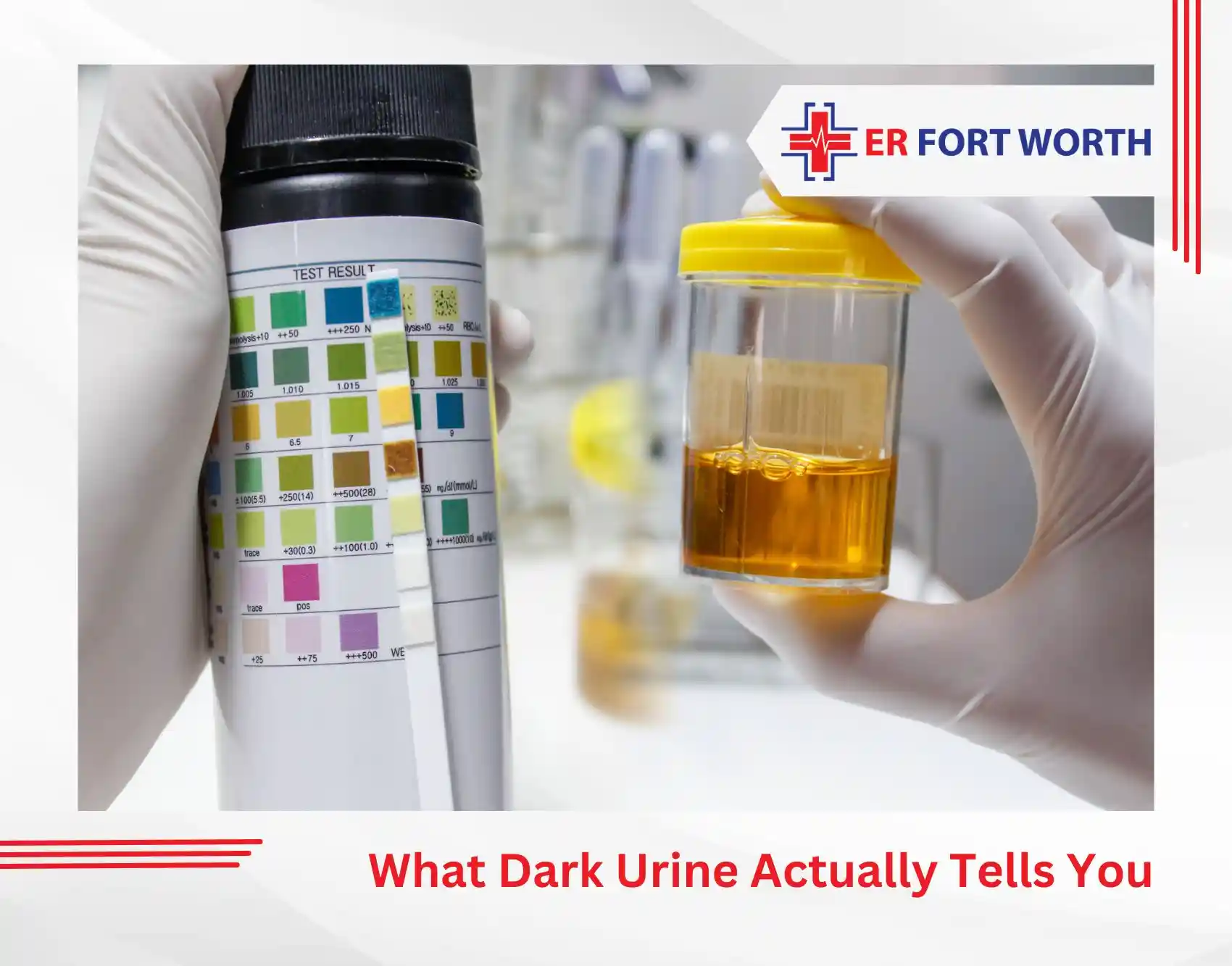
Urine gets its color from a pigment called urochrome. When you drink enough fluids, the pigment is diluted and urine appears pale. When fluids drop, urine becomes concentrated and darker.
Here is a simple urine color chart that shows what each color usually means.
| Color | Hydration Level | Action Needed |
| Clear or very pale | Overhydrated or well hydrated | Consider cutting back on water if often clear |
| Pale yellow | Normal hydration | Keep current fluid intake |
| Yellow | Mild dehydration | Drink a glass of water |
| Dark yellow | Moderate dehydration | Drink water now, monitor symptoms |
| Amber or honey | Significant dehydration | Rehydrate and watch for warning signs |
| Tea or brown | Severe dehydration or possible other cause | Same day ER evaluation |
Tea or brown urine can also point to muscle breakdown, liver problems, or blood in urine that has been in the bladder a long time. Any tea colored urine warrants same day evaluation.
Signs of Severe Dehydration in Adults
Dark urine is one signal. Signs of severe dehydration in adults usually appear together, and recognizing the cluster helps you decide when to come in.
Early warning signs
- Dry mouth, sticky saliva, or cracked lips
- Increased thirst
- Fatigue or unusual tiredness
- Headache or lightheadedness on standing
- Reduced urine output or dark yellow urine
Severe warning signs
- Little or no urine for 8 or more hours
- Very dark, amber, or tea colored urine
- Sunken eyes with dark circles
- Rapid heartbeat, over 100 beats per minute at rest
- Rapid, shallow breathing
- Cold, clammy, or mottled skin
- Confusion, dizziness, or fainting
- Skin that stays tented after being pinched
The Mayo Clinic notes that severe dehydration can cause seizures, low blood volume shock, and, when untreated, life threatening complications. This is why any adult with severe warning signs should be evaluated the same day, not later.¹
Common Causes of Dark Urine and Severe Dehydration
Adults do not become severely dehydrated without a trigger. The most common causes of dark urine severe dehydration adults come to the ER for include the following.
Illness with vomiting or diarrhea
Stomach bugs, food poisoning, and gastrointestinal infections cause rapid fluid loss. A single day of both vomiting and diarrhea can push a healthy adult into severe dehydration.
High fever with heavy sweating
Fever raises body temperature and increases fluid loss through sweat. In hot Texas summers, an adult with fever can lose significant fluids in just a few hours.
Prolonged heat or physical exertion
Working outdoors, hard exercise, or being in a hot environment without adequate fluid replacement is a common trigger, especially in older adults whose thirst signals are weaker.
Urinary tract infection
A UTI can concentrate urine and reduce comfortable fluid intake because of burning during urination.
For patients whose dark urine is paired with UTI symptoms, our UTI treatment in Fort Worth page covers what to expect at our ER for suspected urinary infections.
Alcohol and certain foods
Alcohol acts as a diuretic and causes fluid loss. Certain foods and beverages can also temporarily darken urine, though those cases usually resolve quickly with rehydration.
When Dehydration Needs IV Fluids

When dehydration needs IV fluids is straightforward. If oral hydration is not working or the patient cannot keep fluids down, IV rehydration at the ER is the fastest way to restore fluid balance.
IV fluids are typically needed for
- Persistent vomiting that prevents keeping down water
- Severe diarrhea with rapid fluid loss
- Signs of moderate to severe dehydration on arrival
- Confusion, fainting, or extreme weakness
- Rapid heartbeat with dry mouth and dark urine
- Adults who cannot maintain adequate oral intake for any reason
The Cleveland Clinic lists IV fluid replacement as the standard for severe dehydration because oral intake alone cannot restore fluid balance quickly enough when the situation has advanced.²
Who Is at Higher Risk?
Some adults are more vulnerable to severe dehydration and should come in sooner rather than later.
- Adults over 65 (weaker thirst signals, more medications, less water reserve)
- People with diabetes (higher risk of rapid dehydration)
- Pregnant patients (dehydration can affect fetal wellbeing)
- People with kidney disease or heart conditions
- Anyone with prolonged vomiting or diarrhea
- Outdoor workers and athletes in hot weather
- People with recent illness who have been unable to eat or drink normally
What to Expect at ER of Fort Worth

Evaluation for adult dehydration ER symptoms starts with vital signs, blood pressure checked sitting and standing, and IV access within minutes.
Orthostatic blood pressure changes reveal the true severity of fluid loss. A urinalysis confirms concentration levels, and blood work checks electrolytes and kidney function.
Our typical workup
- Vital signs and orthostatic blood pressure check
- IV access and immediate fluid replacement
- Urinalysis for concentration and infection markers
- Complete blood count and electrolyte panel
- Kidney function tests
- Blood glucose monitoring, especially in diabetic patients
- Cardiac monitoring for patients with rapid heart rate
Our on-site laboratory services process urinalysis, electrolytes, and kidney function tests during the same visit. Most patients feel significantly better within one to two hours of starting IV fluids.
For patients whose dark urine is linked to an underlying urinary infection, our companion guide on thrush and urinary tract infections covers overlapping symptoms that can complicate the picture.
Get evaluated fast: ER of Fort Worth is open 24/7 with on site IV rehydration, lab, and same visit results. Walk in anytime or call +1 817-945-4200.
Common Questions
How quickly can dehydration turn severe in adults?
It depends on the trigger. With vomiting and diarrhea, an otherwise healthy adult can move from mild to severe dehydration within 24 hours. In hot weather with heavy exertion, even faster. Older adults reach severe levels more quickly.
How much water should I drink if my urine is dark yellow?
Start with a full glass of water and check again in 30 minutes. If urine is still dark and you feel unwell, or if you cannot keep fluids down, come in for evaluation. Do not chug large volumes at once.
Can dark urine mean something other than dehydration?
Yes. Tea or brown urine can indicate liver problems, muscle breakdown, or blood that has been in the bladder for a while. Certain foods and vitamins can also darken urine temporarily. A urinalysis distinguishes these causes.
How long does IV rehydration take?
Most adult dehydration ER symptoms respond to IV fluids within one to three hours. Patients typically receive one to three liters of fluid. Improvement is usually rapid and dramatic. Many patients arrive weak and lightheaded and leave able to drive home themselves.
Can I just drink Gatorade instead of coming to the ER?
Sports drinks help mild dehydration but cannot fix severe fluid loss, especially when vomiting or diarrhea is ongoing. If you meet severe warning signs, oral fluids alone are usually not enough.
Severely Dehydrated? Get Same Day Relief in Fort Worth
Dark urine severe dehydration adults notice at home is not something to wait out, especially when vomiting, diarrhea, fever, or heat exposure is the cause. Same day IV rehydration and anti nausea support can turn around hours of misery quickly.
- Address: 4561 Heritage Trace Pkwy, Suite 117, Fort Worth, TX 76244
- Phone: +1 817-945-4200
- Hours: Open 24 hours, every day of the year
- Insurance: Most major commercial plans accepted.
Visit ER of Fort Worth for directions and facility details, or learn more about our full range of emergency services in Fort Worth. We serve Heritage Trace, Alliance, Keller, Watauga, Park Glen, Haslet, Saginaw, and North Richland Hills.
Call 911 now if life threatening: For fainting, confusion, cold clammy skin, rapid heartbeat, low blood pressure, no urine for 8 or more hours, or difficulty staying awake. Do not drive yourself.