Reviewed by the emergency care team at ER of Fort Worth | 4561 Heritage Trace Pkwy, Suite 117, Fort Worth, TX 76244 | +1 817-945-4200
Call 911 immediately: For irregular heartbeat with chest pain, severe shortness of breath, fainting, one-sided weakness, slurred speech, or a racing pulse that will not slow down. These signs point to serious cardiac or stroke emergencies.
Feeling your heart flutter, race, or skip while also feeling dizzy is unsettling for good reason. Irregular heartbeat dizziness causes span from harmless palpitations to atrial fibrillation and other rhythm disorders that raise stroke risk.
This guide answers the most common questions about irregular heart rhythm with dizziness, so you can recognize warning signs and know when to walk into our Fort Worth ER.
What Causes an Irregular Heartbeat With Dizziness?
Irregular heartbeat dizziness causes happen when the heart’s rhythm becomes disorganized enough to reduce blood flow to the brain. Common causes include atrial fibrillation, supraventricular tachycardia, premature beats, dehydration, thyroid problems, caffeine or stimulant use, and electrolyte imbalances.
The medical term for any irregular heart rhythm is arrhythmia. Some arrhythmias are brief and harmless. Others reduce the heart’s ability to pump enough blood, which causes the dizziness that often brings patients to our ER.
According to the Centers for Disease Control and Prevention, atrial fibrillation is the most common serious arrhythmia and affects millions of adults in the United States. AFib raises stroke risk about fivefold, which is why early identification matters.¹
What Are the Main Types of Irregular Heartbeat?
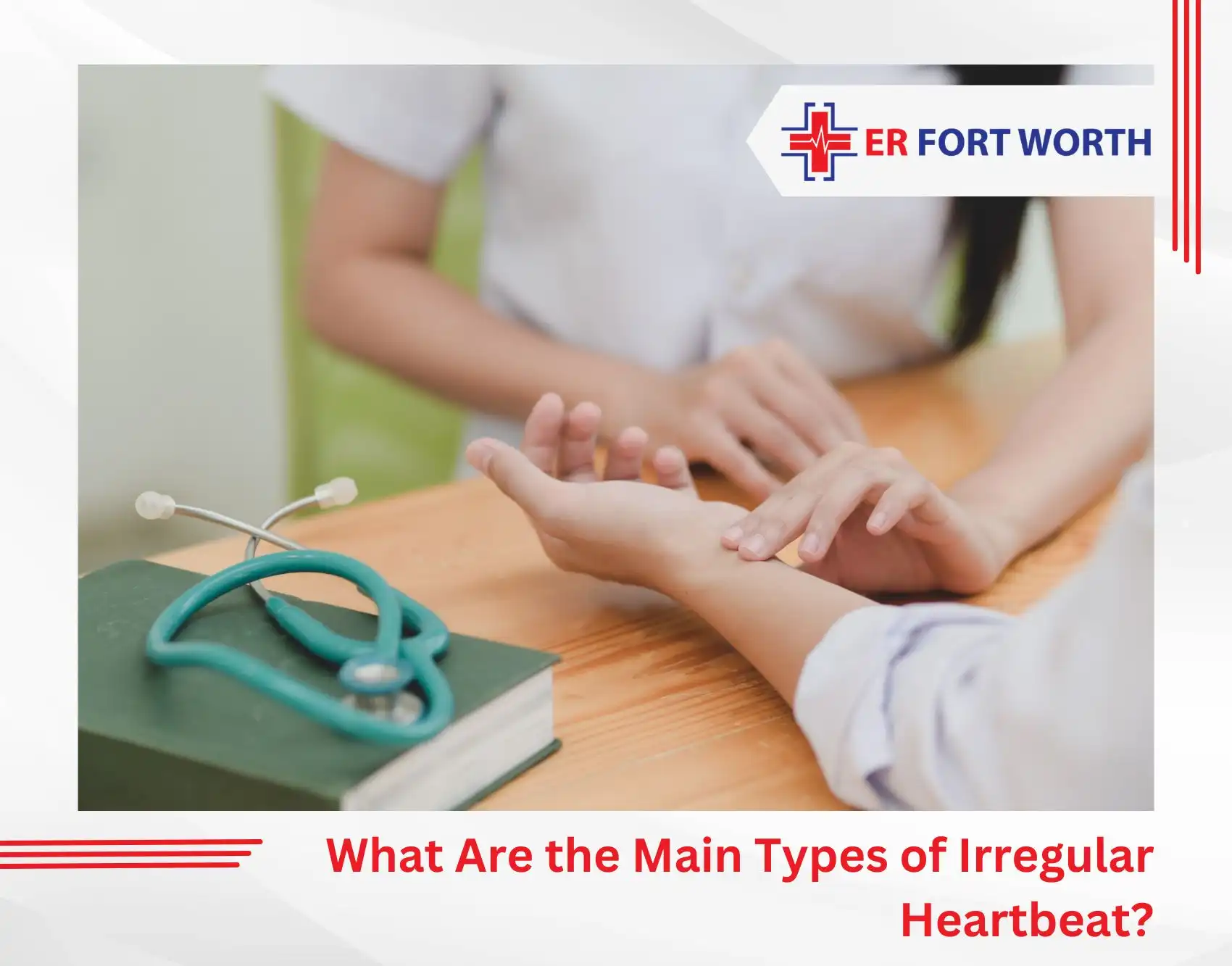
The main types of irregular heartbeat include atrial fibrillation (AFib), supraventricular tachycardia (SVT), premature ventricular contractions (PVCs), and sinus tachycardia. Each has different urgency levels, from harmless skipped beats to arrhythmias that raise stroke or sudden cardiac risk.
The table below compares the four most common patterns, their typical feel, and how urgently each needs evaluation.
| Rhythm Type | What It Feels Like | Typical Triggers | Urgency |
| Atrial Fibrillation (AFib) | Fast, irregular, chaotic heartbeat with fluttering | Age over 60, high blood pressure, heart disease, alcohol | Same day ER |
| Supraventricular Tachycardia (SVT) | Sudden very fast heartbeat, 150-250 bpm | Stress, caffeine, exertion, hormonal changes | Same day ER |
| PVCs (Skipped Beats) | Occasional thumps or a feeling that the heart pauses | Caffeine, stress, fatigue, dehydration | Evaluate if frequent |
| Sinus Tachycardia | Fast but regular heartbeat, usually 100-150 bpm | Fever, dehydration, anxiety, anemia, thyroid problems | Address underlying cause |
| Ventricular Arrhythmias | Chest pain, fainting, or cardiac arrest | Prior heart attack, structural heart disease | Immediate 911 |
If your irregular heartbeat is paired with dizziness, chest pain, or fainting, the rhythm type matters less than getting to an ER for an EKG right away.
What Are the Warning Signs to Watch For?
Heart palpitations warning signs include palpitations lasting more than a few minutes, dizziness or lightheadedness, chest pain, shortness of breath, fainting, and any irregular rhythm in someone with known heart disease. Any combination needs same day ER evaluation.
Not all palpitations are dangerous. These are the heart palpitations warning signs that need attention:
- Palpitations that last longer than a few minutes
- Dizziness or lightheadedness with the irregular beats
- Chest pain, pressure, or tightness
- Shortness of breath at rest or with light activity
- Fainting or near fainting during an episode
- Racing pulse that will not slow down with rest
- Palpitations plus unusual sweating or cold clammy skin
- New irregular rhythm in someone with heart disease or a stroke history
- Palpitations in a pregnant patient with dizziness
The American Heart Association lists dizziness, fatigue, chest pain, and shortness of breath among the most common atrial fibrillation symptoms, but notes that some patients have no symptoms at all and only discover AFib during a routine exam.²
When Is Irregular Heartbeat an Emergency?
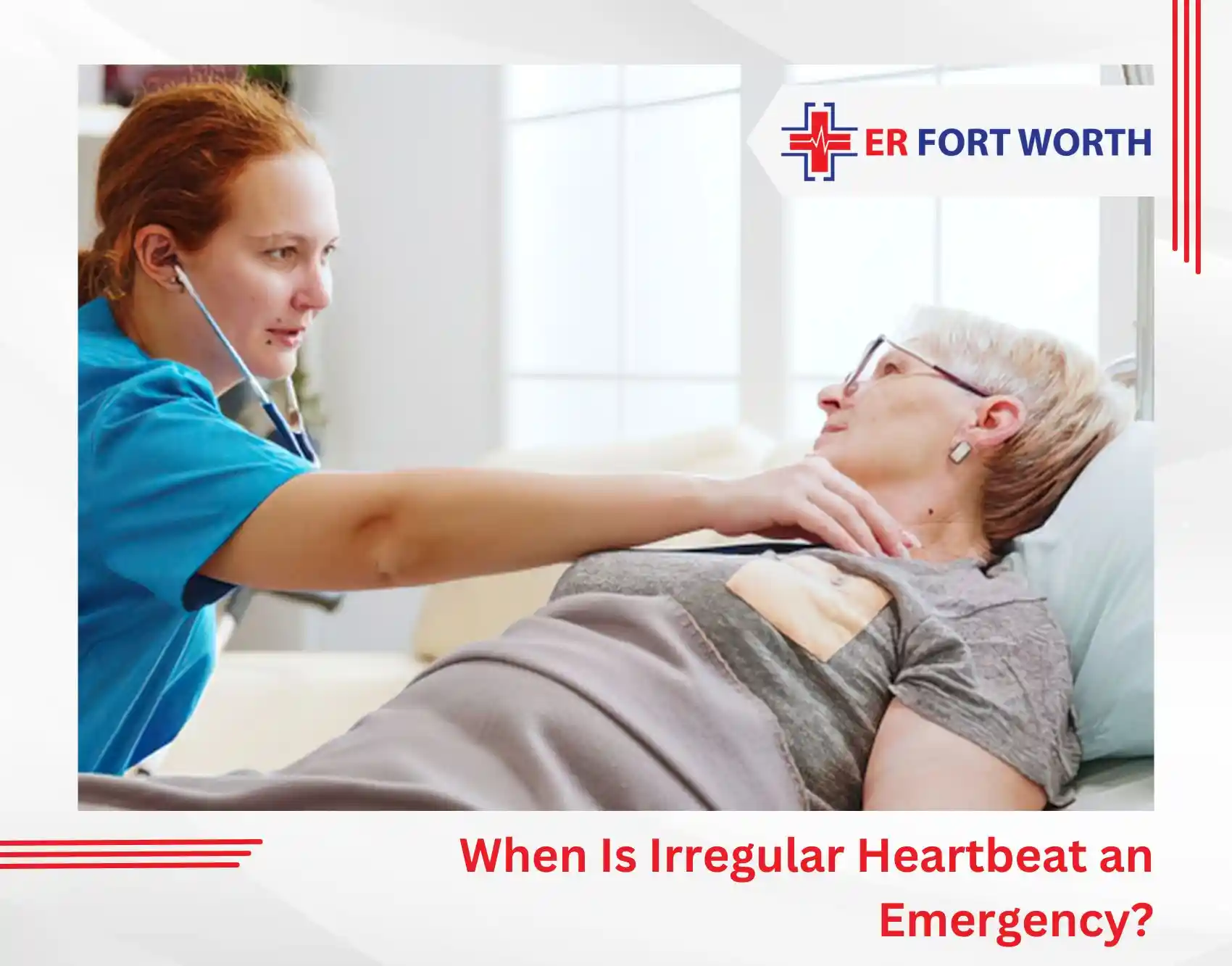
Knowing when arrhythmia is emergency level saves lives. Call 911 for irregular heartbeat with chest pain, severe shortness of breath, fainting, one-sided weakness, slurred speech, or vision loss. These signs may point to heart attack, stroke, or a life threatening arrhythmia that cannot wait.
When arrhythmia is emergency level, action beats observation. The following features escalate a benign feeling episode into an ER visit.
Come to the ER same day for any of these:
- Palpitations with dizziness or fainting
- Racing heart rate above 150 that will not slow down
- New irregular heartbeat you have never felt before
- Palpitations lasting more than 30 minutes
- Any irregular rhythm plus a history of heart disease, stroke, or blood clots
- New AFib symptoms in someone over 65
Call 911 for these:
- Chest pain or pressure with irregular heartbeat
- Severe shortness of breath
- Loss of consciousness or near loss of consciousness
- Signs of stroke (facial droop, arm weakness, slurred speech)
- Cold clammy skin, extreme weakness, or bluish lips
These signs mean the heart or brain is not getting enough blood flow. Do not wait to see if the episode passes on its own.
Who Is at Higher Risk?
Some adults face higher risk of serious arrhythmias. Knowing your risk profile shapes how urgently you should respond to new symptoms.
- Adults over 60 (highest risk group for AFib)
- People with high blood pressure, coronary artery disease, or heart failure
- Diabetes patients
- People with thyroid disorders
- Anyone with a history of heart attack, stroke, or blood clots
- Adults with sleep apnea
- Heavy alcohol drinkers or people with binge drinking episodes
- Athletes with new-onset palpitations
- Family history of arrhythmia or sudden cardiac death
What Happens at ER of Fort Worth for Irregular Heartbeat?
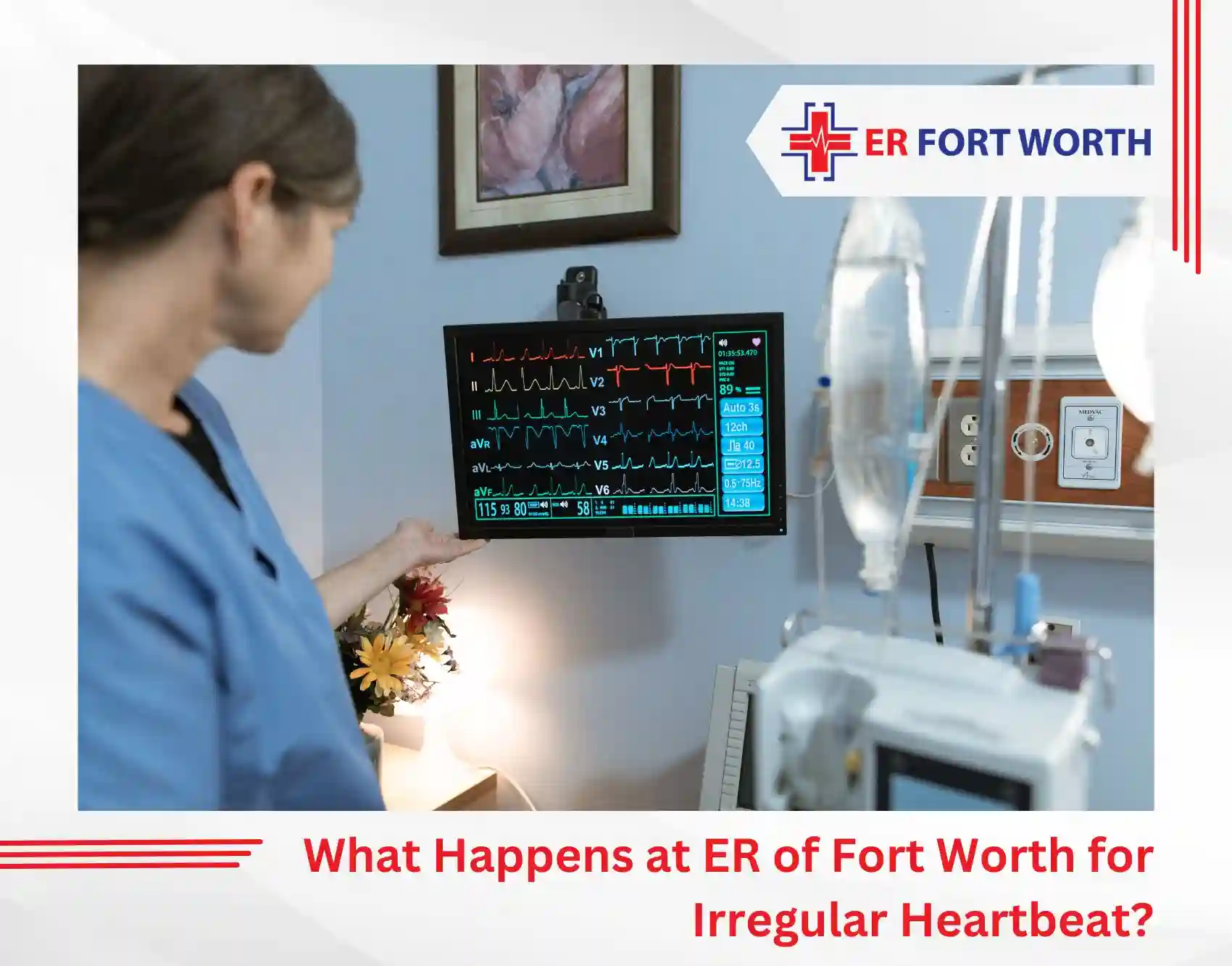
At ER of Fort Worth, evaluation for irregular heartbeat dizziness causes begins with an EKG within minutes of arrival, cardiac monitoring, blood work for cardiac enzymes, and blood pressure checks. Our team looks for AFib, other arrhythmias, and signs of heart attack or stroke.
Immediate workup
- 12-lead EKG within minutes of arrival
- Continuous cardiac monitoring
- Vital signs and orthostatic blood pressure check
- IV access for medication or fluid support
- Focused physical exam and neurologic check for stroke signs
Same visit lab and imaging
- Cardiac enzymes to rule out heart attack
- Complete blood count and metabolic panel
- Electrolyte panel (potassium, magnesium, calcium)
- Thyroid function tests when clinically indicated
- Chest X-ray if breathing changes are present
- CT imaging if stroke is suspected
Our team also runs a cardiac enzyme test when a heart attack is possible alongside the arrhythmia. If chest pain is part of the picture, our guide to chest pain causes and emergency steps covers how our team evaluates every cause of chest discomfort from cardiac to non cardiac.
For dedicated cardiac emergency care, our chest pain treatment in Fort Worth service page details every step of our cardiac workup. Our companion guide on can you survive a heart attack covers the outcomes patients experience with fast intervention.
For patients with confirmed AFib, sustained tachycardia, or high stroke risk, our board certified emergency physicians coordinate direct transfer to a hospital partner for admission, cardioversion, or specialty cardiology care.
Walk in for evaluation: ER of Fort Worth is open 24/7 for palpitations and irregular heartbeat with same visit EKG, lab, and cardiac monitoring. Call +1 817-945-4200 or walk in anytime.
Common Questions
Are heart palpitations always dangerous?
No. Occasional palpitations, especially after caffeine, stress, or exercise, are common and usually harmless. The danger signs are palpitations lasting more than a few minutes, plus dizziness, chest pain, shortness of breath, or fainting.
Can dehydration cause irregular heartbeat?
Yes. Dehydration reduces blood volume and disrupts electrolyte balance, which can trigger palpitations, PVCs, and even brief episodes of tachycardia. Rehydration usually restores normal rhythm, but persistent episodes need evaluation.
How do I know if my palpitations are AFib?
AFib typically feels chaotic, irregular, and often fast. Some patients describe it as a fish flopping in the chest. Classic atrial fibrillation symptoms also include fatigue, chest pressure, and dizziness. The only reliable way to confirm AFib is an EKG, which our ER performs within minutes of arrival.
Can caffeine cause irregular heartbeat?
Yes. Caffeine, energy drinks, and other stimulants can trigger palpitations, PVCs, and short episodes of tachycardia in sensitive individuals. If symptoms persist after cutting these out, come in for evaluation.
Should I go to the ER if my heart rate is over 100 at rest?
It depends. A rate of 100-120 at rest with no other symptoms may reflect fever, dehydration, or anxiety. Rates above 120 at rest, or any fast rate with dizziness, chest pain, or breathing changes, warrant same day ER evaluation.
Irregular Heartbeat With Dizziness in Fort Worth? Walk Into Our ER 24/7
Irregular heartbeat dizziness causes deserve prompt evaluation, especially when combined with chest pain, breathing changes, or fainting. Same visit EKG, cardiac monitoring, and blood work can identify serious arrhythmias like AFib and start appropriate care quickly. Do not ignore atrial fibrillation symptoms in yourself or a loved one.
- Address: 4561 Heritage Trace Pkwy, Suite 117, Fort Worth, TX 76244
- Phone: +1 817-945-4200
- Hours: Open 24 hours, 7 days a week, 365 days a year
- Insurance: Most major commercial plans accepted
- Wait time: Rapid triage with typical door to provider time under 15 minutes
Visit ER of Fort Worth for directions and facility details. Proudly serving Heritage Trace, Alliance, Keller, Watauga, Park Glen, Haslet, Saginaw, North Richland Hills, and surrounding North Fort Worth communities.
Call 911 now: For irregular heartbeat with chest pain, fainting, severe shortness of breath, one-sided weakness, or slurred speech. Do not drive yourself.