
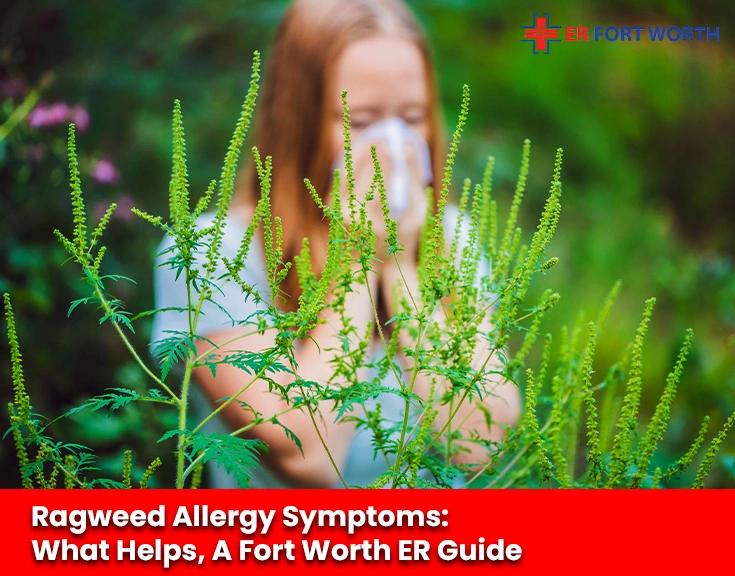
Ragweed allergy symptoms usually show up the same way every year: sneezing fits, a stuffy or runny nose, itchy and watery eyes, and a throat that feels scratchy no matter how much water you drink. If that’s familiar, you are dealing with one of the most common fall allergies in the country, and in North Texas, it tends to show up right around the time school starts back up, which throws a lot of people off at first. Here’s the thing: most ragweed allergy cases don’t need an ER visit. What we see constantly at our Fort Worth ER every September is people whose usual allergy routine suddenly is not cutting it anymore, wondering if this is just a worse ragweed year or something else going on. We have already covered general relief strategies in our How to Treat Seasonal Allergies guide, this one goes deeper specifically on ragweed: what’s causing it, when it peaks locally, what actually helps, and when ragweed-triggered breathing symptoms mean it’s time to come in.
Why Does Ragweed Make You Miserable Every Fall?

Ragweed is a weedy plant that grows practically everywhere in the continental U.S. except Alaska, and it doesn’t need much to thrive, vacant lots, roadsides, and untended yards all work fine for it. Your immune system is the real culprit here, not the plant itself. When ragweed pollen lands in your nose, throat, or eyes, your body mistakes it for something dangerous and releases histamine to fight it off, the same basic mechanism described in MedlinePlus’s overview of allergic reactions generally, whatever the trigger happens to be. That reaction is what causes the sneezing, congestion, and itching that make up allergic rhinitis. It’s not a cold. Not the same thing at all, even though it can feel like one, especially since ragweed season in North Texas tends to overlap with the first few weeks back at school, when a kid’s stuffy nose gets blamed on “something going around” instead.
What Is Ragweed Pollen?
Here’s what makes ragweed pollen so hard to escape: a single plant can release up to a billion pollen grains in one season, and that pollen is light enough to travel hundreds of miles on the wind. You don’t need to live near a ragweed patch to be affected by one nearby, or even one a few counties over. Ragweed grows in nearly every state, and its pollen releases peaks on warm, dry, breezy days, exactly the conditions DFW’s late-summer heat and dry spells deliver most years without fail.
When Does Ragweed Season Peak in Fort Worth?
What Month Is Ragweed the Highest?
Ragweed pollen typically peaks in mid-September across most of the U.S., because warm, dry, breezy conditions in early-to-mid fall are exactly what the plant needs to release pollen, a pattern the Asthma and Allergy Foundation of America has tracked closely in its annual Allergy Capitals reports. In North Texas, that peak tends to arrive a little later and run somewhat milder than it does in the Midwest or Northeast, though “milder” is relative, ask anyone in Tarrant County who’s gone through it. Texas’s ragweed season generally runs from August through the first hard frost, which around Fort Worth often doesn’t show up until well into November. That’s a long stretch of sneezing.
And it’s getting longer, not shorter. Pollen allergy season now starts about 20 days earlier and runs roughly 10 days longer than it did three decades ago, a trend EPA’s climate change indicators attribute to warmer temperatures and a longer frost-free period. So if this September genuinely feels worse than ones you remember from a few years back, it’s not just you.
When Ragweed Allergy Symptoms Need More Than Home Care
Most ragweed allergy symptoms are uncomfortable, not dangerous. But a specific subset of symptoms means it’s time to stop treating this at home:
- Wheezing, chest tightness, or real difficulty breathing, especially if you have a history of asthma
- Facial or throat swelling, hives spreading rapidly, or a feeling of your throat tightening
- Symptoms that suddenly escalate instead of following your usual seasonal pattern
- A rescue inhaler that is not giving you the relief it normally does
- A child with new or worsening breathing difficulty during allergy season
- Any sign of a severe allergic reaction, rapid pulse, dizziness, or fainting alongside breathing symptoms
This is probably just ragweed allergy if your symptoms are the familiar sneezing-congestion-itchy-eyes combination, your usual medication routine is working about as well as it always does, and nothing about this feels different from past Septembers. That pattern doesn’t need an ER visit, it needs patience and your regular approach. But if swelling starts spreading toward your throat, our guide on severe allergic swelling of the face and throat walks through exactly what to watch for, and if a serious asthma flare is more what you’re dealing with, our severe asthma attack guide covers that in more detail. Either way, we can also manage a severe allergic reaction directly if that’s what’s happening.
If any of the above apply, come to the ER of Fort Worth now. We can evaluate breathing, treat asthma flares, and manage severe allergic reactions, open 24 hours a day, 7 days a week. No appointment. No referral needed.
What Actually Helps With Ragweed Allergy Symptoms
So is any allergy treatment better than another? It depends on what’s bothering you most. Oral treatments are usually the first option worth considering, as they target the sneezing, itching, and runny nose that make up most ragweed allergy symptoms. If congestion is your main problem, a nasal spray designed to reduce inflammation may work better, though it can take several days of consistent use before you notice a difference. For people dealing with both, a combination approach or working with an allergist who can tailor a plan to their specific triggers often makes more sense than guessing your way through the pharmacy aisle. There’s no cure for this, only management. What works best genuinely varies from person to person, which is exactly why a one-size-fits-all answer does not exist here.
How Can I Manage My Pollen Allergy?
Managing a pollen allergy day to day comes down to a few habits that actually move the needle. Track pollen counts and plan outdoor time around the lower days when you can. Keep windows closed at home and in the car, especially on dry, breezy afternoons, tempting as it is to let the air in on a rare mild day. Shower and change clothes after you’ve been outside for a while, since pollen clings to hair and fabric more than most people expect.
A HEPA filter in your bedroom can cut down on what you are breathing in overnight, which matters more than it sounds like it should, since symptoms often feel worse first thing in the morning. And here’s something specific to Fort Worth families: because ragweed season overlaps almost exactly with the start of the school year across DFW, it’s easy to blame the first few weeks of sneezing and congestion on “whatever’s going around” at school instead of recognizing it as allergies. If it’s the same pattern every August and September, that’s usually your answer. If none of this is keeping things manageable, that’s when it’s worth talking to an allergist about a longer-term plan.
Home Remedies for Allergy Symptoms
What can you do without reaching for medication? Saline nasal rinses genuinely help, they physically clear pollen and mucus out of your nasal passages, and the evidence behind them holds up. Staying well-hydrated supports your body generally while it’s fighting off the inflammation. Timing outdoor activities around lower-pollen hours makes a real difference too.
Here’s the honest answer on something you have probably heard before: local honey does not do much for a pollen allergy specifically. Bees that make honey are mostly collecting from flowering plants, not the windborne pollen ragweed releases, so eating local honey isn’t really exposing your immune system to the allergen that’s actually bothering you. It’s a nice idea. The evidence just doesn’t back it up for this particular allergy.
If your allergy medications aren’t keeping your breathing comfortable, our Fort Worth ER team can help you figure out what’s actually going on, walk in any time.
Ragweed Allergy and Food, Why Does My Mouth Itch When I Eat Certain Fruit?
Here’s a question we get a lot: why does a slice of watermelon suddenly make your mouth itch in September when it never did in July? The answer is oral allergy syndrome, and it’s a genuine thing, not something you’re imagining. Your immune system can confuse proteins in certain raw fruits and vegetables with ragweed pollen proteins, because they’re similar enough to trigger the same reaction. Banana, melon, zucchini, and cucumber are common triggers for people with ragweed allergies specifically.
Usually it’s mild, itching or minor swelling in the mouth or throat that fades quickly, and cooking the food often eliminates the reaction entirely since heat breaks down the proteins involved. But reactions vary by individual, so if a reaction feels like more than mild itching, swelling that’s spreading, or any trouble swallowing, treat it like any other severe allergic reaction covered above, not something to wait out.
What Happens at Our Fort Worth ER for Allergy-Triggered Breathing Problems

If you have made it to this section, breathing is probably the actual concern, not just sneezing. Here’s what a visit for ragweed-triggered asthma or a severe reaction actually looks like, so it doesn’t feel like an unknown. We start with a breathing assessment, oxygen levels, lung sounds, how hard you are working to breathe, right away, no waiting-room limbo first. Shortness of breath gets evaluated the same way whether ragweed triggered it or something else did.
From there, treatment depends on what’s happening: breathing treatments and medications for an asthma flare, or fast-acting treatment for a more severe allergic reaction if that’s what’s going on. We are not here to oversell this for ordinary sneezing and congestion, most ragweed allergies don’t need us. But when your chest feels tight or your usual inhaler isn’t cutting it, this is exactly the kind of situation our Fort Worth ER handles every allergy season, 24 hours a day. Whether you are coming from Fort Worth itself, Burleson, Keller, Mansfield, or Crowley, we are minutes away.
What we see constantly this time of year is someone who’s managed their ragweed allergy the same way for a decade, and suddenly their usual routine stopped working. Most of the time it’s just a worse pollen year. But every so often, it’s the first time asthma has shown up alongside a seasonal allergy, and that’s genuinely worth a same-day evaluation rather than a wait-and-see week. We’d rather check and rule it out than have you push through something that turns out to matter.
What Fort Worth Patients Are Saying
“I thought my seasonal allergies were something I could manage at home, but my breathing started getting worse during ragweed season. Since I have asthma, I decided not to wait and went to the ER for an evaluation. The team checked my symptoms and helped me understand what was happening and what to do next.”
— Sarah M., Fort Worth, TX
“My allergy symptoms became much more concerning than usual, and I was worried that I might be having a serious allergic reaction. I came to the ER to get checked rather than trying to manage the symptoms on my own. The medical team evaluated me, explained what they found and provided treatment based on my symptoms.”
— James R., Keller, TX
We are Ready When You Are
Most ragweed allergy seasons are something you manage, not something that lands you in an ER, and that’s genuinely fine. But if your breathing is part of the picture this year, or something about a reaction feels different and more serious than usual, ER of Fort Worth is open 24 hours a day, seven days a week, with no appointment needed. We can evaluate breathing, treat allergy-triggered asthma flares, and manage severe allergic reactions on the spot. Whether you are in Fort Worth, Burleson, Keller, Mansfield, or Crowley, we are minutes away, come in today.
Ragweed Allergy FAQs
Here’s what Fort Worth residents ask us most about ragweed allergy, straight from our ER team.
What do ragweed allergy symptoms feel like?
Ragweed allergy symptoms usually mean sneezing, a runny or stuffy nose, itchy and watery eyes, and a scratchy throat that shows up in late summer and runs into fall. Some people also notice a mild cough or feel more tired than usual. If you have asthma, ragweed can make your breathing symptoms worse too.
What month is ragweed the highest?
Ragweed pollen usually peaks in mid-September across most of the U.S. In North Texas, that peak tends to land a little later and run somewhat milder, though the season itself stretches from August through the first hard frost, often well into November around Fort Worth.
How can I manage my pollen allergy?
Track local pollen counts, keep windows closed on high-count days, and shower after spending time outside to rinse pollen off your skin and hair. A HEPA filter indoors and consistent use of your allergy medication during peak season both make a real difference too.
What are some home remedies for allergy symptoms?
Saline nasal rinses are genuinely effective for clearing pollen out of your nasal passages, and staying hydrated supports your body while it’s fighting the inflammation. Local honey, despite the popular claim, doesn’t have solid evidence behind it for pollen allergies specifically.
Can ragweed allergy cause asthma symptoms?
Yes, ragweed pollen is a well-documented asthma trigger, and it can cause wheezing, chest tightness, or real difficulty breathing in people with asthma. If your breathing is affected, that’s different from ordinary allergy symptoms and worth having evaluated.
When should I go to the ER for ragweed allergy?
Come in if you’re wheezing, having real difficulty breathing, your rescue inhaler isn’t helping the way it usually does, or you notice facial or throat swelling. Ordinary sneezing and congestion don’t need an ER visit, breathing symptoms and severe reactions do.
Is there a cure for ragweed allergy?
No, there’s no cure, only symptom management through medication, avoidance, and in some cases immunotherapy. The good news is that with the right combination of approaches, most people get real relief even though the allergy itself doesn’t go away.